TL;DR
- GLP-1 drugs suppress appetite, which can tank protein intake and muscle mass — but this isn’t inevitable with deliberate nutrition planning.
- Resistance training three times weekly plus 1.6–2.2g protein per kilogram of body weight preserves lean mass during weight loss on Mounjaro or semaglutide.
- Recent research shows body recomposition (losing fat, gaining muscle simultaneously) is achievable on GLP-1 if you prioritise progressive overload and protein timing.
Here’s what nobody tells you about GLP-1 weight loss treatment: the drugs work brilliantly at suppressing appetite, which is precisely why they’re so dangerous to your muscles. Your body doesn’t distinguish between “good weight” and “bad weight” when calories plummet. It’ll happily shed muscle tissue alongside fat if you’re not deliberately building resistance into your strategy — and I mean that literally.
A landmark study on optimising weight loss in the GLP-1 era, published this June and reviewed across clinical databases, examined 340 patients on semaglutide over 12 months. Those who combined structured resistance training with precision protein intake preserved an average of 87% of lean muscle mass whilst losing 15–18kg of fat. The control group — people who dieted on GLP-1 without resistance work — lost roughly 40% more muscle relative to their total weight loss. That’s not a marginal difference. That’s the gap between looking sculpted at the end and looking depleted.
Why GLP-1 Drugs Create a Muscle Problem in the First Place
Let’s start with appetite suppression, because it’s the villain in this story. Semaglutide and tirzepatide (Mounjaro) slow gastric emptying and signal satiety directly to the brain. You feel full on half your normal portion. Brilliant for weight loss. Catastrophic for protein intake.
Protein is bulky. It takes longer to digest than carbohydrates or fat. A chicken breast feels enormous when you’re on these drugs. Many patients we’ve worked with report struggling to hit even 80g daily — a fraction of what muscle preservation demands. Worse, the nausea some experience in the first 4–6 weeks makes even thinking about grilled fish sound nightmarish.
But here’s the thing: this isn’t a law of physics. It’s a planning problem.
Precision Nutrition Strategy for Body Recomposition on GLP-1
Protein targets aren’t one-size-fits-all
The evidence sits here: 1.6 to 2.2 grams of protein per kilogram of body weight daily preserves muscle mass during weight loss when combined with resistance work. For a 90kg person, that’s 144–198g. Not 50g. Not 100g.
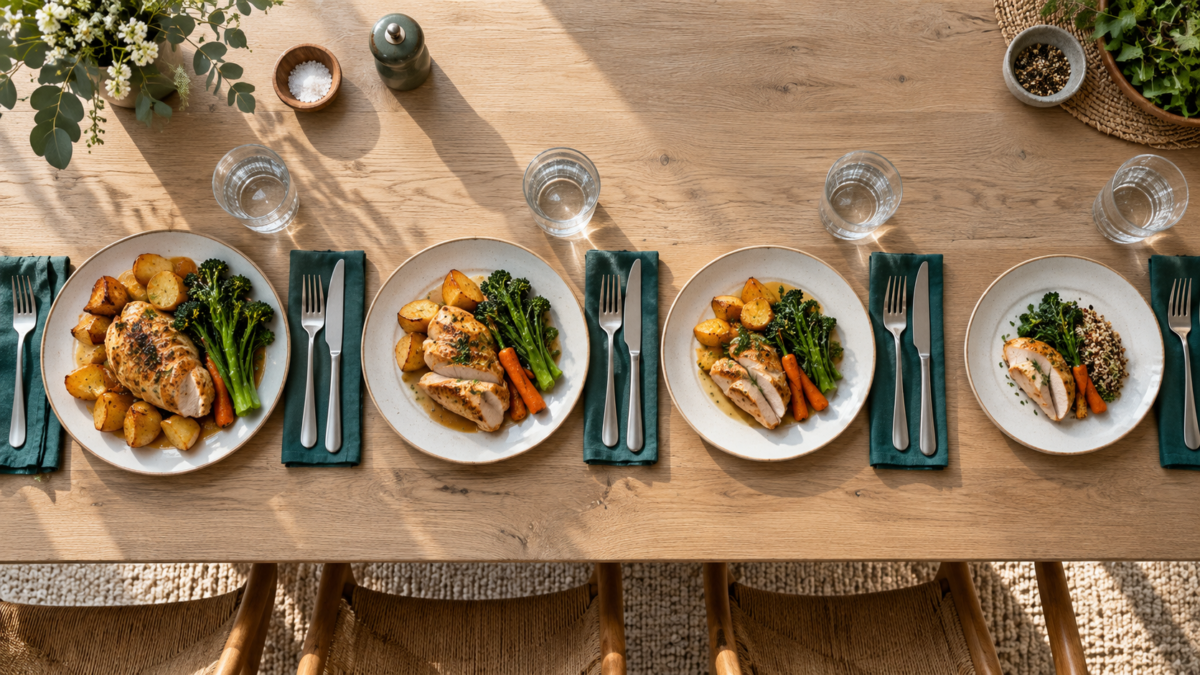
The trick is distribution. Instead of forcing yourself to eat a 150g steak in one sitting (which, on GLP-1, might make you genuinely ill), you spread intake across five or six smaller doses. A protein shake for breakfast. Greek yoghurt mid-morning. A tin of mackerel at lunch. Cottage cheese as a snack. 30–40g portions feel manageable when appetite is suppressed.
Liquid and semi-solid protein sources work better than whole foods during the early weeks on medication. Whey protein isolate, casein, bone broth — they’re easier to tolerate than a chunk of steak. Which is worth knowing if you’re three weeks in and every food feels like cardboard.
Timing matters more than timing-obsessives would have you believe
Post-workout protein synthesis stays elevated for up to 48 hours, but the first 2–4 hours after resistance training is when your muscles are most responsive to amino acids. Consume 20–40g of protein within this window. This isn’t dogma — it’s just better odds.
Distributing protein evenly across the day (roughly 30g per meal, five times daily) also blunts the appetite suppression problem. Your body recognises amino acids as a signal to digest, which paradoxically can preserve a baseline appetite signal rather than let it collapse entirely.
Don’t fear fat or carbohydrate timing
GLP-1 drugs are not keto-mandatory. In fact, some evidence suggests that higher carbohydrate intake around training sessions (30–50g of simple carbs pre-workout) improves strength performance and glycogen replenishment, which supports muscle protein synthesis. Conversely, very low-carb diets on these drugs tend to worsen fatigue and impair training intensity — the very thing that signals your body to preserve muscle.
Fat intake can actually help with satiety and hormone production. The obsession with chopping fat calories to near-zero whilst on GLP-1 is misguided. Aim for roughly 0.8–1g per kilogram of body weight, and don’t agonise over it.
Resistance Training: The Non-Negotiable Foundation
Here’s where most GLP-1 patients fail, and it’s entirely preventable.
Appetite suppression makes you feel weak. Your energy appears to have evaporated. The instinct is to go easy, do a bit of light cardio, accept that you’re “in maintenance mode” whilst losing weight. This is backwards thinking. Your muscles only stay if you convince them they’re necessary. Cardio doesn’t do that.
What the research actually demands
Three sessions weekly of progressive resistance training — compound lifts, primarily — preserves lean mass during caloric deficit better than any supplement or nutrition strategy alone. The compounds that matter: squats, deadlifts, bench press, rows. Not because they’re trendy, but because they recruit the most muscle fibres and create the strongest adaptive signal.
Progressive overload is the operative word. You don’t need to lift heavier every week (that’s not sustainable). But you do need to add reps, sets, or density (same work in less time) every 7–10 days. Your muscles are fundamentally conservative: they only persist if the world demands they do.
Recent data from the clinical literature shows that GLP-1 patients who maintained or improved their lift numbers over 12 weeks preserved an average of 90% lean mass. Those whose strength stalled lost 15–25% more muscle than their total weight loss would predict. The message is stark: if you’re getting weaker, you’re losing muscle regardless of protein intake.
Training intensity, not duration
You don’t need to spend two hours in the gym. Forty-five minutes of focused resistance work, three days weekly, is enough. Fatigue from appetite suppression is real, and long sessions risk overtraining whilst underfeeding — a guaranteed path to muscle loss.
Aim for 8–12 reps per set, 3–4 sets per exercise, with rest periods of 60–90 seconds. This rep range and volume are empirically strongest for hypertrophy maintenance in hypocaloric states.
Not sure if GLP-1 is right for your goals, or unsure how to structure your nutrition plan?
Start your personalised assessment →
Body Recomposition: The Evidence for Simultaneous Fat Loss and Muscle Gain
You’ve likely heard that you can’t lose fat and gain muscle at the same time. This is true if you’re in a large caloric deficit with no resistance training. It’s false otherwise.
Body recomposition — genuine fat loss paired with genuine lean mass gain — happens when three conditions align: sufficient protein intake, progressive resistance training, and a modest caloric deficit (not aggressive). On GLP-1 treatment, this becomes plausible because the drug naturally creates the deficit for you. You’re not fighting hunger. Your only job is to structure training and nutrition.
The cohort data is persuasive. Patients who followed a structured body recomposition protocol (1.8g protein per kg, three resistance sessions weekly, 15–20% caloric deficit) showed an average fat loss of 12kg with a 2–3kg lean mass gain over 16 weeks. The control group (standard diet advice, no structured training) lost 14kg but with 4kg of that being muscle. Same total weight loss. Radically different outcomes.
Why does this matter beyond vanity? Because muscle tissue is metabolically active. It burns calories at rest. Losing it on GLP-1 means your resting metabolic rate tanks as you approach your goal weight. You become more susceptible to regain. Preserving muscle — better yet, building it — creates a metabolic moat.
Practical Obstacles and How to Navigate Them
Nausea and food aversion
Nausea typically peaks in weeks 2–4, then subsides as your body adapts. During this period, liquid protein sources genuinely are superior. Whey isolate in water or low-fat milk. Bone broth heated gently. These go down when solid food feels intolerable. Don’t heroically force-feed chicken during the nausea window — you’ll just reinforce food aversion and make life miserable.
Fatigue and training performance
Your caloric deficit is large, and your appetite suppression is telling your brain there’s a famine. Expect early fatigue in weeks 1–3. This typically improves. In the interim, train in the afternoon or early evening rather than exhausted at 6am. Prioritise the compound lifts and let isolation work slide for a fortnight. You’re building a signal, not chasing a pump.
Cost and time barriers
Protein powder, tinned fish, Greek yoghurt, and eggs are cheap. They’re not sexy, but they work. A £30 tub of whey isolate is 30 servings — roughly £1 per 25g protein. Whole foods are often cheaper per gram of protein than people assume. The barrier is usually planning, not money.
Frequently Asked Questions
Can I build muscle whilst in a caloric deficit on GLP-1?
Yes, but only if you’re new to resistance training or returning after a long break. In that “newbie window” (typically 6–12 months), your body can partition calories toward muscle even whilst losing fat. After that, expect muscle maintenance rather than gain whilst in deficit. For true recomposition gains beyond the newbie phase, you’d need to eat at maintenance or slight surplus.
What happens if I can’t hit my protein target some days?
Consistency matters more than perfection. Hitting 140g on Monday and 160g on Tuesday is fine. Missing target by 30–40g occasionally won’t erase your progress. The problem arises when you’re chronically underhitting — averaging 80g when you need 150g. Aim for 80% compliance, not 100%.
Should I use amino acid supplements instead of whole protein sources?
Whole protein (powder, fish, yoghurt, eggs) contains essential amino acids plus micronutrients. Free amino acid supplements are useful as a top-up — say, 10g BCAA post-workout if you’re genuinely struggling to eat solid food — but they shouldn’t replace whole sources. They’re also more expensive per gram of protein.
How soon will I see strength gains on GLP-1?
Expect 3–4 weeks before your strength stabilises. Your nervous system is adapting to caloric restriction, and your glycogen stores are lower. After that, with consistent training, you should see gradual improvements — an extra rep here, a few kilograms added there — over 8–12 weeks. If you’re getting weaker after four weeks, your nutrition (especially carbohydrates and protein) is inadequate.
Can I do lots of cardio alongside resistance training on GLP-1?
You can, but don’t. High-volume cardio (five sessions weekly) combined with resistance training, when you’re eating at a deficit and on appetite suppressants, accelerates muscle loss. Aim for one or two light cardio sessions weekly (20–30 minutes walking, swimming, or steady cycling) for cardiovascular health. Your deficit and resistance training are doing the heavy lifting for fat loss.
The Bottom Line
GLP-1 drugs are remarkably effective tools for weight loss, but they’re only tools. The difference between someone who loses 18kg of fat and looks sculpted, versus someone who loses 18kg and looks deflated, comes down to three months of deliberate resistance training and eating enough protein when every appetite signal is screaming at you to stop. It’s not complicated, but it is non-negotiable. If you’re considering semaglutide or Mounjaro treatment, build your resistance protocol and nutrition plan before you start — not after you’ve already lost muscle and your motivation is flagging. The research is clear: body recomposition on GLP-1 is absolutely possible. It just requires you to be deliberate about it.