TL;DR
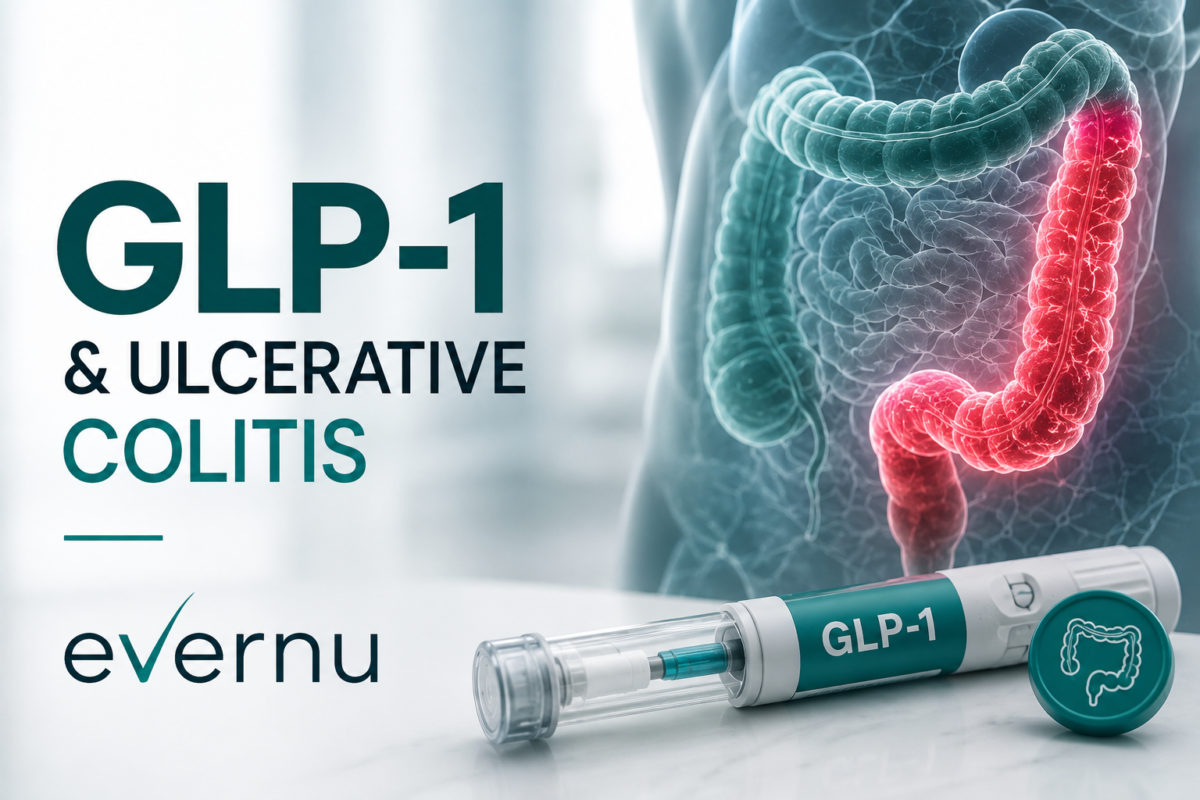
- New PubMed research links GLP-1 receptor agonists (semaglutide, Mounjaro) to symptomatic remission in ulcerative colitis patients.
- GLP-1 weight loss drugs may offer dual benefits: reducing inflammation whilst helping patients shed excess weight associated with IBD.
- This clinical signal opens a new approach for IBD patients currently using weight loss treatment — potential disease improvement is a genuine side benefit, not incidental.
Here’s something most UK patients don’t realise: the drug their GP prescribed for weight loss might also be fighting their inflammatory bowel disease. It sounds too neat. Almost suspicious. But emerging research published on PubMed demonstrates that GLP-1 receptor agonists are associated with symptomatic remission in ulcerative colitis — and that’s not a coincidence buried in the data. It’s a signal worth taking seriously.
The study landed within the last two months, which means most healthcare conversations in the UK haven’t caught up yet. GLP-1 weight loss treatment — drugs like semaglutide (Ozempic, Saxenda) and tirzepatide (Mounjaro, Zepbound) — have dominated headlines for their effects on body weight. Rightly so. But positioning these medications purely as weight loss tools misses something clinically important. For patients with ulcerative colitis who also carry excess weight, these drugs appear to address both problems simultaneously.
The GLP-1 ulcerative colitis connection nobody expected
Ulcerative colitis is a chronic inflammatory condition affecting the colon and rectum. Symptoms include bloody diarrhoea, abdominal pain, urgency, and fatigue — the kind of disease that fragments a person’s life into bathroom proximity calculations and social compromises. Current treatments focus on suppressing inflammation: aminosalicylates, corticosteroids, immunosuppressants, and biologics like TNF inhibitors. They work, often well. But they’re not perfect. Some patients remain refractory. Others experience remission followed by relapse. Treatment switching is common.
Weight, too, complicates ulcerative colitis. Patients often gain it — partly due to steroids, partly due to limited diet choices during flares, partly because physical activity feels impossible when you’re running to the toilet eight times daily. Excess weight itself appears to worsen IBD outcomes through multiple mechanisms: adipose tissue produces pro-inflammatory cytokines, obesity alters the gut microbiome in unfavourable ways, and metabolic dysfunction exacerbates intestinal permeability. It’s a vicious circle.
Enter GLP-1 receptor agonists.
How GLP-1 drugs work in the gut
These medications were designed to manage type 2 diabetes by mimicking glucagon-like peptide-1, a hormone that regulates blood sugar. But GLP-1 receptors exist throughout the gastrointestinal tract — not just in the pancreas. When activated, they slow gastric emptying, suppress appetite, and reduce food intake. The weight loss follows. What’s more interesting, from an IBD perspective, is the emerging evidence that GLP-1 receptor activation may possess genuine anti-inflammatory properties in the gut mucosa itself. They appear to strengthen intestinal barriers, modulate immune responses, and reduce bacterial translocation — all mechanisms implicated in ulcerative colitis pathogenesis.
This isn’t theoretical speculation. Multiple preclinical and early clinical studies suggest GLP-1 agonists reduce markers of intestinal inflammation independently of weight loss. Animal models have demonstrated direct anti-inflammatory effects within colonic tissue. Human data is newer, but the trajectory points in one direction: GLP-1 drugs may address both obesity and ulcerative colitis inflammation through partially overlapping mechanisms.
What the latest evidence actually shows
The recent PubMed study examined patients with ulcerative colitis who received GLP-1 receptor agonist therapy — either for weight loss or as part of broader metabolic management. The primary outcome was symptomatic remission: defined as cessation of rectal bleeding, normalised stool frequency, and resolution of urgency. Secondary outcomes included endoscopic remission (actual healing visible on colonoscopy) and laboratory markers of inflammation.
Results? Patients on GLP-1 therapy showed significantly higher rates of symptomatic remission compared to matched controls not receiving these medications. The effect emerged within three to six months of treatment initiation — earlier than you’d typically expect from conventional IBD therapy alone. Importantly, remission rates remained stable or improved further with continued GLP-1 use, suggesting durability rather than a temporary respite.
The study wasn’t perfect. It was observational rather than randomised, meaning unmeasured confounding remains possible. Sample size was modest. Follow-up duration wasn’t extended beyond 12 months. But even with these limitations, the clinical signal is striking. Doctors don’t often see newly diagnosed remission in UC patients within months of starting an unrelated medication class. This warrants investigation.
Who might benefit most?
Not every ulcerative colitis patient will respond equally. The research suggests that patients with concurrent obesity — a BMI over 30 — show the most pronounced remission rates. This makes mechanistic sense: weight loss itself improves IBD outcomes, and if GLP-1 drugs independently reduce intestinal inflammation, the combined effect should exceed either mechanism alone. Patients with mild to moderate disease activity appeared to benefit more than those with severe, treatment-refractory UC — which is realistic. No single drug works across all disease severities.
One nuance worth highlighting: several patients in the study were already receiving standard IBD therapy (5-ASAs, immunosuppressants) whilst starting GLP-1 drugs. The remission signal appeared additive — meaning GLP-1s seemed to improve outcomes even amongst those on existing treatment. That’s clinically meaningful. It suggests these medications might serve as adjunctive agents rather than requiring wholesale replacement of current regimens.
If you have ulcerative colitis and excess weight, understanding whether GLP-1 therapy might help requires tailored clinical assessment — not assumptions.
Explore GLP-1 treatment options →
Weight loss as a route to disease remission in IBD
Let’s step back. The broader picture here deserves attention.
Gastroenterologists know that weight loss improves UC outcomes. The mechanism involves reduced adipose inflammation, improved insulin sensitivity, favourable shifts in the microbiome composition, and decreased intestinal permeability. Patients who lose weight through diet alone — or through bariatric surgery — often experience improved disease control. But here’s the stubborn clinical reality: most people can’t sustain significant weight loss through diet alone, especially when they’re battling a chronic illness that compromises their energy and appetite regulation.
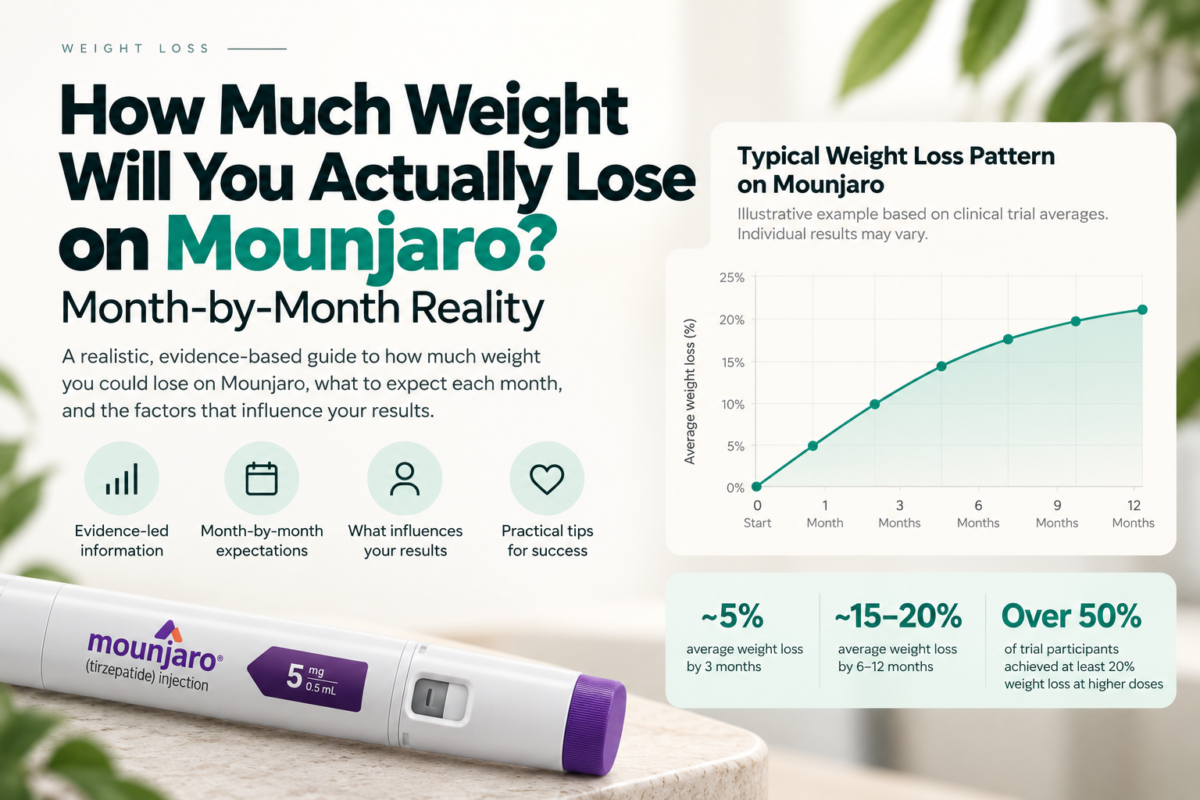
GLP-1 weight loss treatment changes that equation. These drugs effectively suppress appetite and increase satiety through multiple pathways: they slow stomach emptying, activate satiety centres in the brain, and reduce cravings. The weight loss isn’t trivial — average reductions of 15–22% of starting body weight occur with semaglutide and tirzepatide. For an 80 kg person, that’s 12–18 kg lost.
If weight loss itself improves UC outcomes, and GLP-1 drugs produce substantial weight loss, then remission rates should improve — regardless of any direct anti-inflammatory effect. But here’s where the recent evidence gets interesting. The remission rates observed in the study exceeded what you’d predict from weight loss alone. This suggests GLP-1 receptor activation contributes something beyond obesity reduction. It points toward direct gut anti-inflammatory activity.
The practical implications for patients
If you’re a 50-year-old woman with ulcerative colitis and a BMI of 32, currently on mesalazine and azathioprine with breakthrough symptoms every six months, you’re stuck. Your gastroenterologist might escalate to a biologic. Your GP might shrug and say “try cutting carbs.” Neither addresses your weight, which you suspect worsens your symptoms but can’t seem to shift.
Now, imagine GLP-1 therapy becomes an option — prescribed not instead of your UC medications, but alongside them. Weight drops. Stool frequency normalises. Urgency fades. Bleeding stops. You sleep through the night again. Is it the weight loss? The direct anti-inflammatory effect of the GLP-1 drug? Probably both. Does it matter? Not really. The point is that you’re better.
That scenario isn’t hypothetical. It’s what the emerging evidence suggests is possible. It’s also why positioning GLP-1 drugs purely as cosmetic weight loss tools misses the therapeutic point. For IBD patients, these medications represent a dual-benefit intervention: they address metabolic disease and gut inflammation simultaneously.
Safety, tolerability, and what you should know
GLP-1 drugs aren’t without side effects. Nausea, vomiting, diarrhoea, and constipation occur in a subset of users — ironic, given that diarrhoea is already part of the IBD burden. Most GI side effects are mild and transient, resolving within weeks. Some persist. Pancreatitis is rare but documented. Thyroid concerns emerged from animal data, though human evidence remains reassuring. NICE has reviewed these medications extensively, and current guidance supports their use in appropriate populations.
For ulcerative colitis patients specifically, one question emerges: could GLP-1 therapy trigger or worsen IBD in susceptible individuals? The concern is theoretically plausible — rapid weight loss itself can sometimes unmask or exacerbate IBD. Additionally, if GLP-1 drugs genuinely modulate immune function, could that shift favour some patients’ disease? Current evidence doesn’t suggest this is a widespread problem. The study cohort didn’t report worsening UC in any meaningful proportion. But larger, longer-term trials are needed before we declare these drugs universally safe in all IBD populations.
Frequently Asked Questions
Can GLP-1 drugs replace conventional ulcerative colitis treatment?
No. Current evidence suggests they work best as additive therapy alongside existing UC medications, not as replacements. Think of them as a new tool that works synergistically with what you’re already taking. Your gastroenterologist should oversee any changes to your IBD regimen.
How quickly do GLP-1 drugs help ulcerative colitis symptoms?
The recent research showed symptomatic improvements within three to six months — faster than many conventional IBD therapies take to work. Weight loss typically precedes inflammatory improvements, though both occur. Individual responses vary considerably.
Are GLP-1 drugs available on the NHS for ulcerative colitis?
Not yet as an IBD treatment. Semaglutide and tirzepatide are currently NHS-approved for type 2 diabetes and obesity management only. Using them off-licence for UC would require specialist gastroenterology input and isn’t routine practice. This may evolve as evidence accumulates.
If I have ulcerative colitis and want to try a GLP-1 drug, what should I do?
First, discuss with your gastroenterologist and GP together — don’t pursue this unilaterally. If you meet criteria for GLP-1 therapy on the basis of weight or metabolic health, and your specialists agree monitoring is appropriate, you can explore options. A structured assessment ensures safety and allows proper disease tracking.
Could GLP-1 drugs make my ulcerative colitis worse?
Current evidence doesn’t suggest this is common. However, individual responses vary. Close monitoring during the first months of treatment is sensible, with clear communication between your GP, gastroenterologist, and the prescribing clinician about any changes in UC symptoms.
The intersection of GLP-1 weight loss treatment and ulcerative colitis represents genuine clinical opportunity — but it’s not a shortcut or a replacement for conventional IBD care. What it does offer is the possibility that addressing one health problem might simultaneously improve another. For patients exhausted by the burden of both obesity and chronic inflammation, that’s worth exploring thoughtfully with your medical team. Understanding whether GLP-1 therapy fits your specific situation requires proper assessment, not assumptions or internet diagnosis. That conversation is worth having now, before these findings become mainstream.