You have done the research, spoken to your prescriber, and your first Mounjaro pen has arrived. Now comes the question that almost everyone asks: how much weight will I actually lose in the first month?
The short answer, based on clinical trial data, is that most people lose between 2% and 4% of their starting body weight in the first four weeks. For someone weighing 90 kg, that translates to roughly 1.8 to 3.6 kg. For someone at 120 kg, it could be 2.4 to 4.8 kg.
Those numbers may sound modest, particularly if you have seen dramatic before-and-after transformations on social media. But they represent a healthy, sustainable rate of loss, and they are just the beginning. Understanding what is realistically achievable in month one, and why, can help you stay focused rather than chasing an unrealistic number.
What Is Mounjaro and Why Is It Different?
Mounjaro (tirzepatide) is a prescription weight-management injection manufactured by Eli Lilly. It is approved in the UK for adults with a BMI of 30 or above, or a BMI of 27 or above with at least one weight-related health condition such as type 2 diabetes, high blood pressure, or high cholesterol.
What makes Mounjaro distinctive is its dual mechanism of action. It targets two gut hormone receptors:
- GLP-1 (glucagon-like peptide-1): Reduces appetite, slows gastric emptying, and helps regulate blood sugar.
- GIP (glucose-dependent insulinotropic polypeptide): Works alongside GLP-1 to enhance appetite control and influence how the body metabolises and stores fat.
This dual action is what distinguishes Mounjaro from single-receptor medications like semaglutide (found in Wegovy) and is thought to be responsible for its stronger weight-loss results in head-to-head comparisons.
Your First Month on Mounjaro: A Detailed Breakdown
Week 1: The Starting Line
Every patient begins Mounjaro at the lowest dose: 2.5 mg, administered as a once-weekly injection. This introductory dose is not designed to drive significant weight loss. Its purpose is to allow your body to adjust to the medication and to establish tolerability before increasing the dose.
What you will likely experience:
- A gentle reduction in hunger. Many patients describe it as simply not thinking about food as much, or forgetting to snack.
- Feeling full more quickly at meals. You might find that a meal that previously felt like a normal portion now feels like too much.
- Possible gastrointestinal side effects: mild nausea, bloating, or changes in bowel habits. These are among the most common early side effects and usually settle within a few days.
On the scales: Do not be surprised if the number barely moves, or if you see a slight fluctuation that could easily be water weight. Genuine fat loss at this stage is minimal, and that is by design.
Week 2: Settling In
By your second injection, the medication is building up in your system (tirzepatide has a half-life of approximately five days). The appetite-suppressing effects often become more noticeable and reliable.
What you will likely experience:
- More consistent appetite reduction throughout the day, not just around mealtimes.
- A reduction in what many patients call “food noise,” the persistent background thoughts about what to eat next.
- Side effects typically peak around the end of week one or early week two, then begin to ease.
On the scales: Some patients see their first meaningful drop during week two, often 0.5 to 1.5 kg. Others may see very little change yet. Both are normal.
Weeks 3 to 4: Momentum Builds
By the third and fourth weeks, most patients are noticing real changes in their eating habits and their bodies. Data from the SURMOUNT-1 trial shows that participants had lost an average of 2% to 4% of their body weight by week four.
What you will likely experience:
- Portions feeling naturally smaller without having to consciously restrict.
- Cravings for high-calorie, high-sugar foods starting to diminish.
- Clothing fitting slightly differently, particularly around the waist and midsection.
- For some, early improvements in energy levels and mood.
At the four-week mark, your prescriber will assess your response and typically increase your dose to 5 mg. This is where many patients notice a step up in results.
What the Clinical Trials Actually Show
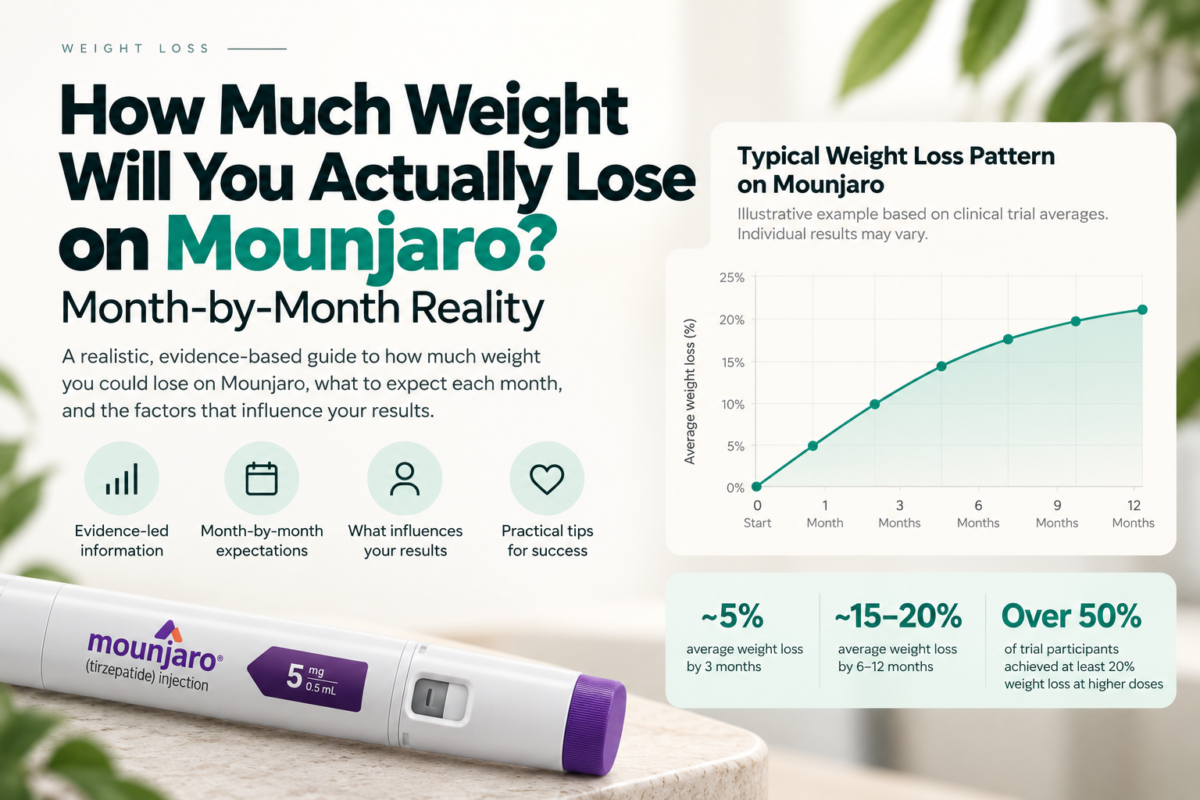
The SURMOUNT-1 trial, published in the New England Journal of Medicine, enrolled over 2,500 adults with obesity or overweight. After 72 weeks of treatment, the average weight loss was:
- 5 mg dose: 16% of body weight
- 10 mg dose: 21.4% of body weight
- 15 mg dose: 22.5% of body weight
The first-month results represent just the beginning of a curve that continues to steepen over the following months. The most significant losses typically occur between months two and six, as the dose is titrated upward and the body’s metabolic response to the medication deepens.
It is worth emphasising that these are averages. Some participants lost considerably more, and some lost less. Your result will be your own, and comparing it to a trial average, or to someone else’s social media post, is rarely helpful.
Factors That Influence Your First-Month Results
Understanding what accelerates or slows early weight loss can help you set appropriate expectations and make informed choices about your lifestyle during treatment.
Your Starting Weight and BMI
People with a higher starting BMI often lose more in absolute terms during the first month. This is partly because a larger body requires more energy at rest, and partly because there is simply more excess weight to mobilise. However, the percentage of body weight lost tends to be broadly similar across starting weights over the full course of treatment.
What You Eat Matters More Than You Might Think
Mounjaro reduces your appetite, but it does not change the nutritional content of your food. Patients who focus on the quality of their diet, prioritising protein, vegetables, fibre-rich carbohydrates, and healthy fats, tend to lose more fat and retain more muscle than those who simply eat less of whatever they were eating before.
Protein is particularly important. Aiming for 1.2 to 1.6 grams of protein per kilogram of body weight daily helps preserve lean muscle mass during weight loss, which is critical for maintaining your metabolic rate and long-term health. Good sources include lean meat, fish, eggs, Greek yoghurt, beans, lentils, and tofu.
Physical Activity
Exercise is not strictly necessary for the medication to work, but it significantly enhances results. Regular physical activity, particularly resistance training, helps protect muscle mass during weight loss, improves insulin sensitivity, and supports mental health. The NHS recommends at least 150 minutes of moderate-intensity activity per week for adults.
If you are not currently active, start slowly. Walking, swimming, or light cycling are all excellent options. The best exercise is the one you will actually do consistently.
Hormonal Factors
Hormones play a significant role in how your body responds to weight-loss treatment. Women between 30 and 45 may notice that their menstrual cycle affects the scales; water retention in the luteal phase (the two weeks before a period) can temporarily mask fat loss. This is not a stall; it is normal physiology.
Conditions like PCOS, hypothyroidism, and insulin resistance can also influence the rate of weight loss. If you have any of these, let your prescriber know so they can factor them into your treatment plan.
Stress and Sleep
Chronic stress elevates cortisol, a hormone that promotes fat storage, particularly around the abdomen. Poor sleep disrupts the hunger hormones ghrelin and leptin, potentially counteracting some of the appetite-suppressing effects of the medication. Prioritising seven to nine hours of sleep and finding effective ways to manage stress can meaningfully improve your results.
Underlying Health Conditions and Medications
Certain medications, including some antidepressants, corticosteroids, beta-blockers, and insulin, can promote weight gain or make loss more difficult. Conditions like type 2 diabetes, depression, and chronic pain can also affect your trajectory. Your prescriber will consider these factors when assessing your progress.
Managing Side Effects During Month One
The first month is when side effects are most likely to occur. The good news is that they are usually mild and temporary. The most commonly reported include:
- Nausea: Affects up to 1 in 4 patients initially. Eating smaller, more frequent meals and avoiding very fatty or rich foods can help. Nausea typically eases within the first week or two.
- Constipation: Common due to the slower gastric emptying. Increasing fibre gradually, drinking plenty of water, and staying physically active all help. If persistent, a gentle over-the-counter laxative may be appropriate. Speak to your prescriber or pharmacist.
- Bloating and indigestion: Often linked to eating portions that are still too large for your reduced appetite. Listen to your body’s new fullness signals.
- Fatigue: Can occur in the first week or two as your body adjusts. If you are eating significantly less than before, ensure you are getting adequate nutrition. Undereating can cause tiredness.
Serious side effects are rare but include pancreatitis and severe allergic reactions. The NHS tirzepatide information page provides a full list of side effects and guidance on when to seek urgent medical help.
What Not to Do in Your First Month
Enthusiasm is great, but some common mistakes can undermine your early progress:
- Do not crash diet. The medication reduces your appetite naturally. You do not need to impose severe calorie restriction on top of that. Eating too little can lead to muscle loss, fatigue, nutritional deficiencies, and ultimately a slower metabolism.
- Do not weigh yourself every day. Daily weight fluctuations are driven by water, sodium intake, bowel habits, and hormones, not by meaningful changes in body fat. Weekly weigh-ins (same day, same conditions) give a much more accurate picture.
- Do not compare your results to others. Everyone’s body, metabolism, medical history, and starting point are different. Focus on your own trajectory.
- Do not skip doses. Consistency is important for maintaining steady medication levels in your body. Set a weekly reminder if it helps.
When to Speak to Your Prescriber
Your first month should include at least one check-in with your prescriber, either in person or via a remote consultation. Contact them sooner if you experience:
- Severe or persistent nausea or vomiting that prevents you from eating or drinking
- Intense abdominal pain, particularly if it radiates to your back
- Signs of an allergic reaction: difficulty breathing, swelling of the face or throat, severe rash
- Symptoms of low blood sugar if you also take other diabetes medications: shakiness, sweating, confusion
- No appetite suppression at all after two to three weeks (this is uncommon but worth discussing)
Considering Mounjaro for Weight Loss?
Evernu offers clinician-led weight management programmes with ongoing support throughout your treatment. Our medical team will assess your eligibility, guide your dose progression, and help you get the most from your first month and beyond.
Take your free eligibility assessment
Beyond Month One: What Comes Next
If month one is the foundation, months two through six are where the building happens. After your dose increases to 5 mg (and potentially 7.5 mg, 10 mg, or 15 mg in subsequent months), most patients experience a steepening of their weight-loss curve.
Patients who stay the course, maintain healthy habits, and attend regular reviews with their prescriber typically achieve the most sustainable and significant results. Weight management is not a sprint. It is a long-term health investment, and the first month is simply the first step.
Frequently Asked Questions
Is losing 2% to 4% in a month considered good on Mounjaro?
Yes. A loss of 2% to 4% of body weight in the first month is consistent with clinical trial data and is considered a healthy, sustainable rate. Weight loss typically accelerates in the following months as the dose increases. Losing weight too quickly in the early weeks can actually be counterproductive, risking muscle loss and nutritional deficiencies.
Will I lose more weight once my dose increases?
Most patients do experience greater weight loss at higher doses. The SURMOUNT-1 trial showed that participants on the 15 mg dose lost an average of 22.5% of their body weight over 72 weeks, compared to 16% on the 5 mg dose. However, individual responses vary, and dose increases are made based on your clinical response and tolerability.
Why have I not lost any weight after two weeks on Mounjaro?
The starting dose of 2.5 mg is primarily for acclimatisation, not aggressive weight loss. Many patients see minimal scale movement in the first two weeks. Additionally, water retention, hormonal fluctuations, and changes in bowel habits can mask early fat loss. Focus on whether your appetite has changed and your eating habits have shifted, as these are the early signs the medication is working.
Can I drink alcohol during my first month on Mounjaro?
Moderate alcohol consumption is not contraindicated, but be aware that alcohol provides empty calories, can increase nausea (which is already common in the first month), and may lower your inhibitions around food choices. Many patients find their tolerance for alcohol decreases while on Mounjaro. If you do drink, keep it moderate and account for it in your overall intake.
How does Mounjaro compare to Wegovy for first-month weight loss?
Both medications start at low doses in the first month, so initial weight loss is comparable, typically in the 2% to 4% range. The differences between Mounjaro and Wegovy become more apparent over longer treatment periods, with Mounjaro’s dual-receptor mechanism generally producing greater average weight loss in clinical trials. Your prescriber can help determine which medication is most appropriate for your individual circumstances.
Start Your Weight Loss Journey with Expert Support
Our prescribers across England, Scotland, Wales, and Northern Ireland are here to help you make an informed decision about treatment. No pressure, no obligation.
Learn more about our weight loss treatments