High blood pressure is often called the “silent killer” — and for good reason. It rarely produces noticeable symptoms, yet it significantly increases your risk of heart attack, stroke, kidney disease, and vascular dementia. In the UK, approximately one in three adults has high blood pressure, and many of them do not know it.
Home blood pressure monitoring is one of the most effective things you can do for your cardiovascular health. It gives you a more accurate picture of your blood pressure than occasional GP readings, helps you track the effect of lifestyle changes or medication, and puts you in control of an aspect of your health that genuinely matters.
This guide covers everything you need to know: how to choose a monitor, how to take accurate readings, what the numbers mean, and when you should be concerned.
Why Monitor Blood Pressure at Home?
You might wonder why home monitoring matters when your GP can check your blood pressure at appointments. The answer is that a single reading in a clinical setting is often unreliable — and home monitoring solves several important problems:
White Coat Hypertension
Up to 30% of people who appear to have high blood pressure at the GP actually have normal blood pressure when measured in a relaxed home environment. This phenomenon, known as white coat hypertension, occurs because the stress and anxiety of a clinical visit temporarily elevates blood pressure. Without home monitoring, these individuals may be unnecessarily prescribed medication.
Masked Hypertension
The opposite problem also exists. Some people have normal readings at the GP surgery but consistently elevated blood pressure at home or during daily life. This is called masked hypertension, and it carries the same cardiovascular risks as sustained high blood pressure. Home monitoring can detect this pattern that would otherwise be missed.
Tracking Treatment Effectiveness
If you are taking blood pressure medication, home monitoring allows you and your doctor to assess whether the medication is working effectively across the entire day, not just at the moment you happen to be sitting in the surgery. This leads to better-informed prescribing decisions and more effective blood pressure control.
Motivation for Lifestyle Changes
Seeing the direct impact of exercise, diet, stress reduction, and weight loss on your blood pressure readings is powerfully motivating. Many people find that home monitoring gives them a tangible reason to maintain healthy habits because they can see the results in real time.
Choosing the Right Blood Pressure Monitor
Not all blood pressure monitors are created equal. The accuracy, reliability, and ease of use vary significantly between devices. Here is what to look for when buying a home blood pressure monitor in the UK:
Upper Arm vs Wrist Monitors
The British Hypertension Society (BHS) and NICE (National Institute for Health and Care Excellence) recommend upper arm monitors for home use. Wrist monitors are convenient but tend to be less accurate because the arteries in the wrist are narrower and the readings are more sensitive to arm position.
If you do use a wrist monitor, you must hold your wrist at heart level during every reading — even a small deviation can produce inaccurate results.
Validated Devices
Look for monitors that have been clinically validated according to international protocols. The British and Irish Hypertension Society maintains a list of validated monitors at stridebp.org. Common validated brands available in the UK include:
- Omron — Widely regarded as the gold standard for home monitoring. The Omron M3 and M7 models are frequently recommended by GPs.
- Kinetik — A UK brand that offers BHS-validated monitors at various price points.
- Beurer — German manufacturer with several validated upper arm models.
- A&D Medical — Used in many clinical settings and available for home use.
Cuff Size Matters
An incorrectly sized cuff is one of the most common causes of inaccurate home blood pressure readings. If the cuff is too small, your readings will be falsely high. If it is too large, they will be falsely low.
Measure the circumference of your upper arm at the midpoint between your shoulder and elbow:
- Small cuff: 22–26cm arm circumference
- Standard cuff: 22–32cm arm circumference
- Large cuff: 32–42cm arm circumference
Most monitors come with a standard cuff. If your arm circumference is above 32cm, you will need to purchase a large cuff separately — this is common and nothing to worry about, but it is essential for accurate readings.
Features Worth Having
- Memory storage: Monitors that store your previous readings allow you to track trends without writing everything down.
- Irregular heartbeat detection: Some monitors can alert you to an irregular pulse, which may indicate atrial fibrillation — a common condition that increases stroke risk.
- Bluetooth or app connectivity: Higher-end monitors can sync with smartphone apps, making it easy to share data with your GP or track long-term trends.
- Dual user mode: Useful if two people in the household want to track their blood pressure separately.
How to Take an Accurate Blood Pressure Reading at Home
The technique you use when taking your blood pressure matters enormously. Poor technique is the leading cause of inaccurate home readings. Follow these steps every time:
Before You Measure
- Avoid caffeine, alcohol, and exercise for 30 minutes before taking a reading. All three temporarily elevate blood pressure.
- Empty your bladder. A full bladder can raise systolic blood pressure by 10–15 mmHg.
- Do not smoke for 30 minutes beforehand. Nicotine causes an acute increase in blood pressure.
- Sit quietly for 5 minutes before taking your reading. Rushing straight from activity to measurement will give falsely high results.
During the Measurement
- Sit in a chair with your back supported. Do not sit on a sofa or bed where your back is unsupported — this can elevate readings.
- Place your feet flat on the floor. Crossing your legs can increase systolic blood pressure by 2–8 mmHg.
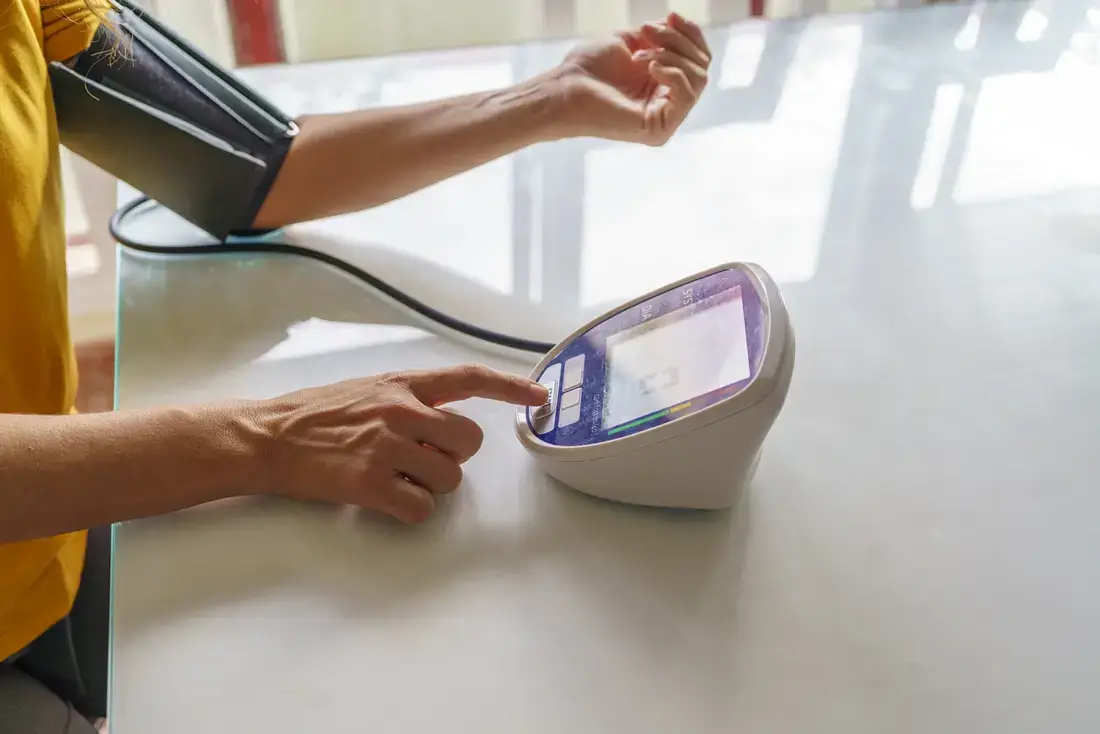
- Rest your arm on a flat surface at heart level. If your arm is hanging by your side or held above heart level, the reading will be inaccurate.
- Place the cuff on bare skin, not over clothing. Rolling up a tight sleeve that constricts the arm can affect the reading.
- Position the cuff correctly. The bottom edge of the cuff should sit approximately 2cm above the crease of your elbow. The artery marker on the cuff (usually indicated by a line or arrow) should align with the brachial artery on the inner side of your arm.
- Do not talk or move during the measurement. Talking can raise systolic blood pressure by 10–15 mmHg.
How Many Readings Should You Take?
NICE guidelines recommend taking two readings, one minute apart, and recording the lower of the two. The first reading is often slightly higher due to the initial cuff inflation, so the second reading tends to be more representative.
For the most accurate picture, take readings:
- Twice daily: Once in the morning (before medication, before breakfast) and once in the evening
- For at least 4 consecutive days if establishing a baseline or assessing treatment changes — ideally 7 days
- Discard the first day’s readings when calculating your average, as people tend to be more anxious on the first day of monitoring
Understanding Your Blood Pressure Numbers
A blood pressure reading consists of two numbers, expressed as one over the other (for example, 120/80 mmHg). Understanding what these numbers mean is essential for interpreting your home readings.
Systolic Pressure (Top Number)
This is the pressure in your arteries when your heart beats and pushes blood out. It is the higher of the two numbers and is considered the more important indicator of cardiovascular risk, particularly in adults over 50.
Diastolic Pressure (Bottom Number)
This is the pressure in your arteries between heartbeats, when your heart is filling with blood. While less emphasised than systolic pressure in recent guidelines, a consistently elevated diastolic pressure still indicates increased cardiovascular risk.
Blood Pressure Categories for Home Readings
It is important to note that home blood pressure targets are slightly lower than clinic targets because readings taken in a relaxed home environment are typically 5–10 mmHg lower than those taken in a clinical setting. The categories below apply to home readings:
| Category |
Systolic (mmHg) |
Diastolic (mmHg) |
| Normal |
Below 130 |
Below 85 |
| Elevated / Pre-hypertension |
130–134 |
85–89 |
| Stage 1 Hypertension |
135–149 |
90–99 |
| Stage 2 Hypertension |
150 or above |
100 or above |
| Severe / Hypertensive Crisis |
Above 180 |
Above 120 |
For context, the NHS target for most adults is a home blood pressure below 135/85 mmHg. If you have diabetes or kidney disease, your target may be lower — discuss this with your GP.
What Affects Blood Pressure Readings?
Blood pressure is not a static number. It fluctuates throughout the day in response to various factors. Understanding these fluctuations helps you interpret your home readings more accurately:
- Time of day: Blood pressure typically follows a circadian pattern — lowest during sleep, rising sharply in the early morning, and peaking in the late afternoon. Morning readings before medication are particularly important for assessing treatment effectiveness.
- Stress and anxiety: Emotional stress triggers the release of adrenaline, which temporarily raises blood pressure. If you have had a stressful day, your evening reading may be higher than usual.
- Meals: Blood pressure can drop slightly after eating as blood is diverted to the digestive system. Taking readings 30 minutes after meals gives more consistent results.
- Temperature: Cold temperatures cause blood vessels to constrict, raising blood pressure. Warm environments have the opposite effect. This is one reason why blood pressure tends to be higher in winter across the UK.
- Physical activity: Exercise temporarily raises blood pressure during and immediately after exertion, but regular exercise lowers resting blood pressure over time. Wait at least 30 minutes after exercise before taking a reading.
- Alcohol: A single drink may temporarily lower blood pressure, but regular or heavy drinking raises it. Binge drinking can cause acute spikes.
- Medication timing: If you take blood pressure medication, the timing of your reading relative to your dose matters. Readings taken just before your next dose (trough readings) are the most informative for assessing whether your medication is working throughout the full 24-hour period.
How Often Should You Check Blood Pressure at Home?
The frequency of home monitoring depends on your situation:
If You Have Been Diagnosed with High Blood Pressure
Monitor twice daily (morning and evening) for the first week after diagnosis or any medication change. After that, monitor at least two to three days per week, taking two readings each time. This provides enough data points for your GP to assess trends without making monitoring feel like a burden.
If You Are on Blood Pressure Medication
Monitor regularly, particularly in the week after any dose change. Once your blood pressure is well controlled and stable, you can reduce to weekly monitoring, but continue to take a full week of twice-daily readings before each GP review.
If You Have Normal Blood Pressure but Risk Factors
If you have risk factors for high blood pressure — family history, overweight, diabetes, high salt diet, sedentary lifestyle, African or Caribbean heritage, age over 65 — checking your blood pressure at home once every three to six months is a sensible precaution.
If You Are Taking GLP-1 Weight Loss Medication
Weight loss often improves blood pressure, sometimes significantly. If you are on blood pressure medication and losing weight with Ozempic, Wegovy, or Mounjaro, regular home monitoring is particularly important because your blood pressure medication may need to be reduced as your weight drops. Signs that your blood pressure medication dose may be too high include dizziness, lightheadedness, and fatigue — all of which can be detected early through regular home monitoring.
When to Contact Your GP About Your Readings
Home blood pressure monitoring is a tool for awareness, not a replacement for medical advice. Contact your GP or NHS 111 if:
- Your average home reading is consistently above 135/85 mmHg over a week of monitoring
- You get a single reading above 180/120 mmHg — rest for 5 minutes and retake. If it remains this high, contact your GP urgently or call 111
- You experience symptoms alongside high readings: severe headache, chest pain, visual disturbances, confusion, or difficulty breathing. Call 999 if these occur.
- Your readings are significantly lower than expected (below 90/60 mmHg with symptoms of dizziness or fainting) — this may indicate your medication dose needs adjusting
- You notice a consistent upward trend in your readings over several weeks
- There is a significant difference between your left and right arms (more than 15 mmHg systolic difference, which can indicate peripheral artery disease)
Ambulatory Blood Pressure Monitoring: When Home Monitoring Is Not Enough
In some cases, your GP may recommend ambulatory blood pressure monitoring (ABPM) — a test where you wear a portable blood pressure cuff for 24 hours that takes automatic readings every 15–30 minutes during the day and every 30–60 minutes at night.
ABPM is considered the gold standard for diagnosing hypertension because it captures your blood pressure across all activities — sleeping, working, eating, exercising — and eliminates the white coat effect entirely. NICE guidelines recommend ABPM to confirm a diagnosis of high blood pressure before starting treatment.
You may be referred for ABPM if:
- Your GP suspects white coat hypertension
- Your home and clinic readings differ significantly
- Your blood pressure is difficult to control with medication
- Your GP wants to assess your nocturnal blood pressure (blood pressure during sleep), which is an important cardiovascular risk factor
Lifestyle Changes That Lower Blood Pressure
Home monitoring becomes most valuable when paired with lifestyle modifications that can genuinely reduce your blood pressure. The following changes have strong evidence behind them:
- Weight loss: For every kilogram of weight lost, systolic blood pressure drops by approximately 1 mmHg. A 10kg weight loss can reduce blood pressure by as much as a single medication.
- Regular exercise: 150 minutes of moderate aerobic activity per week (brisk walking, cycling, swimming) can reduce systolic blood pressure by 5–8 mmHg.
- Reducing salt intake: The average UK adult consumes 8.1g of salt per day — well above the recommended 6g maximum. Reducing salt intake to below 6g can lower systolic blood pressure by 2–8 mmHg.
- Increasing potassium: Potassium helps counteract the blood pressure-raising effect of sodium. Good sources include bananas, sweet potatoes, spinach, avocados, and beans.
- Limiting alcohol: The NHS recommends no more than 14 units per week, spread across several days. Reducing alcohol intake from heavy to moderate levels can lower systolic blood pressure by 2–4 mmHg.
- Managing stress: Chronic stress contributes to sustained blood pressure elevation. Regular relaxation practices, adequate sleep, and addressing sources of ongoing stress can all contribute to lower readings.
- DASH diet: The Dietary Approaches to Stop Hypertension (DASH) eating plan, rich in fruits, vegetables, whole grains, and lean protein while low in saturated fat and salt, has been shown to reduce systolic blood pressure by 8–14 mmHg.
Blood Pressure Monitoring Across the UK
Access to blood pressure monitoring and hypertension services varies across the UK. In England, many pharmacies offer free blood pressure checks as part of the NHS Pharmacy Blood Pressure Check Service. In Scotland, Wales, and Northern Ireland, similar pharmacy and community services are available, though the specific programmes may differ.
Regardless of where you live in the UK, a home blood pressure monitor gives you consistent, reliable access to your own data without relying on appointment availability. This is particularly valuable in areas where GP access is limited or waiting times are long.
Key Takeaways for Home Blood Pressure Monitoring
- Choose a clinically validated upper arm monitor with the correct cuff size
- Sit quietly for 5 minutes before measuring, with your back supported and feet flat on the floor
- Take two readings one minute apart and record the lower reading
- Monitor at the same times each day for consistency — morning and evening is ideal
- Your home target is below 135/85 mmHg (slightly lower than the clinic target of 140/90)
- Contact your GP if your average reading is consistently above 135/85 or if you get a reading above 180/120
- Use your readings to track the impact of lifestyle changes and medication
- Home monitoring is especially important during weight loss, as blood pressure medication may need adjusting
- Keep a log of your readings to share with your GP at appointments
Monitoring your blood pressure at home takes less than five minutes a day. For a simple, inexpensive habit, few things offer a better return on investment for your long-term health.