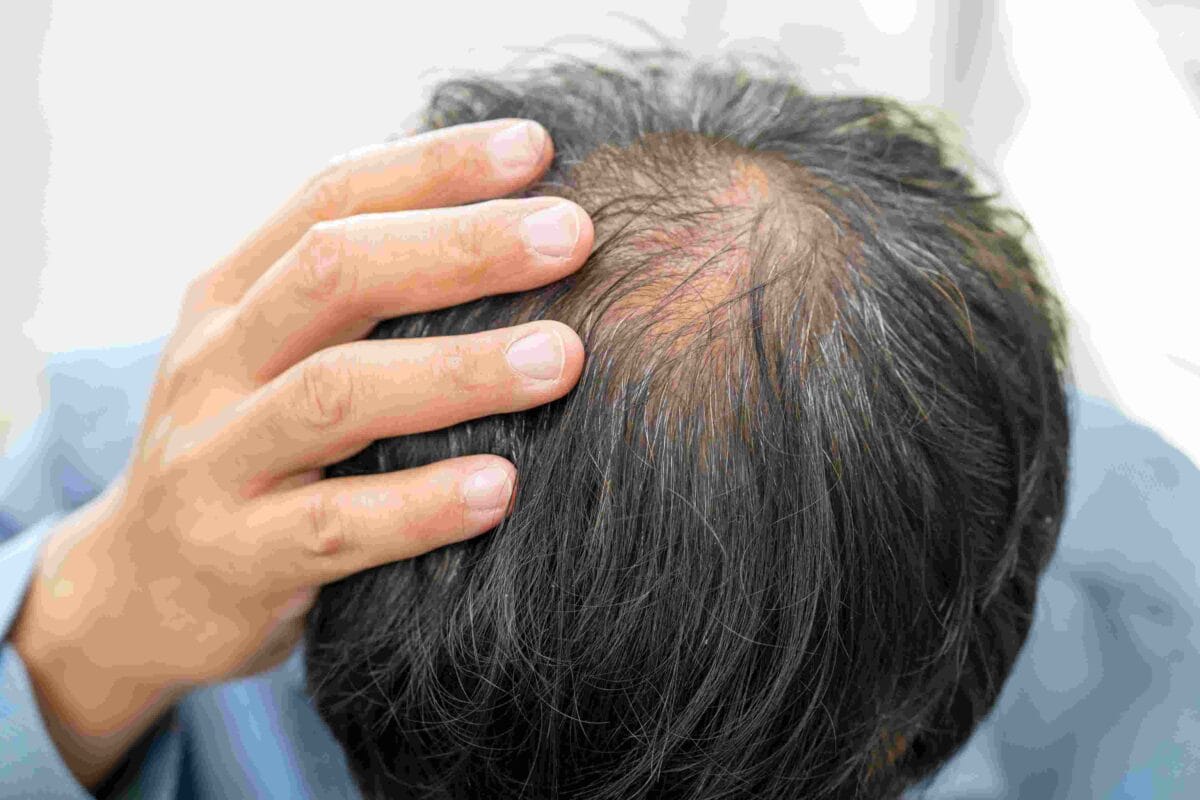
If you’re noticing your hair thinning, your parting widening, or your hairline creeping backwards, you’re not alone. Male pattern baldness (androgenetic alopecia) affects approximately 50% of men by age 50 and around 80% by age 70. It’s the most common form of hair loss in men, and it’s driven by a combination of genetics and hormones — not by anything you’ve done wrong.
The good news is that effective, evidence-based treatments exist. The less good news is that the internet is awash with unproven remedies, misleading claims, and outright myths that make it difficult to separate what actually works from what doesn’t. This article cuts through the noise. We’ll cover the proven medical treatments, the lifestyle factors that genuinely matter, the myths that don’t hold up to scrutiny, and when it’s time to seek professional help.
Understanding Male Pattern Baldness
Before discussing treatments, it helps to understand what’s actually happening when you lose your hair. Male pattern baldness isn’t caused by stress, hat-wearing, excessive shampooing, or poor circulation. It’s a genetically determined sensitivity of certain hair follicles to a hormone called dihydrotestosterone (DHT).
The DHT Mechanism
DHT is produced when the enzyme 5-alpha-reductase converts testosterone into its more potent form. In men with a genetic predisposition to hair loss, DHT binds to androgen receptors on hair follicles in specific areas of the scalp — typically the crown, mid-scalp, and frontal hairline. This triggers a process called follicular miniaturisation:
- The hair growth phase (anagen) progressively shortens
- The follicle physically shrinks with each growth cycle
- Thick, pigmented terminal hairs are gradually replaced by fine, nearly invisible vellus hairs
- Eventually, the follicle may stop producing visible hair altogether
This process unfolds over years and decades, following predictable patterns (the Norwood-Hamilton scale). The hair on the back and sides of the head is genetically resistant to DHT, which is why it’s preserved even in advanced baldness. For a more detailed explanation of this process, see our article on how finasteride works for hair loss.
The Importance of Early Treatment
One of the most critical things to understand about hair loss treatment is that it’s far easier to maintain existing hair than to regrow lost hair. Once a follicle has been dormant for years, it becomes increasingly difficult to reactivate. Starting treatment earlier — when thinning is first noticed — produces significantly better long-term outcomes than waiting until hair loss is advanced.
Proven Medical Treatments
There are currently three medications with strong clinical evidence for treating male pattern baldness. Two of these — finasteride and minoxidil — have been used for decades and have extensive safety and efficacy data. The third, dutasteride, is a more potent alternative to finasteride.
1. Finasteride (Propecia)
Finasteride is a prescription medication that works by blocking the Type II 5-alpha-reductase enzyme, reducing scalp DHT levels by approximately 60-70%. It’s taken as a 1mg tablet daily.
What the evidence shows:
- In clinical trials, 83-90% of men maintained or increased their hair count over two years, compared to continued loss in the placebo group
- Approximately 65% of men experience some degree of regrowth, not just maintenance
- Results are typically visible from around 3-6 months, with full assessment at 12 months
- Finasteride is most effective at the crown and mid-scalp, with more modest results at the hairline
Side effects:
- Sexual side effects (decreased libido, erectile difficulties) occur in approximately 2-4% of men
- The majority of side effects resolve after stopping the medication
- Detailed information is available in our finasteride side effects guide
NICE and NHS guidance: Finasteride is recommended by NICE as a treatment option for male pattern baldness. It’s available on private prescription in the UK. For comprehensive information, see our complete guide to Propecia.
2. Minoxidil (Regaine)
Minoxidil is a topical treatment available over the counter in the UK. It comes in liquid (2% and 5%) and foam (5%) formulations, applied directly to the scalp.
What the evidence shows:
- The 5% formulation is superior to 2% and is the standard recommendation for men
- Clinical trials have demonstrated statistically significant increases in hair count compared to placebo, particularly on the crown
- Results typically become visible at 4-6 months, with full assessment at 12 months
- Minoxidil works through a different mechanism to finasteride — it’s a vasodilator that stimulates follicle activity and extends the growth phase
Side effects:
- Scalp irritation (itching, dryness, flaking) — more common with the liquid formulation
- Initial shedding in the first 2-4 weeks (a positive sign — see our detailed article on how long minoxidil takes to work)
- Unwanted facial hair if the solution contacts the face
- Rare: dizziness or light-headedness
Key consideration: Minoxidil must be used continuously to maintain results. If you stop, the benefits reverse over several months, and hair loss resumes at its natural rate.
3. Dutasteride (Avodart)
Dutasteride is a more potent 5-alpha-reductase inhibitor that blocks both Type I and Type II isoforms of the enzyme, reducing serum DHT by approximately 90% (compared to 70% with finasteride). It’s taken as a 0.5mg capsule daily.
What the evidence shows:
- Head-to-head studies have shown dutasteride to be modestly more effective than finasteride for increasing hair count
- Particularly beneficial for men who have not responded adequately to finasteride alone
- Licensed for benign prostatic hyperplasia (BPH) in the UK; its use for hair loss is off-label but well-supported by clinical evidence
Side effects:
- Similar to finasteride but with slightly higher rates of sexual side effects
- Very long half-life (4-5 weeks) means side effects take longer to resolve after stopping
- Full details in our dutasteride side effects guide
Combination Therapy
Using finasteride (or dutasteride) alongside minoxidil is widely considered the most effective approach to treating male pattern baldness. Because the two treatments work through entirely different mechanisms — one reducing DHT, the other stimulating follicle growth directly — they complement each other rather than duplicating efforts. Clinical evidence supports that combination therapy produces superior results to either treatment used alone.
Other Evidence-Based Approaches
Low-Level Laser Therapy (LLLT)
Low-level laser therapy uses red light wavelengths to stimulate cellular activity in hair follicles. Devices include laser caps, combs, and helmets designed for home use.
The evidence: Several randomised controlled trials have shown modest improvements in hair density with LLLT. The FDA has cleared several LLLT devices for hair loss treatment. However, the evidence base is smaller and less robust than for finasteride or minoxidil, and results tend to be more modest. LLLT is best considered as a supplementary treatment rather than a standalone solution.
Platelet-Rich Plasma (PRP)
PRP therapy involves drawing blood, concentrating the platelets, and injecting the platelet-rich plasma into the scalp. The growth factors in platelets are thought to stimulate follicle regeneration.
The evidence: Emerging evidence from small clinical trials is cautiously positive, but the quality of evidence is variable. Standardisation of protocols (concentration, injection technique, frequency) is lacking, which makes it difficult to make definitive recommendations. PRP is offered by some clinics but is not currently recommended by NICE for hair loss.
Hair Transplant Surgery
For men with stable hair loss who want to restore coverage in specific areas, hair transplant surgery (FUE or FUT) can produce excellent, permanent results. The procedure moves DHT-resistant follicles from the back and sides of the head to thinning areas.
Important considerations:
- Best suited for men whose hair loss has stabilised — transplanting into actively receding areas can produce unnatural results as surrounding native hair continues to thin
- Medical treatment (finasteride/minoxidil) is typically recommended alongside transplant surgery to protect remaining native hair
- Results take 12-18 months to fully develop
- Quality of results depends heavily on the skill of the surgeon
Lifestyle Factors: What Actually Helps
While male pattern baldness is fundamentally a genetic and hormonal condition, certain lifestyle factors can influence overall hair health and potentially support treatment outcomes.
Nutrition
A balanced diet that provides adequate protein, iron, zinc, and vitamins D and B12 supports healthy hair growth. Genuine nutritional deficiencies — particularly iron deficiency, which is less common in men but does occur — can contribute to hair thinning independently of male pattern baldness. A blood test can identify any deficiencies worth addressing.
However, it’s crucial to understand that dietary changes alone will not stop male pattern baldness. No amount of protein, supplements, or “superfoods” will counteract the hormonal mechanism driving follicular miniaturisation. Nutrition supports overall hair health; it doesn’t treat androgenetic alopecia.
Stress Management
Chronic stress can contribute to a type of hair loss called telogen effluvium — a diffuse, temporary shedding triggered by physical or emotional stress. This is distinct from male pattern baldness, though the two can coexist and compound each other. Managing stress through exercise, sleep, and appropriate support isn’t a treatment for MPB, but it can prevent additional, stress-related hair loss from making the situation worse.
Sleep
Adequate sleep supports hormonal regulation, including testosterone and growth hormone production. While poor sleep won’t cause male pattern baldness, chronic sleep deprivation can disrupt overall hormonal balance and potentially accelerate hair thinning.
Exercise
Regular physical activity improves circulation, supports hormonal health, and reduces stress — all of which create a better environment for hair health. There’s no evidence that any specific type of exercise directly treats male pattern baldness, but general fitness supports the body’s overall functioning, including hair growth.
Smoking
Several studies have identified an association between smoking and increased severity of male pattern baldness. The proposed mechanisms include impaired blood flow to the scalp, oxidative damage to follicles, and hormonal disruption. Quitting smoking is beneficial for virtually every aspect of your health, and your hair may benefit too.
What Doesn’t Work: Common Myths Debunked
The hair loss industry is enormous, and it’s full of products and claims that don’t stand up to scrutiny. Here are some of the most persistent myths:
Biotin Supplements for Male Pattern Baldness
Biotin (vitamin B7) is one of the most heavily marketed supplements for hair loss. The reality? There is no clinical evidence that biotin supplementation improves male pattern baldness in people who are not biotin deficient. Biotin deficiency is genuinely rare in people with a normal diet. The vast majority of biotin supplement sales are driven by marketing, not science.
If you suspect a deficiency, a blood test can confirm it. But taking biotin “just in case” won’t help with androgenetic alopecia.
Saw Palmetto
Saw palmetto is a herbal supplement sometimes marketed as a “natural alternative to finasteride” because it may have weak 5-alpha-reductase inhibitory properties. However, clinical evidence for its effectiveness in treating hair loss is limited and inconsistent. The degree of DHT suppression it provides is far lower than pharmaceutical options, and the quality of available studies is generally poor.
Caffeine Shampoos
Some in vitro (laboratory) studies have shown that caffeine can stimulate hair follicle growth in isolated samples. However, the leap from “works in a petri dish” to “works on your head” is enormous. There is insufficient clinical evidence to recommend caffeine shampoos as a treatment for male pattern baldness. They won’t do any harm, but they’re unlikely to make a meaningful difference.
Scalp Massages and Dermarolling
Scalp massage is sometimes promoted as a way to increase blood flow to follicles and stimulate growth. While there is limited, very preliminary research suggesting that consistent scalp massage might have a modest effect on hair thickness, the evidence is far from conclusive, and any effect would be minimal compared to proven medical treatments.
Microneedling (dermarolling) has somewhat stronger preliminary evidence — some small studies suggest it may enhance the absorption and effectiveness of topical minoxidil. However, it should be considered experimental and supplementary, not a standalone treatment.
“Natural” or “Organic” Hair Loss Treatments
Products marketed as “natural” or “organic” hair loss solutions — including various oils, herbal extracts, and proprietary blends — almost universally lack rigorous clinical evidence. The word “natural” is a marketing term, not a scientific one. The most effective treatments for hair loss are pharmaceutical precisely because they’ve been through the clinical trial process that demonstrates they actually work.
Expensive Shampoos and Conditioners
No shampoo or conditioner can treat male pattern baldness. These products clean and condition the hair shaft — they don’t affect the follicle or the hormonal process driving miniaturisation. Use whatever shampoo you prefer; just don’t expect it to stop hair loss.
When to See a Doctor
While male pattern baldness is the most common cause of hair loss in men, it’s not the only cause. You should seek medical advice if:
- Hair loss is sudden or rapid — male pattern baldness is gradual. Sudden hair loss may indicate telogen effluvium, alopecia areata, or another condition
- You’re losing hair in patches — circular or irregular patches of hair loss suggest alopecia areata, which is an autoimmune condition with different treatment approaches
- Hair loss is accompanied by other symptoms — fatigue, weight changes, skin changes, or other health issues alongside hair loss may indicate an underlying medical condition such as thyroid disease or iron deficiency
- You’re under 18 — hair loss in teenagers warrants medical investigation to rule out underlying causes
- You have scalp symptoms — itching, redness, scaling, or pain may indicate a dermatological condition (such as seborrhoeic dermatitis or scalp psoriasis) that needs treatment in its own right
- You want to start treatment — prescription treatments like finasteride require a clinical consultation. Getting proper advice ensures you’re using the right treatment for your specific pattern of loss
A good starting point is a comprehensive blood test to rule out underlying causes like thyroid dysfunction, iron deficiency, or hormonal imbalances. Our clinicians can help you identify the cause of your hair loss and recommend appropriate treatment.
Starting Treatment with Evernu
At Evernu, we offer clinician-led hair loss treatments including prescription finasteride and combination therapy options. Our approach is straightforward:
- Clinical assessment — we review your hair loss history, pattern, and health background
- Personalised treatment plan — based on your specific pattern and preferences
- Ongoing monitoring — we don’t just prescribe and disappear. Our clinicians are available throughout your treatment
- Evidence-based approach — we only recommend treatments with genuine clinical evidence behind them
If you’re ready to take the first step, visit our hair loss treatments page to learn more about what we offer and how to get started.
Key Takeaways
- Male pattern baldness is caused by genetic sensitivity to DHT — not by lifestyle factors, hats, or shampoo
- The three proven medical treatments are finasteride (oral), minoxidil (topical), and dutasteride (oral). All have strong clinical evidence supporting their effectiveness
- Combination therapy (finasteride + minoxidil) produces the best results
- Starting early is critical — it’s far easier to maintain existing hair than to regrow hair from dormant follicles
- Lifestyle factors (nutrition, stress, sleep, exercise, smoking) support overall hair health but won’t stop male pattern baldness on their own
- Most “natural” remedies and supplements (biotin, saw palmetto, caffeine shampoos) lack credible evidence for treating androgenetic alopecia
- Seek medical advice if hair loss is sudden, patchy, or accompanied by other symptoms — not all hair loss is male pattern baldness
- Effective treatment requires commitment — results take months to become visible, and most treatments need to be continued to maintain their benefits
Hair loss is a common condition, but common doesn’t mean you have to accept it. With the right treatment, started at the right time, the vast majority of men can slow, stop, or partially reverse their hair loss. The key is to act on evidence, not marketing — and to start sooner rather than later.