You have started Mounjaro (tirzepatide), you are injecting it reliably every week, and yet the scales are barely moving. It is frustrating, demoralising, and you are starting to wonder: is Mounjaro not working for me?
Before you assume the medication has failed, take a breath. In the vast majority of cases, a weight loss stall on Mounjaro is not because the drug is ineffective — it is because something else in the equation needs adjusting. Tirzepatide is the most powerful weight loss medication available in the UK right now, but it is not a magic injection. It creates the conditions for weight loss by suppressing appetite and slowing digestion. What you do with those conditions determines whether the weight actually comes off.
This guide covers the eight most common reasons people hit a Mounjaro plateau, and what you can do about each one.
1. You Are Still on a Starting Dose
This is the most common reason people feel that Mounjaro is not working, and it is the easiest to address. Everyone begins Mounjaro on the 2.5 mg starting dose, which is a titration dose — its purpose is to let your body adjust to the medication, not to drive significant weight loss.
Many patients lose little or no weight during their first four weeks on 2.5 mg. Some even gain a pound or two due to normal daily fluctuations. This is completely normal and does not predict your long-term results.
The clinical trials that produced Mounjaro’s impressive weight loss figures — averages of 15% to 22% of body weight in the SURMOUNT-1 trial — were conducted over 72 weeks, with participants gradually titrated up to therapeutic doses of 5 mg, 10 mg, or 15 mg. The meaningful weight loss began at 5 mg and accelerated from there.
What to do: If you are on 2.5 mg or have only recently moved to 5 mg, be patient. Discuss the dose escalation schedule with your prescriber at your next review. Most patients need to reach at least 5 mg — and often 7.5 mg or higher — before seeing consistent, meaningful weight loss.
2. You Are Not Eating Enough Protein
This is, in our clinical experience, the most underestimated barrier to weight loss on GLP-1 medications. Here is why protein matters so much:
When Mounjaro suppresses your appetite, you eat less overall. But if the reduced food you are eating is primarily carbohydrates and fats with insufficient protein, your body will break down muscle tissue to meet its amino acid needs. Less muscle means a lower basal metabolic rate — meaning you burn fewer calories at rest. Over time, this metabolic slowdown can completely offset the calorie deficit created by eating less.
The research is clear: patients who maintain adequate protein intake during GLP-1 treatment lose more fat, preserve more muscle, and have better long-term outcomes than those who do not. A growing body of evidence suggests that protein intake is one of the strongest predictors of body composition outcomes on weight loss medication.
How much protein do you need?
Aim for 1.2 to 1.6 grams of protein per kilogram of body weight per day. For a person weighing 90 kg, that is 108 to 144 grams daily. Spread across three meals and a snack, that works out to roughly 30 to 40 grams per meal.
To put that in perspective, 30 grams of protein looks like:
- 150g chicken breast
- 170g salmon fillet
- 200g Greek yoghurt plus a scoop of protein powder
- 4 large eggs
- 250g cottage cheese
If you are not tracking your protein intake, start today. Many people are shocked to discover they are eating half of what they need.
What to do: Use a simple food tracking app for one week to establish your baseline protein intake. Then focus on eating protein first at every meal. If you are struggling to hit your target because your appetite is very suppressed, consider a whey protein shake as a convenient supplement.
3. You Are Not Exercising — Particularly Resistance Training
Mounjaro handles the calorie deficit. But exercise, specifically resistance training, addresses something the medication cannot: preserving and building lean muscle mass.
Without resistance training, up to 25–30% of weight lost on GLP-1 medications can come from muscle rather than fat. This is not just a cosmetic concern — it has real metabolic consequences. Every kilogram of muscle you lose reduces the number of calories your body burns at rest, making continued weight loss progressively harder and future weight regain more likely.
Resistance training sends a clear signal to your body: this muscle is being used — do not break it down. Combined with adequate protein, it is the most effective way to ensure that the weight you lose is predominantly fat.
You do not need to become a gym enthusiast or lift heavy weights. Two to three sessions per week of basic resistance exercises is sufficient. This can include:
- Bodyweight exercises at home: squats, lunges, press-ups, planks
- Resistance band workouts
- Light dumbbell routines
- Group fitness classes like Body Pump
- Swimming, which provides natural resistance
Walking is excellent for general health and mood, but it does not provide the resistance stimulus needed to preserve muscle. Think of walking as a complement to resistance training, not a replacement.
What to do: If you are not currently doing any resistance training, start with two sessions per week. Local leisure centres across the UK often offer beginner classes, and there are excellent free resources online. The NHS strength exercises guide is a good starting point.
4. Calorie Creep Is Undermining Your Deficit
Mounjaro reduces your appetite, but it does not eliminate it entirely. And over time, as your body adjusts to the medication, some of the initial appetite suppression may soften. This is when “calorie creep” tends to set in — a gradual, often unconscious increase in calorie intake that erodes the deficit the medication created.
Common sources of calorie creep include:
- Liquid calories: Coffees with milk and syrup, fruit juices, smoothies, and alcohol all contain significant calories that many people do not mentally register as “eating.”
- Grazing: Small amounts of food throughout the day — a biscuit here, a handful of crisps there — can add up to several hundred unexpected calories.
- Portion drift: Gradually returning to pre-medication portion sizes without realising it.
- Weekend eating: Being disciplined Monday to Friday but relaxing at weekends, effectively wiping out the weekly deficit.
- Cooking oils and sauces: A generous pour of olive oil (120 calories per tablespoon) or a thick layer of mayonnaise can silently add hundreds of calories to an otherwise healthy meal.
What to do: Track your food intake honestly for one week. You do not need to count calories permanently, but a short period of tracking often reveals the specific areas where extra calories are sneaking in. Once identified, they are usually straightforward to address.
5. Your Expectations Are Unrealistic
Social media has created wildly distorted expectations of what weight loss on Mounjaro looks like. Viral before-and-after posts showing dramatic transformations in a few weeks are not representative of the typical experience — and many of them are misleading or outright fabricated.
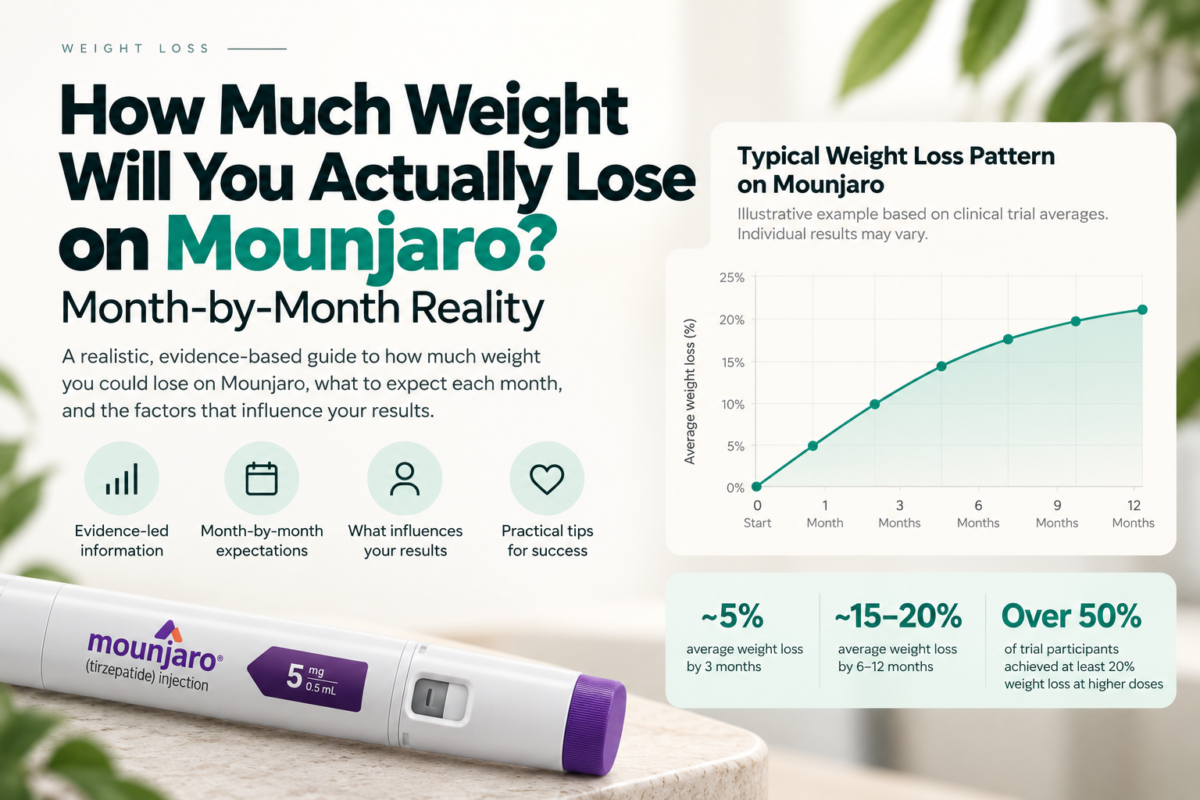
Here is what the clinical evidence actually shows for realistic weight loss on tirzepatide:
- Month 1 (2.5 mg): 0–3% of body weight. For someone at 100 kg, that is 0–3 kg.
- Month 3 (typically 5–7.5 mg): 5–8% of body weight
- Month 6 (therapeutic dose): 10–15% of body weight
- Month 12 (continued treatment): 15–22% of body weight
These are averages. Some people lose more, some less. And the trajectory is not a straight line — weight loss comes in waves, with periods of rapid loss interspersed with plateaus that can last days or even weeks. This is normal physiology, not a sign that the medication has stopped working.
A “plateau” that lasts one to two weeks is not a true stall. Your body is adjusting, redistributing water, and potentially losing fat while gaining small amounts of muscle (particularly if you are exercising). The scales do not tell the whole story.
What to do: Weigh yourself once per week at the same time (first thing in the morning, after using the toilet, before eating or drinking). Track the trend over weeks and months, not day to day. Take body measurements and progress photos — these often show changes that the scales miss.
6. Medical Factors Are at Play
Certain medical conditions and medications can make weight loss significantly harder, even with Mounjaro. If you are doing everything right and still not seeing results, it is worth investigating whether an underlying factor is involved.
Common medical barriers to weight loss include:
- Hypothyroidism: An underactive thyroid slows metabolism and can make weight loss difficult. A simple blood test from your GP can check thyroid function. If you have not had your thyroid tested recently, request one.
- Polycystic ovary syndrome (PCOS): Hormonal imbalances associated with PCOS increase insulin resistance and can impede weight loss. Mounjaro helps with insulin sensitivity, but PCOS may require additional management.
- Medications that promote weight gain: Some commonly prescribed medications work against weight loss efforts. These include certain antidepressants (mirtazapine, paroxetine, amitriptyline), antipsychotics, beta-blockers, corticosteroids, and some diabetes medications (insulin, sulphonylureas). Do not stop any prescribed medication without consulting your doctor, but do discuss whether alternatives might be available.
- Insulin resistance: Even without a diabetes diagnosis, significant insulin resistance can slow weight loss. Mounjaro improves insulin sensitivity, but severely insulin-resistant individuals may respond more slowly initially.
- Menopause: Hormonal changes during perimenopause and menopause can make weight loss harder, particularly around the midsection.
- Chronic stress and cortisol: Sustained high cortisol levels promote fat storage, particularly visceral fat around the abdomen. Addressing chronic stress is not just about wellbeing — it can directly impact your weight loss outcomes.
What to do: If you suspect a medical factor is involved, discuss it with your prescriber. Basic blood tests (thyroid function, HbA1c, fasting insulin) can identify or rule out the most common culprits.
7. You Are Not Sleeping Enough
Sleep is the most overlooked factor in weight management. Research consistently shows that poor sleep — defined as consistently getting fewer than seven hours per night — has measurable negative effects on weight loss:
- Increased hunger hormones: Sleep deprivation raises ghrelin (the hunger hormone) and lowers leptin (the satiety hormone), increasing appetite even while on appetite-suppressing medication.
- Increased cravings: Poor sleep specifically increases cravings for high-calorie, high-carbohydrate foods. The reward centres in the brain become more responsive to food stimuli when you are tired.
- Reduced insulin sensitivity: Even one week of sleep restriction can measurably impair insulin sensitivity, working against one of Mounjaro’s key mechanisms.
- Lower motivation to exercise: When you are exhausted, the gym is the first thing to go.
- Higher cortisol: Sleep deprivation raises cortisol levels, which promotes fat storage and muscle breakdown.
The NHS recommends seven to nine hours of sleep per night for adults. If you are consistently falling short, improving your sleep may be as impactful as any dietary change.
What to do: Prioritise a consistent sleep schedule. Go to bed and wake up at the same time every day, including weekends. Limit screens for an hour before bed. Keep your bedroom cool (16–18°C is ideal). If you suspect a sleep disorder such as sleep apnoea — which is common in people with higher body weight — speak to your GP about a referral.
8. Your Medication Timing or Technique Needs Adjusting
How and when you inject Mounjaro can affect how well it works. While the medication provides a steady level of appetite suppression throughout the week, some patients find that certain approaches work better than others.
Things to check:
- Injection technique: Mounjaro should be injected subcutaneously (into the fatty tissue just under the skin) in the abdomen, thigh, or upper arm. If the injection goes too deep (into muscle) or too shallow (into the skin surface), absorption may be affected. Your prescriber or pharmacist can review your technique.
- Injection site rotation: Injecting in the same spot repeatedly can cause lipodystrophy — changes in the fatty tissue that affect absorption. Rotate between different sites.
- Consistency: Inject on the same day each week. While the exact time of day is less important, maintaining a consistent schedule helps maintain steady drug levels.
- Storage: Before first use, Mounjaro pens should be stored in the fridge (2–8°C). Once in use, they can be kept at room temperature (up to 30°C) for up to 21 days. Exposure to extreme heat or freezing can degrade the medication.
What to do: If you have not had your injection technique reviewed recently, ask your prescriber to observe you at your next appointment. Even experienced patients sometimes develop habits that affect absorption.
What About a True Mounjaro Plateau?
If you have been on a stable dose for eight weeks or more, you are eating adequate protein, you are exercising, your sleep is good, and the scales have genuinely not moved for three to four consecutive weeks, you may be experiencing a true pharmacological plateau.
This can happen when your body reaches a new equilibrium — the calorie deficit created by the medication is now matched by your reduced energy expenditure at a lower body weight. Your smaller body simply needs fewer calories to maintain itself.
Options at this point include:
- Dose increase: If you are not yet on the maximum dose (15 mg), increasing the dose may restart weight loss by further reducing appetite. This is a clinical decision that should be made with your prescriber.
- Dietary review: Recalculate your protein and calorie needs based on your current weight. What worked at 100 kg may not be appropriate at 85 kg.
- Exercise adjustment: Increasing the intensity or frequency of your exercise can boost your calorie expenditure and break through a plateau.
- Patience: Sometimes plateaus resolve on their own after two to four weeks as the body recalibrates. Continuing to do the right things consistently often yields results, even when the scales suggest otherwise.
The Evernu Approach: Mid-Cycle Check-ins and Ongoing Support
At Evernu, we do not simply prescribe Mounjaro and leave you to figure it out. Our weight loss programme includes mid-cycle check-ins specifically designed to identify and address the issues described in this article before they become entrenched problems.
Our clinical team reviews your progress, protein intake, exercise habits, and any side effects at regular intervals. If the medication does not appear to be working optimally, we investigate why — rather than simply increasing the dose and hoping for the best.
We also take a protein-first, exercise-first approach. This means we focus on optimising your nutrition and physical activity alongside the medication, because clinical evidence consistently shows that patients who combine GLP-1 treatment with adequate protein and resistance training achieve significantly better outcomes than those who rely on the medication alone.
Weight loss medication is a powerful tool, but it is most effective as part of a comprehensive programme that addresses all the factors that influence your results.
Key Takeaways
- The most common reason for not losing weight on Mounjaro is being on a dose too low to produce meaningful weight loss — be patient with the titration schedule
- Inadequate protein intake is the most underrated barrier to results — aim for 1.2–1.6g per kg of body weight daily
- Resistance training is essential for preserving muscle mass and maintaining your metabolic rate
- Calorie creep (liquid calories, grazing, weekend eating) can silently erase your deficit
- Social media creates unrealistic expectations — refer to clinical trial data for what is genuinely achievable
- Medical conditions and certain medications can impede weight loss even on Mounjaro
- Sleep deprivation directly sabotages weight loss through hormonal and metabolic disruption
- A true plateau lasting three to four weeks may require a dose adjustment, dietary review, or exercise change
- Regular check-ins with your prescriber help identify and address problems early