If you have been trying to lose weight through diet and exercise alone and the results have been disappointing, you are not in a small minority. For a significant number of people, lifestyle changes — while absolutely important — are not sufficient on their own to achieve meaningful, lasting weight loss. This is not a character flaw. It reflects the complex biology of weight regulation, where genetics, hormones, metabolism, and appetite control all play roles that willpower cannot simply override.
The good news is that the landscape of weight loss treatments available in the UK has changed dramatically in recent years. A new generation of prescription medications has shown results that would have seemed implausible a decade ago. But navigating the options — understanding what is available, who qualifies, how they work, and what to realistically expect — can feel overwhelming.
This guide provides an honest, evidence-based overview of the weight loss treatments currently available in the UK, from prescription medications to surgical options, so you can make an informed decision about what might be right for you.
Why Lifestyle Changes Sometimes Are Not Enough
Before discussing treatments, it is worth understanding why losing weight is so difficult for so many people. This is not about blame — it is about biology.
Your body has sophisticated systems designed to maintain its current weight. When you reduce calorie intake, your body responds by increasing hunger hormones (particularly ghrelin), reducing satiety hormones, slowing your metabolic rate, and making food more psychologically rewarding. From an evolutionary perspective, this made perfect sense — in environments where food was scarce, the ability to resist weight loss was a survival advantage.
In the modern world, where calorie-dense food is readily available and physical activity has been engineered out of daily life, these same mechanisms work against people trying to lose weight. Research consistently shows that the majority of people who lose weight through diet alone regain it within two to five years — not because they lack discipline, but because their biology is actively fighting the change.
This is the context in which weight loss treatments exist. They are not shortcuts or cheats. They are medical interventions that address the biological factors that make sustained weight loss so challenging.
Prescription Weight Loss Medications in the UK
Several prescription medications are currently approved for weight management in the UK. They fall into two main categories: oral medications and injectable medications.
Orlistat (Oral Medication)
Orlistat is the only weight loss medication available in pill form in the UK. It has been available for over two decades and works through a fundamentally different mechanism than newer medications.
How it works: Orlistat blocks the action of lipase, an enzyme in your digestive system that breaks down dietary fat. By inhibiting this enzyme, orlistat prevents approximately one-third of the fat you consume from being absorbed. The unabsorbed fat passes through your digestive system and is excreted.
Available forms:
- Prescription strength (120mg): Available as Xenical or generic orlistat, taken three times daily with meals
- Lower strength (60mg): Available as Alli or Orlos, which can be purchased from pharmacies without a prescription for adults with a BMI of 28 or above
Expected results: Clinical trials show that orlistat users typically lose around 5% of their starting body weight within three months when combined with a reduced-calorie diet. This means someone weighing 100kg might expect to lose around 5kg.
Who can use it: Orlistat is typically prescribed to people with a BMI of 30 or above, or 28 and above if they have weight-related health conditions. Most prescribers require evidence that you have previously attempted weight loss through diet and exercise.
Side effects: The most common side effects are gastrointestinal and directly related to the mechanism of action: oily or fatty stools, oily spotting on underwear, flatulence, and urgent bowel movements. These effects are more pronounced when eating high-fat meals. While unpleasant, many people find they act as a behavioural incentive to reduce fat intake. Orlistat can also reduce the absorption of fat-soluble vitamins (A, D, E, and K), so a daily multivitamin taken at bedtime is usually recommended.
Honest assessment: Orlistat produces modest results compared to newer medications. It requires strict adherence to a low-fat diet to avoid unpleasant side effects, and the weight loss it produces is generally less dramatic than what newer injectable medications can achieve. However, it remains a viable option for some patients, particularly those who prefer an oral medication or are not eligible for newer treatments.
GLP-1 Receptor Agonist Injections
The most significant development in weight loss treatment in recent years has been the emergence of GLP-1 receptor agonist medications. These drugs have fundamentally changed what is medically achievable in terms of weight loss.
GLP-1 (glucagon-like peptide-1) is a hormone naturally produced in your gut after eating. It plays a key role in appetite regulation, blood sugar control, and feelings of satiety. GLP-1 receptor agonist medications mimic this hormone, but at levels that produce a much more pronounced effect on appetite and food intake.
Three injectable weight loss medications are currently approved and available in the UK:
Semaglutide (Wegovy)
How it works: Semaglutide is a GLP-1 receptor agonist that reduces appetite, increases feelings of fullness, and slows gastric emptying (the rate at which food leaves your stomach). It acts on receptors in the brain’s appetite control centres, fundamentally changing how hungry you feel.
Dosing: Administered as a once-weekly self-injection using a pre-filled pen. The dose is gradually increased over 16 weeks to the maintenance dose of 2.4mg weekly, which helps minimise side effects.
Expected results: In clinical trials (the STEP programme), participants lost an average of approximately 15% of their body weight over 68 weeks. Some individuals achieved significantly more. For someone weighing 100kg, this represents an average loss of around 15kg.
Availability: Wegovy received NICE approval for NHS use in England and Wales, though availability through the NHS has been limited by supply constraints. It is more widely available through private healthcare providers and specialist weight management clinics.
Tirzepatide (Mounjaro)
How it works: Tirzepatide is a dual GIP/GLP-1 receptor agonist — meaning it activates two incretin hormone receptors rather than one. This dual mechanism appears to produce more powerful effects on appetite suppression and metabolic function than GLP-1 alone.
Dosing: Once-weekly self-injection, gradually titrated up over several months to the optimal maintenance dose (up to 15mg weekly).
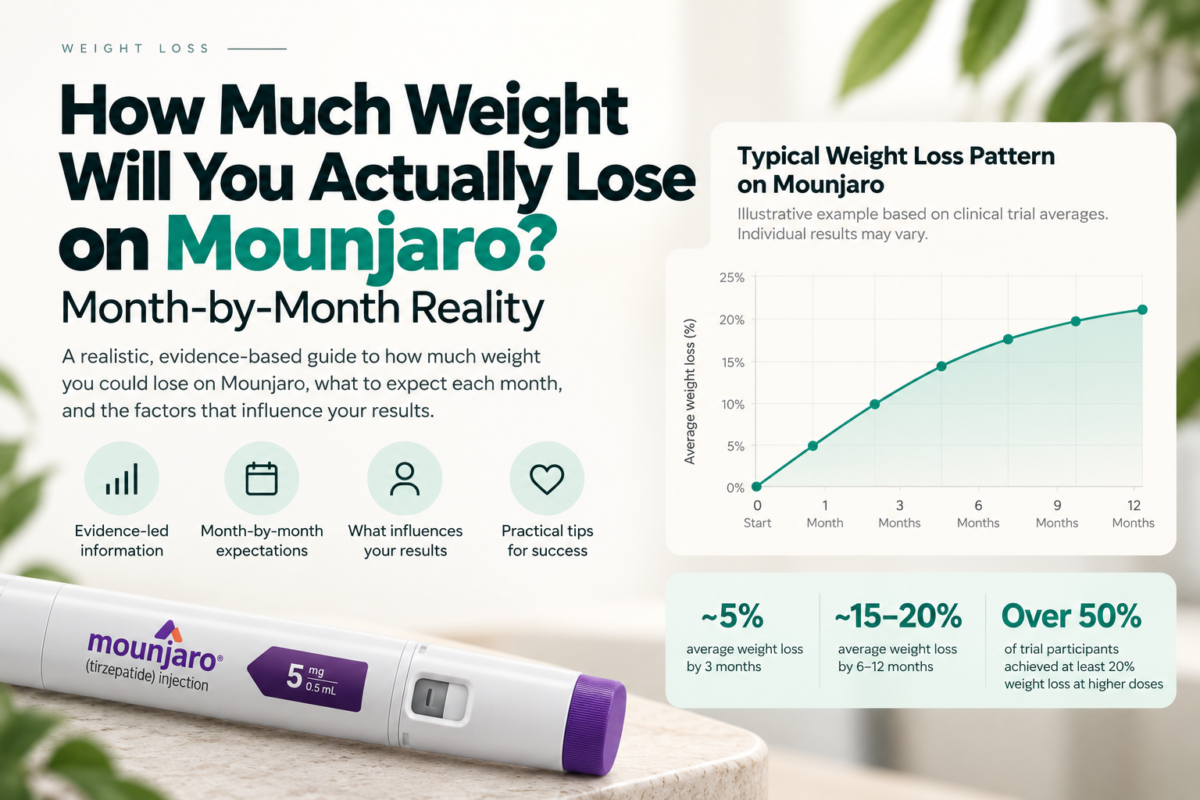
Expected results: Clinical trials (SURMOUNT programme) demonstrated average weight loss of approximately 20–22% of body weight at the highest dose over 72 weeks. This makes tirzepatide the most effective weight loss medication currently available. For someone weighing 100kg, average loss could be 20–22kg.
Availability: Mounjaro was initially licensed in the UK for type 2 diabetes but has received approval for weight management. Availability continues to expand through both NHS and private pathways.
Liraglutide (Saxenda)
How it works: Like semaglutide, liraglutide is a GLP-1 receptor agonist that reduces appetite and increases satiety. It was one of the first injectable weight loss medications to become widely available in the UK.
Dosing: Daily self-injection (compared to weekly for semaglutide and tirzepatide), gradually increased over five weeks to the maintenance dose of 3mg daily.
Expected results: Clinical trials showed average weight loss of approximately 8% of body weight over one year. While this is less than semaglutide or tirzepatide, it represents clinically meaningful weight loss for many people.
Availability: Widely available through private prescribers and some NHS weight management services across England, Scotland, Wales, and Northern Ireland.
Common Side Effects of GLP-1 Medications
All GLP-1 receptor agonist medications share a similar side effect profile, primarily gastrointestinal:
- Nausea — the most common side effect, particularly during dose escalation. Usually improves over time as your body adjusts.
- Vomiting and diarrhoea — can occur, especially at higher doses or after large meals.
- Constipation — some people experience the opposite of diarrhoea.
- Abdominal discomfort — bloating, cramping, or general stomach upset.
- Headache and fatigue — less common but reported by some users.
The gradual dose escalation built into all these medications is specifically designed to minimise these effects. Most people find that side effects are manageable and diminish significantly within the first few weeks at each dose level. Eating smaller meals, avoiding very fatty or rich foods, and staying hydrated can all help.
More serious side effects are rare but include pancreatitis, gallbladder problems, and (in preclinical studies) a theoretical risk related to thyroid tumours. Your prescribing clinician will discuss these with you and screen for any contraindications before starting treatment.
Who Qualifies for Prescription Weight Loss Treatment?
Eligibility criteria vary slightly between medications and prescribers, but the general requirements are:
- BMI of 30 or above (classified as obesity), OR
- BMI of 27 or above with at least one weight-related health condition (such as type 2 diabetes, high blood pressure, high cholesterol, or obstructive sleep apnoea)
- Previous attempts at weight loss through diet and exercise
- Commitment to lifestyle changes alongside medication — these treatments work best in combination with improved nutrition and regular physical activity
Certain conditions may preclude the use of specific medications. For example, GLP-1 receptor agonists are generally not suitable for people with a personal or family history of medullary thyroid carcinoma, or those with a history of pancreatitis. A thorough medical assessment is always required before starting treatment.
Medication vs Lifestyle: It Is Not Either/Or
One of the most important things to understand about prescription weight loss treatments is that they are not replacements for a healthy lifestyle. They are tools that work alongside dietary changes and increased physical activity.
In clinical trials, participants who combined medication with structured lifestyle programmes achieved better results than those using medication alone. The medications make it easier to eat less by reducing appetite and cravings, but the choices you make about what you eat and how active you are still matter enormously.
Think of it this way: these medications address the biological barriers to weight loss — the relentless hunger, the hormonal signals driving you to eat more. They level the playing field, making it possible for lifestyle changes to actually work the way they are supposed to. But they do not eliminate the need for those lifestyle changes.
How to Access Weight Loss Treatments in the UK
There are several pathways to accessing prescription weight loss medication:
Through Your GP
Your GP can prescribe weight loss medications, though NHS availability of newer injectable treatments has been limited in some areas due to supply issues and prescribing guidelines. If your GP is unable to prescribe directly, they may refer you to an NHS Tier 3 weight management service.
NHS Weight Management Services
Specialist NHS weight management services (Tier 3 and Tier 4) provide structured programmes that may include prescription medication alongside dietary counselling, psychological support, and exercise guidance. Waiting times for these services vary significantly across different parts of England, Scotland, Wales, and Northern Ireland.
Private Healthcare Providers
Private clinics and online healthcare providers offer more immediate access to prescription weight loss treatments. The advantage is convenience, shorter waiting times, and often more personalised ongoing support. The trade-off is cost, as you will pay for both the consultation and the medication.
When choosing a private provider, ensure they are regulated by the appropriate body (such as the RQIA, CQC, or equivalent), conduct proper medical assessments before prescribing, and provide ongoing clinical support rather than simply dispensing medication.
Explore Evernu’s clinician-led weight loss programme for a medically supervised approach that includes thorough eligibility assessment, personalised treatment plans, and ongoing clinical support.
Surgical Options: Bariatric Surgery
For people with severe obesity (BMI of 40 or above, or 35 and above with serious weight-related conditions), bariatric surgery may be appropriate. Common procedures include gastric bypass, sleeve gastrectomy, and gastric band surgery.
Bariatric surgery produces the most dramatic and sustained weight loss of any intervention — typically 25–35% of body weight, maintained long-term. However, it is major surgery with associated risks, requires lifelong dietary modifications, and is typically only considered after other approaches have been attempted.
NHS access to bariatric surgery involves meeting strict criteria and often lengthy waiting times. Private bariatric surgery is available but expensive. For most people exploring weight management options, medication-based treatments represent a more accessible and less invasive starting point.
What About Non-Prescription Products?
The weight loss supplement market in the UK is enormous, with countless products marketed as fat burners, appetite suppressants, metabolism boosters, and similar claims. It is important to approach these with a healthy scepticism.
The vast majority of non-prescription weight loss supplements have little or no robust clinical evidence supporting their effectiveness. Some contain ingredients that may cause side effects or interact with medications. Unlike prescription medications, supplements do not undergo the same rigorous testing and regulatory scrutiny.
If a supplement genuinely produced the kind of weight loss its marketing suggests, it would be prescribed by doctors, studied in clinical trials, and approved by regulatory authorities. The fact that these products sit on shop shelves alongside vitamins and protein powders tells you something about their level of evidence.
This is not to say that all supplements are worthless or dangerous — some, such as fibre supplements, may have modest benefits as part of a broader strategy. But they should not be confused with evidence-based medical treatments.
Making the Right Choice for You
Choosing a weight loss treatment is a personal decision that should be made with proper medical guidance. Here are some considerations:
- Start with lifestyle foundations: Whatever treatment you consider, a healthy diet and regular physical activity remain essential. No medication works well in isolation.
- Understand your eligibility: Your BMI, medical history, and previous weight loss attempts all factor into which treatments are appropriate for you.
- Be realistic about expectations: Even the most effective medications do not produce overnight results. Weight loss is gradual, and the goal is sustained, long-term change.
- Consider the long-term plan: Some medications are intended for long-term use, while others may be used for a defined period. Discuss with your clinician what happens when you stop treatment and how to maintain your results.
- Prioritise safety: Only use prescription medications under proper medical supervision, and choose regulated providers who conduct thorough assessments.
The Role of Hormonal Health in Weight Management
Weight management does not exist in isolation from the rest of your health. Hormonal imbalances can significantly affect your ability to lose weight and maintain a healthy body composition, even when you are doing everything else right.
Low testosterone in men is associated with increased body fat, reduced muscle mass, and a slower metabolic rate. Women experiencing perimenopause and menopause often find that hormonal changes lead to weight gain, particularly around the abdomen, despite no change in diet or exercise habits. Thyroid disorders, insulin resistance, and cortisol imbalances all play roles in weight regulation.
If you are struggling with weight despite genuine efforts with diet, exercise, and potentially weight loss medication, it is worth investigating whether hormonal factors are contributing. Addressing the underlying hormonal issue can make weight management significantly more achievable.
Frequently Asked Questions
Are weight loss injections safe?
GLP-1 receptor agonist injections (semaglutide, tirzepatide, liraglutide) have undergone extensive clinical trials involving tens of thousands of participants and have been approved by the MHRA for use in the UK. Like all medications, they carry potential side effects — most commonly gastrointestinal symptoms such as nausea — and are not suitable for everyone. A proper medical assessment before prescribing is essential to ensure they are safe and appropriate for your individual circumstances.
Can I get weight loss medication on the NHS?
Yes, though access varies by area and medication. Orlistat has been available on the NHS for many years. Semaglutide (Wegovy) has received NICE approval, and tirzepatide (Mounjaro) is also available through certain NHS pathways. However, supply constraints and local prescribing policies mean that NHS access to newer injectable treatments can be limited. Your GP can advise on what is available in your area, and referral to an NHS weight management service is another option.
How much weight can I expect to lose with medication?
Results vary between individuals and medications. As a general guide: orlistat produces average weight loss of around 5% of body weight, liraglutide (Saxenda) around 8%, semaglutide (Wegovy) around 15%, and tirzepatide (Mounjaro) around 20–22%. These are averages from clinical trials — individual results can be higher or lower. Weight loss is always greatest when medication is combined with lifestyle changes.
Do I have to take weight loss medication forever?
This depends on the individual and the medication. Some people use weight loss medication for a defined period to achieve their target weight, then transition to maintenance through lifestyle measures alone. Others may benefit from longer-term use to maintain their results. Research shows that weight regain is common after stopping medication, which is why ongoing lifestyle habits and, in some cases, continued treatment are important for long-term success. Your clinician will help you develop an appropriate plan.
What is the difference between Mounjaro and Wegovy?
Both are injectable weight loss medications administered once weekly, but they work through slightly different mechanisms. Wegovy (semaglutide) activates GLP-1 receptors, while Mounjaro (tirzepatide) activates both GLP-1 and GIP receptors (a dual agonist). In clinical trials, Mounjaro produced greater average weight loss than Wegovy, though both are highly effective. The best choice depends on your individual medical history, response to treatment, and your clinician’s recommendation.