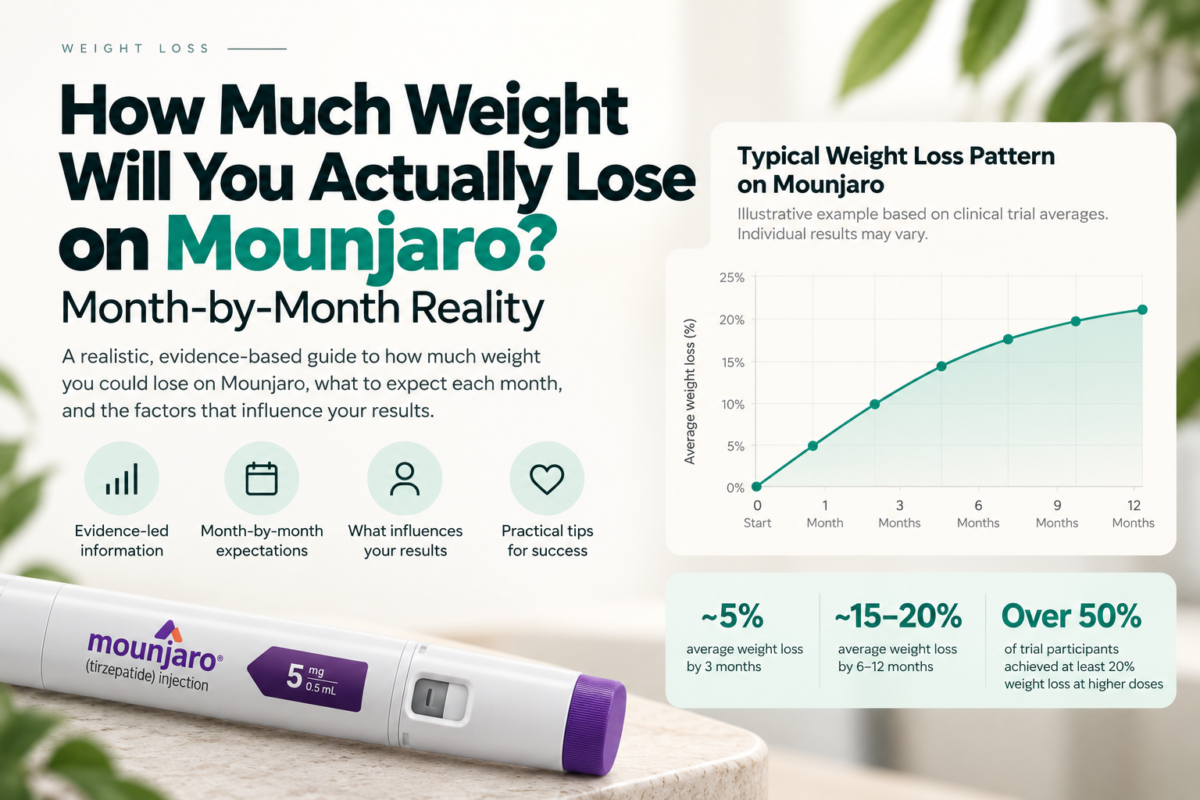
Setting a weight loss goal is the easy part. Achieving it — and maintaining the results — is where most people struggle. And if you have been through this cycle before — the initial motivation, the early results, the plateau, the gradual slide back to where you started — you already know that the standard advice to “eat less, move more” does not quite capture the complexity of what is involved.
This is not a guide that will promise you a transformation in 30 days or pretend that weight loss is simple. Instead, it offers a realistic, evidence-based framework for setting goals you can actually reach and building habits you can actually maintain. Because sustainable weight loss is not about dramatic short-term change — it is about finding an approach you can live with for the long haul.
Why Most Weight Loss Attempts Fail (And Why That Is Not Your Fault)
Before we talk about strategies, it is worth understanding why weight loss is so difficult. Not in the abstract, “calories in, calories out” sense — but in the lived, day-to-day reality of trying to change your eating habits while navigating a world that works against you.
Research tells us that approximately 80% of people who lose a significant amount of weight regain it within two to five years. This is not a statistic about individual failure. It is a reflection of powerful biological and environmental factors:
- Metabolic adaptation: When you lose weight, your body reduces its energy expenditure. Your metabolism slows, you burn fewer calories at rest, and your body becomes more efficient — meaning you need fewer calories to maintain your new weight than someone who has always been that weight.
- Hormonal resistance: Weight loss triggers changes in hunger and satiety hormones. Ghrelin (the hunger hormone) increases, while leptin (which signals fullness) decreases. These changes can persist for months or even years after weight loss, creating a persistent biological drive to eat more.
- Environmental pressure: We live in an environment where calorie-dense, highly palatable food is cheap, accessible, and heavily marketed. Portion sizes have grown substantially over the past few decades. Social occasions revolve around food. These pressures are constant and cumulative.
- Psychological factors: Stress, emotional eating, ingrained habits, and the psychological fatigue of sustained dietary restriction all contribute to the difficulty of maintaining weight loss.
Understanding these factors is not about making excuses. It is about approaching weight loss with realistic expectations and choosing strategies that work with your biology rather than against it.
Setting Goals That Actually Work
The way you frame your weight loss goals significantly influences your likelihood of achieving them. Vague aspirations like “I want to lose weight” or unrealistic targets like “I want to lose three stone by next month” set you up for disappointment.
Start With a Realistic Target
The NHS and most clinical guidelines recommend a weight loss rate of 0.5 to 1kg (1 to 2 pounds) per week. This might not sound dramatic, but it adds up: 2 to 4kg per month, 6 to 12kg in three months, 25 to 50kg over a year.
An initial goal of losing 5–10% of your body weight is both achievable and clinically meaningful. For someone weighing 90kg, that is 4.5 to 9kg. Research shows that even this modest level of weight loss can produce significant improvements in blood pressure, blood sugar control, cholesterol levels, joint pain, and energy.
Focus on Process Goals, Not Just Outcome Goals
Outcome goals (“I want to lose 10kg”) are important for direction, but they are not something you can directly control on any given day. Process goals are the daily and weekly actions that lead to the outcome:
- “I will eat a portion of vegetables with every main meal”
- “I will walk for 30 minutes on five days this week”
- “I will prepare lunch at home instead of buying it at work”
- “I will drink water instead of sugary drinks during the working day”
Process goals are actionable, measurable, and within your control. They also build the habits that sustain weight loss long after the initial motivation has faded.
Set a Meaningful Timeframe
Give yourself enough time to reach your goal at a healthy rate. If you want to lose 15kg at 0.5–1kg per week, you are looking at roughly four to seven months. Planning for this timeframe is more realistic — and more sustainable — than trying to achieve it in six weeks.
Building a Sustainable Diet (Not Going on One)
The distinction between “going on a diet” and “changing your diet” is critical. Diets — in the traditional sense of a temporary restriction you endure until you reach a target — almost always lead to regain. The eating pattern that helps you lose weight needs to be one you can maintain indefinitely, with adjustments, as your normal way of eating.
Principles of Sustainable Eating
Whole foods as the foundation: Build your meals around minimally processed foods: vegetables, fruits, lean proteins (chicken, fish, eggs, legumes, tofu), wholegrains (oats, brown rice, wholemeal bread), and healthy fats (olive oil, nuts, avocado). These foods are more nutrient-dense, more satiating, and generally lower in calories per portion than highly processed alternatives.
Protein at every meal: Protein is the most satiating macronutrient and helps preserve muscle mass during weight loss. Aim for a source of protein at every meal and snack: Greek yoghurt with breakfast, chicken or chickpeas in your lunch, fish or lentils at dinner.
Generous vegetables: Vegetables are low in calories, high in fibre, and take up space on your plate and in your stomach. Filling half your plate with vegetables is one of the simplest strategies for reducing calorie intake without feeling deprived.
Mindful portions: You do not need to weigh every morsel, but developing an awareness of portion sizes is valuable. Using smaller plates, serving food rather than eating from the pot or packet, and pausing halfway through a meal to check your hunger level are simple techniques that can reduce intake without formal calorie counting.
Room for enjoyment: Any eating pattern that eliminates all the foods you enjoy is not sustainable. Include the foods you love — in moderation and with awareness. A square or two of chocolate after dinner, a meal out at the weekend, a slice of birthday cake — these are part of a normal, healthy relationship with food.
Practical Meal Planning
Planning does not need to be elaborate. A few minutes at the start of each week thinking about what you will eat — and making sure you have the ingredients — dramatically reduces impulsive, calorie-dense choices. Some practical approaches:
- Batch cook on weekends: Prepare a large pot of soup, a curry, or a grain salad that provides several lunches or dinners through the week
- Keep staples stocked: Eggs, tinned beans, frozen vegetables, wholemeal bread, oats — simple ingredients that can become quick, healthy meals
- Plan for busy days: If you know certain days are hectic, plan simpler meals or have leftovers ready. The alternative is usually a takeaway or convenience food
- Shop with a list: Going to the supermarket without a plan and on an empty stomach is a reliable recipe for buying things you do not need
Exercise: Finding What You Will Actually Do
The NHS recommends at least 150 minutes of moderate-intensity physical activity per week, plus strength training on at least two days. This is sound advice for overall health, but when it comes to weight loss, the most important factor is finding activity you will consistently do — not the theoretically “optimal” exercise programme that you abandon after a fortnight.
Cardiovascular Activity
Any activity that raises your heart rate counts. Walking, cycling, swimming, dancing, gardening, playing with your children — these all burn calories and improve cardiovascular health. You do not need a gym membership or expensive equipment.
Walking deserves particular mention because it is the most accessible form of exercise available. It requires no equipment, no special skills, and can be done almost anywhere. A brisk 30-minute walk burns around 150–200 kcal and can be easily incorporated into a daily routine: walking to work, a lunchtime stroll, an evening walk around the neighbourhood. Across towns and cities in England, Scotland, Wales, and Northern Ireland, simply getting outside for a regular walk remains one of the most effective and underrated exercise habits.
Strength Training
Strength training is often overlooked in weight loss programmes, but it serves a crucial function: preserving and building muscle mass. When you lose weight through calorie restriction alone, a proportion of that weight loss comes from muscle. Strength training helps ensure that the weight you lose is predominantly fat.
Muscle tissue burns more calories at rest than fat tissue, so maintaining or increasing your muscle mass supports a higher metabolic rate. This matters particularly during weight loss, when metabolic adaptation is working to reduce your energy expenditure.
Strength training does not have to mean heavy weights in a gym. Bodyweight exercises (squats, push-ups, lunges), resistance bands, or even carrying shopping bags and gardening all count.
Non-Exercise Activity
Your formal exercise sessions are only part of the picture. NEAT (Non-Exercise Activity Thermogenesis) — the energy you burn through everyday activities like walking around your house, fidgeting, standing, and doing housework — can account for a significant proportion of your total daily calorie expenditure.
Small changes to increase NEAT can add up: taking stairs instead of lifts, walking during phone calls, standing rather than sitting where possible, walking to the shops instead of driving. These do not feel like exercise, but they contribute meaningfully to your overall energy expenditure.
The Psychology of Weight Loss
The mental side of weight loss is often the most challenging and the least discussed. Your mindset, habits, and emotional relationship with food all play central roles in determining whether you succeed.
Mindful Eating
Mindful eating is not a diet technique — it is a way of paying attention to what and how you eat. It means eating without distraction (not in front of the television or while scrolling your phone), noticing the taste and texture of your food, eating slowly enough to recognise when you are full, and distinguishing between physical hunger and emotional or habitual eating.
Research consistently shows that people who eat mindfully tend to consume fewer calories naturally, without the need for rigid calorie counting or food rules.
Managing Emotional Eating
If you eat in response to stress, boredom, sadness, or anxiety, you are not alone. Emotional eating is extremely common and is one of the primary reasons people struggle to maintain a calorie deficit. Food provides genuine (if temporary) comfort — it triggers the release of dopamine in the brain, providing a brief sense of pleasure and relief.
Addressing emotional eating means developing alternative coping strategies: going for a walk, calling a friend, journaling, practising relaxation techniques, or simply sitting with the emotion and recognising that it will pass. It does not mean never eating for comfort again — but it means reducing how often food is your default response to difficult feelings.
Dealing With Setbacks
Setbacks are inevitable. A weekend of overindulgence, a stressful week where exercise falls by the wayside, a holiday where routine goes out the window. The difference between people who achieve long-term weight loss and those who do not is not whether they have setbacks — it is how they respond to them.
The most destructive response is the “all or nothing” mindset: “I have ruined my diet, so I might as well give up.” A single day of overeating does not undo weeks of progress. The most constructive response is simple: acknowledge what happened, understand why, and get back to your usual habits at the next meal. Not next Monday. The next meal.
Sleep and Stress
Poor sleep and chronic stress are both independently associated with weight gain and difficulty losing weight. Sleep deprivation increases ghrelin (hunger hormone) and decreases leptin (satiety hormone), making you hungrier and less able to recognise fullness. Chronic stress elevates cortisol, which promotes fat storage, particularly around the abdomen, and increases cravings for calorie-dense foods.
Prioritising sleep (seven to nine hours for most adults) and finding effective ways to manage stress are not luxuries or afterthoughts in a weight loss plan. They are fundamental components.
Monitoring Progress Without Obsessing
Tracking your progress helps you stay accountable and make adjustments when needed, but it is important to do so in a way that supports rather than undermines your wellbeing.
The Scale: Useful but Imperfect
Weekly weigh-ins (same day, same time, same conditions) can track overall trends. However, weight fluctuates naturally by 1–2kg day to day due to water retention, food in your digestive system, hormonal cycles, and other factors. A single weigh-in tells you almost nothing. Trends over weeks and months are what matter.
If daily weighing causes anxiety or obsessive behaviour, reduce to weekly or fortnightly, or stop altogether and use other measures.
Other Measures of Progress
- Body measurements: Waist circumference, in particular, is a useful indicator of health-related fat loss
- How your clothes fit: Often the most noticeable indicator of change
- Energy levels: Improvements in energy, stamina, and sleep quality
- Fitness progress: Being able to walk further, climb stairs more easily, or lift heavier weights
- Blood markers: Improvements in blood pressure, blood sugar, and cholesterol (measurable through GP checks)
- Photographs: Progress photos taken at monthly intervals can reveal changes that are invisible day to day
When to Consider Medical Support
If you have been consistently following a balanced diet, exercising regularly, managing stress and sleep, and still not achieving meaningful weight loss after three to six months, it may be time to explore whether additional support is needed.
Several factors can make weight loss significantly more difficult regardless of lifestyle efforts:
- Hormonal imbalances: Thyroid conditions, PCOS, low testosterone, and menopausal changes can all affect metabolism and weight regulation
- Insulin resistance: A precursor to type 2 diabetes that makes it harder for your body to use calories efficiently
- Medications: Certain medications (including some antidepressants, steroids, and contraceptives) can promote weight gain
- Metabolic adaptation: After significant weight loss or prolonged dieting, your body may have adapted in ways that make further loss very difficult
Modern weight loss medications, particularly GLP-1 receptor agonists, have transformed what is achievable for people with obesity. These medications are not replacements for lifestyle changes — they are evidence-based tools that address the biological barriers that lifestyle changes alone cannot overcome.
If you feel you have exhausted lifestyle approaches and want to explore whether medical treatment could help, speaking with a clinician who understands weight management is a sensible next step. Learn more about Evernu’s clinician-led weight loss programme to see how medically supported weight loss could work for you.
The Long Game: Maintaining Your Results
Reaching your goal weight is an achievement worth celebrating. But the real challenge — and the area where most weight loss programmes fail people — is maintaining that loss over the months and years that follow.
The National Weight Control Registry, which tracks people who have successfully maintained significant weight loss, identifies several common habits among long-term maintainers:
- They eat breakfast regularly
- They weigh themselves at least weekly
- They exercise consistently (an average of about 60 minutes of moderate activity daily)
- They watch portion sizes and make conscious food choices
- They have developed strategies for handling high-risk situations (holidays, social events, stress)
- They treat maintenance as an ongoing, active process rather than something that happens automatically
Maintenance requires the same fundamental habits as weight loss — just without the calorie deficit. It is not a return to previous eating habits. It is a permanent shift in how you eat and move, with the flexibility to enjoy life without rigid restriction.
Frequently Asked Questions
How fast should I expect to lose weight?
A safe and sustainable rate of weight loss is 0.5 to 1kg (1 to 2 pounds) per week. Faster loss is possible in the early weeks, particularly if you have a lot of weight to lose, but rapid weight loss is difficult to sustain, may involve muscle loss, and increases the risk of nutritional deficiencies. Patience is genuinely important here — the slower the loss, the more likely it is to stay off.
Do I need to join a gym to lose weight?
No. While gym memberships can be helpful if you enjoy that environment, weight loss is primarily driven by what you eat, not how you exercise. Walking, home workouts, cycling, swimming, gardening, and general daily movement all contribute to your activity level. The best exercise for weight loss is the exercise you actually do consistently, whatever form that takes.
Why do I always regain the weight I lose?
Weight regain is common and is driven by biological factors (metabolic adaptation, hormonal changes), psychological factors (return to previous habits, emotional eating), and environmental factors (food availability, social pressures). The most effective way to reduce regain risk is to lose weight gradually, maintain the lifestyle habits that produced the loss, and seek medical support if biological factors are making maintenance difficult. It is not a willpower problem — it is a complex interaction of biology and environment.
Should I cut out carbs to lose weight?
You do not need to eliminate any food group to lose weight. Low-carbohydrate diets can be effective for some people because they naturally reduce calorie intake and improve satiety, but they are not superior to other approaches when total calorie intake is matched. The best dietary approach is the one you can sustain long-term. If cutting carbs makes you miserable, it is unlikely to work for you regardless of its theoretical benefits. NHS weight loss guidance emphasises a balanced approach rather than elimination of specific food groups.
When should I talk to a doctor about my weight?
Consider speaking with a GP or specialist clinician if: you have been consistently trying to lose weight for three to six months without success, you have a BMI of 30 or above, you have weight-related health conditions (high blood pressure, type 2 diabetes, joint pain, sleep apnoea), you suspect a hormonal or medical condition may be affecting your weight, or you are interested in exploring prescription weight loss treatments. There is no wrong time to seek professional guidance — weight management is a legitimate health concern deserving of proper medical support.