If you are currently taking Mounjaro or were considering starting treatment, you have likely heard about the price increase that took effect on 1 September 2025. The change has understandably caused concern among patients across England, Scotland, Wales, and Northern Ireland, many of whom have built their weight-management plans around Mounjaro and are now facing higher monthly costs.
The most important thing to understand is this: you have options. The price increase does not mean you have to give up on your treatment or your progress. This guide explains what happened, why it happened, and the practical choices available to you right now.
What Changed and Why?
Eli Lilly, the manufacturer of Mounjaro (tirzepatide), implemented a price increase across all dose levels effective from 1 September 2025. The company stated that the increase aligns UK pricing with other European and developed nations where Mounjaro is available.
A few important points about what this means in practice:
- All UK providers are affected. The price increase occurs at the manufacturer and pharmaceutical wholesaler level, which means every clinic, pharmacy, and online provider in the UK is paying more for the medication. No provider can avoid this increase, regardless of their size or negotiating power.
- The increase varies by dose. Lower doses (2.5 mg and 5 mg) saw smaller absolute increases than higher doses (10 mg, 12.5 mg, and 15 mg). This is worth noting because it directly affects some of the options we will discuss below.
- It is not specific to any one provider. If you see a provider claiming they are unaffected by the price increase, be cautious. The wholesale cost has increased for everyone.
Option 1: Continue on Your Current Dose
For some patients, the price increase, while unwelcome, is manageable. If Mounjaro is working well for you and the additional cost does not create financial hardship, continuing on your current dose remains a perfectly valid choice.
Before automatically accepting the higher price, however, it is worth having a conversation with your prescriber about whether your current dose is still the most appropriate one. Sometimes patients remain on higher doses by default, when a lower dose might be equally effective for their current stage of treatment.
Option 2: Move to a Lower Mounjaro Dose
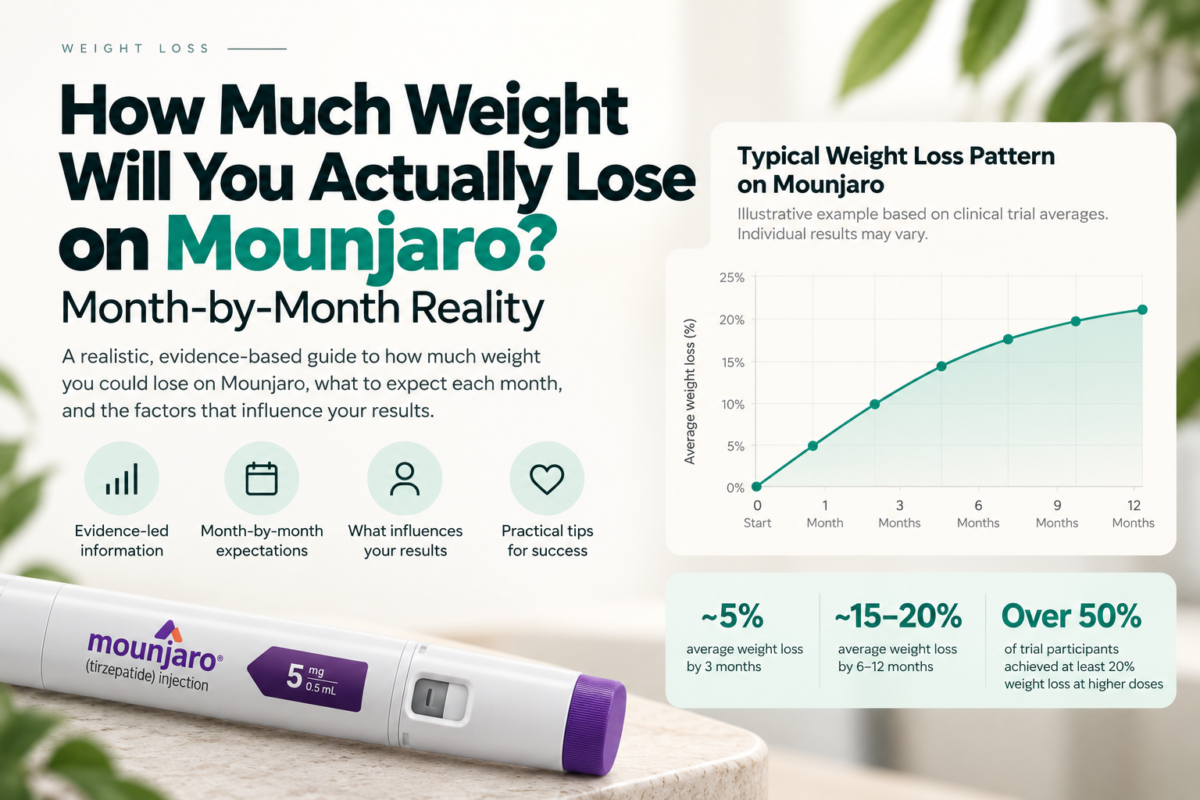
This is one of the most practical options and one that is often overlooked. The clinical trial data shows that lower Mounjaro doses still deliver significant weight loss.
Weight Loss by Dose (SURMOUNT-1 Trial, 72 Weeks)
| Dose |
Average Weight Loss |
| 5 mg |
15% of body weight |
| 10 mg |
19.5% of body weight |
| 15 mg |
20.9% of body weight |
Look at those numbers carefully. The difference between 5 mg and 15 mg is meaningful, but the 5 mg dose still produced an average weight loss of 15%, which is well above the threshold that NICE considers clinically significant (typically 5% to 10%). And the difference between 10 mg and 15 mg is only 1.4 percentage points, which for many patients may not justify the additional cost.
Is Dose Reduction Right for You?
A dose reduction may be appropriate if:
- You have already achieved significant weight loss and are now in a maintenance phase.
- You originally titrated up to a higher dose but your appetite control has been stable for some time.
- The cost difference between doses would make treatment more sustainable for you long-term.
- You are willing to enhance lifestyle factors (diet quality, exercise, sleep) to compensate for any slight reduction in the medication’s appetite-suppressing effect.
A dose reduction should always be discussed with and supervised by your prescriber. Dropping a dose abruptly without guidance could lead to a return of appetite that catches you off guard. Your prescriber may recommend a gradual step-down, for example from 15 mg to 10 mg rather than straight to 5 mg.
Option 3: Switch to Wegovy (Semaglutide)
For some patients, switching from Mounjaro to Wegovy is the most practical response to the price increase. Wegovy (semaglutide) is a GLP-1 receptor agonist that has demonstrated strong weight-loss results in its own right and may offer a more affordable alternative depending on current pricing.
How Does Wegovy Compare?
- Weight-loss efficacy: The standard Wegovy dose (2.4 mg) produces approximately 15% body weight loss, while the newer 7.2 mg dose achieves approximately 20.7%. These figures compare favourably with Mounjaro, particularly at the lower and mid-range Mounjaro doses.
- Mechanism: Wegovy is a GLP-1-only agonist, whereas Mounjaro targets both GLP-1 and GIP receptors. The dual mechanism is thought to contribute to Mounjaro’s slightly greater average weight loss, but many patients do very well on Wegovy.
- Cardiovascular benefit: Wegovy has proven cardiovascular outcomes data from the SELECT trial, showing a 20% reduction in major cardiovascular events. This is a meaningful advantage for patients with existing cardiovascular risk factors.
Transitioning from Mounjaro to Wegovy
If you and your prescriber decide that switching is the right move, the transition should be managed carefully. General guidance for starting Wegovy doses based on your current Mounjaro dose:
- Mounjaro 2.5 mg to 7.5 mg: Typically start Wegovy at 0.25 mg and titrate up according to the standard schedule.
- Mounjaro 10 mg to 15 mg: May start Wegovy at 0.5 mg, though your prescriber will advise based on your individual circumstances.
Important considerations when switching:
- You may experience some return of appetite during the transition period as you adjust to the new medication.
- Side effects (particularly nausea) may recur as your body adapts to semaglutide, even if you tolerated tirzepatide well.
- The transition should always be supervised by a prescriber who can monitor your response and adjust the titration schedule if needed.
- Give the new medication adequate time to reach its maintenance dose before evaluating whether it is working for you. A fair comparison requires at least 3 to 4 months on Wegovy.
Option 4: Explore Other Licensed Treatments
If neither Mounjaro at a lower dose nor Wegovy feels right, there are other licensed weight-management options available in the UK, though each comes with trade-offs:
Saxenda (Liraglutide)
An older GLP-1 agonist that requires daily injections. Average weight loss is approximately 8% to 10% of body weight, which is lower than both Mounjaro and Wegovy. However, it may be more affordable and is suitable for some patients who do not tolerate the newer medications.
Orlistat
An oral medication (no injections) that blocks approximately 25% of dietary fat absorption. Weight loss is more modest (typically 5% to 10%), and it requires a low-fat diet to avoid unpleasant gastrointestinal side effects. It is the cheapest prescription option and is available on the NHS.
Your prescriber can discuss which alternative might be most appropriate given your treatment history, goals, and budget.
What About Stopping Treatment Entirely?
This is understandable as a reaction to rising costs, but it is worth being fully informed about what happens when you stop before making that decision.
Research consistently shows that weight regain following discontinuation of GLP-1 or dual-agonist medications is common. A study published in the New England Journal of Medicine found that participants who stopped tirzepatide regained a significant proportion of their lost weight over the following year. Similar patterns have been observed with semaglutide.
This does not mean stopping is never appropriate. But it should be an informed, deliberate decision made in consultation with your prescriber, ideally with a plan in place to maintain as much of your progress as possible through:
- Establishing sustainable habits first. If you have used your time on medication to develop healthier eating patterns, regular exercise habits, and better sleep routines, you are in a stronger position than if you relied solely on the medication.
- Gradual dose reduction rather than abrupt cessation. Tapering off may help your body adjust more gradually and reduce the shock of a sudden return of appetite.
- Ongoing monitoring. Regular check-ins with your prescriber or GP can help catch early weight regain and allow you to resume treatment if needed.
- Understanding that it is not a personal failure. Obesity is a chronic medical condition influenced by genetics, hormones, environment, and biology. Weight regain after stopping medication reflects the underlying condition, not a lack of willpower.
Practical Tips for Managing Treatment Costs
Whatever option you choose, here are some practical strategies for managing the financial side of weight-management treatment:
- Compare providers. Prices can vary between regulated UK providers. Ensure any provider you consider is properly regulated (CQC, RQIA, or GPhC registered) and that the price includes adequate clinical support.
- Ask about treatment programmes. Some providers offer structured programmes that include consultations, monitoring, and support alongside the medication, which may represent better value than medication alone.
- Consider your total health spending. Effective weight-management treatment can reduce spending on other health-related costs, from diabetes medications to joint pain treatments, over the longer term.
- Discuss NHS options with your GP. If you meet the criteria, ask about referral to a specialist weight-management service. Waiting times vary, but NHS treatment is available at no direct cost to the patient.
- Be wary of unusually cheap offers. If a price looks too good to be true, it may indicate unregulated products, counterfeit medication, or providers operating outside proper clinical governance. Your safety is worth more than a saving.
Need Help Navigating Your Options?
Evernu’s clinical team can help you review your current treatment, discuss alternatives, and find the most cost-effective approach that still delivers results. We offer transparent pricing with no hidden costs and ongoing clinical support throughout your journey.
Speak to our prescribers today
The Bottom Line
The Mounjaro price increase is frustrating, there is no getting around that. But it does not have to derail your weight-management journey. Whether you choose to stay on a lower Mounjaro dose, switch to Wegovy, explore other treatments, or combine a lower dose with enhanced lifestyle changes, there are viable paths forward.
The worst option, in most cases, is to stop treatment entirely without a plan. If cost is a barrier, talk to your prescriber before making any changes. They can help you find an approach that works for both your health and your budget.
Frequently Asked Questions
Why did Mounjaro’s price increase?
Eli Lilly, the manufacturer of Mounjaro, stated that the September 2025 price increase aligns UK pricing with other European and developed nations. The increase applies at the pharmaceutical wholesaler level, meaning all UK providers, regardless of size, face higher costs that are typically passed on to patients.
Will Mounjaro’s price go down again?
There is no indication from Eli Lilly that the current pricing will be reversed. Pharmaceutical pricing is influenced by manufacturing costs, regulatory requirements, market dynamics, and company strategy. Generic versions of tirzepatide are not yet available in the UK, which limits competitive pricing pressure.
Can I switch from Mounjaro to Wegovy safely?
Yes, with clinical supervision. Your prescriber will determine an appropriate starting dose of Wegovy based on your current Mounjaro dose and manage the transition to minimise disruption. You may experience some temporary side effects and a brief period of adjustment, but the switch is well-established and clinically safe when managed properly.
Is Mounjaro still worth the cost?
That depends on your individual circumstances, including your response to the medication, your financial situation, and whether alternatives would work as well for you. For patients who have responded exceptionally well to tirzepatide’s dual mechanism and have not achieved similar results with other treatments, the additional cost may be justified. For others, a switch to Wegovy or a lower Mounjaro dose may offer a better balance of efficacy and affordability.
Will the NHS cover Mounjaro or Wegovy for weight loss?
Both medications have received NICE approval for use within certain NHS pathways, but access through the NHS varies significantly across the UK and is typically limited to specialist weight-management services with substantial waiting lists. Ask your GP about referral options in your area, and consider private treatment if you need faster access. The NHS provides information on available weight-management services and referral criteria.
Affordable, Clinician-Led Weight Management
Evernu offers a range of evidence-based weight loss treatments with transparent pricing and ongoing clinical support. Whether you are considering Mounjaro, Wegovy, or need help choosing the right option, our team is here to help.
View our treatment options and pricing