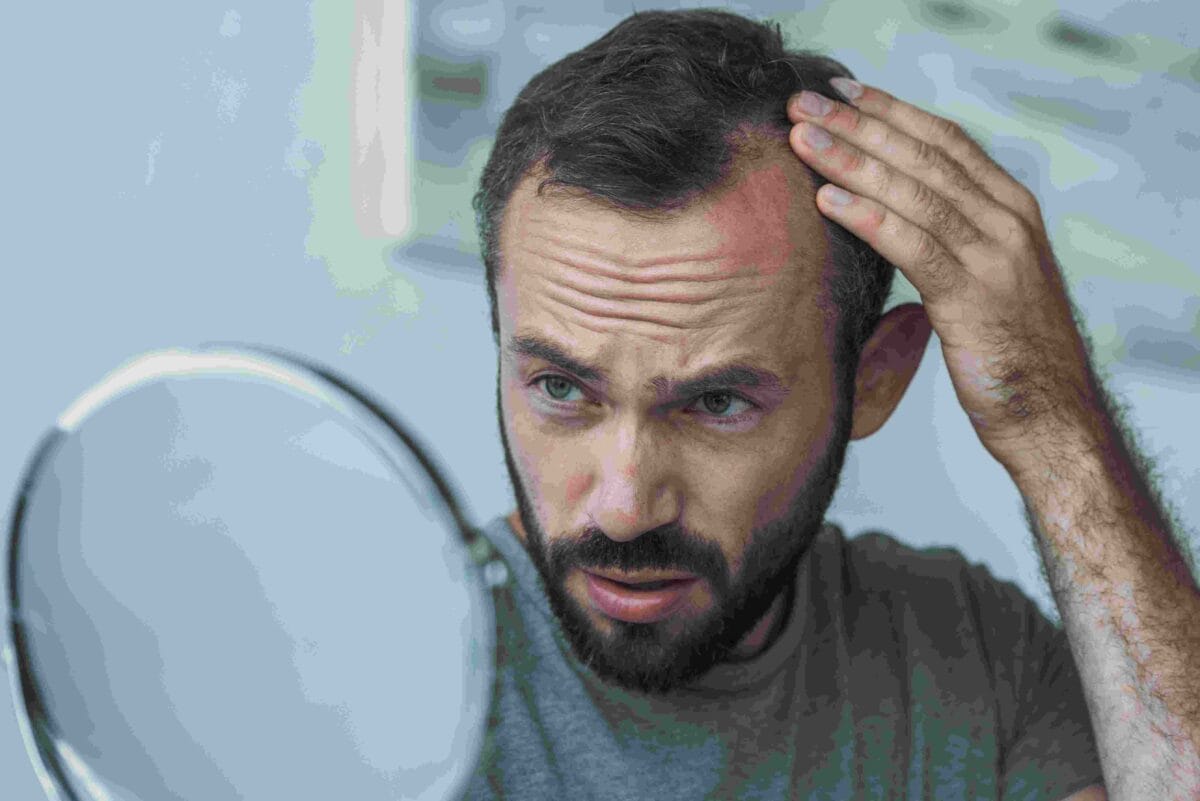
If you’re considering testosterone replacement therapy (TRT), or you’ve recently been diagnosed with low testosterone, one of the first questions that probably crossed your mind is: will it make me lose my hair?
It’s one of the most common concerns we hear from men exploring testosterone treatment, and it’s completely understandable. Nobody wants to solve one health problem only to create another. But the relationship between testosterone and hair loss is far more nuanced than most people realise.
In this article, we’ll break down exactly what the science says about testosterone, DHT, and male pattern baldness — and give you honest, practical guidance about managing your hair while optimising your hormonal health.
Understanding the Basics: Testosterone, DHT, and Your Hair
To understand whether testosterone causes hair loss, you first need to understand the role of a hormone called dihydrotestosterone (DHT).
Testosterone itself doesn’t directly cause hair loss. Instead, an enzyme called 5-alpha reductase converts a portion of your circulating testosterone into DHT. This conversion happens in several tissues throughout the body, including the skin and hair follicles.
DHT is a more potent androgen than testosterone — roughly three to five times more powerful at binding to androgen receptors. It plays important roles during male development, including the growth of facial and body hair, deepening of the voice, and development of the prostate gland.
Here’s where it gets interesting: DHT has opposite effects on different types of hair follicles. It stimulates facial and body hair growth, but it can shrink hair follicles on the scalp. This process is called follicular miniaturisation, and it’s the underlying mechanism behind male pattern baldness.
How Male Pattern Baldness Actually Works
Male pattern baldness — clinically known as androgenetic alopecia — affects roughly 50% of men by the age of 50, according to the NHS. It’s the most common form of hair loss in men, and its progression follows a predictable pattern, typically starting at the temples and crown.
The critical factor is not how much DHT you have, but rather how sensitive your hair follicles are to DHT. This sensitivity is determined almost entirely by your genetics.
Men with androgenetic alopecia have hair follicles on the scalp that carry more androgen receptors, or receptors that bind DHT more readily. When DHT binds to these receptors, it triggers a gradual shrinking of the follicle. Over successive hair growth cycles, the follicle produces thinner, shorter, lighter hairs until eventually it stops producing visible hair altogether.
The Genetics Behind It
The genetic component of male pattern baldness is complex, involving multiple genes. The most well-studied is the androgen receptor (AR) gene, located on the X chromosome. This means the gene is inherited from your mother’s side, which is why people often say to look at your maternal grandfather’s hairline for a prediction.
However, research published in PLOS Genetics has identified over 200 genetic loci associated with baldness, many of which are on non-sex chromosomes. So it’s not as simple as looking at one relative — both sides of the family contribute.
The key takeaway: two men with identical testosterone levels can have completely different hair loss outcomes, purely because of their genetic makeup.
Does TRT Accelerate Hair Loss?
This is the question that matters most to men considering treatment for low testosterone. Let’s look at what the evidence actually shows.
What the Research Says
When you begin TRT, your total testosterone levels rise. As a consequence, there is typically a proportional increase in DHT, since more testosterone is available for conversion by 5-alpha reductase.
However, the relationship between TRT and hair loss is not straightforward:
- Men without genetic predisposition: If your hair follicles are not genetically sensitive to DHT, increasing your testosterone and DHT levels through TRT is unlikely to cause significant hair loss. Many men use TRT for years without noticing any change to their hairline.
- Men with genetic predisposition: If you carry the genetic variants that make your follicles sensitive to DHT, TRT may accelerate a process that was already going to happen. The important word here is “accelerate” — it doesn’t create hair loss from nothing; it may speed up what your genetics had already programmed.
A 2019 review published in the Journal of the American Academy of Dermatology concluded that while TRT can theoretically worsen androgenetic alopecia in genetically predisposed men, the evidence for clinically significant hair loss attributable to TRT remains limited. Many studies on TRT do not report hair loss as a prominent side effect.
Putting It in Perspective
Consider this: men with low testosterone often already have lower DHT levels. When we restore testosterone to optimal physiological ranges, DHT levels rise to what would be considered normal. We’re not pushing DHT to supraphysiological levels — we’re restoring it to where it should be.
Men who abuse anabolic steroids at doses far exceeding therapeutic ranges do frequently experience accelerated hair loss. But this is a very different scenario from medically supervised TRT, where doses are carefully calibrated to achieve optimal, not excessive, hormone levels.
Myths vs Reality
| Myth |
Reality |
| High testosterone causes baldness |
Genetic sensitivity to DHT causes baldness, not testosterone levels themselves. Many bald men have normal testosterone. |
| TRT will definitely make you go bald |
TRT may accelerate hair loss in genetically predisposed men, but many men on TRT experience no hair changes. |
| Low testosterone protects your hair |
Having low testosterone doesn’t prevent male pattern baldness. Many men with low T still lose their hair. |
| Bald men have more testosterone |
Studies show no consistent link between total testosterone levels and baldness. It’s about follicle sensitivity, not hormone levels. |
| Nothing can be done to prevent TRT-related hair loss |
Several evidence-based treatments can help manage hair loss alongside TRT. |
Who Is at Risk?
If you’re considering TRT and worried about hair loss, here are the factors that increase your risk:
- Family history: A strong family history of male pattern baldness on either side (especially maternal) is the strongest predictor.
- Already thinning: If you’re already noticing hair thinning or recession, TRT may accelerate the process.
- Age: Older men who have already begun the balding process may notice faster progression.
- Dose: Higher doses of testosterone that push levels above the optimal range may increase DHT conversion.
If you have no family history of baldness and a full head of hair at the time of starting TRT, the risk of significant hair loss is generally considered low.
Preventative Options: Managing Hair Loss While on TRT
If you are genetically predisposed to hair loss but need TRT for your health and quality of life, the good news is that there are well-established treatments that can help protect your hair. Our clinicians can discuss these options with you as part of your treatment plan.
Finasteride (Propecia)
Finasteride is a 5-alpha reductase inhibitor — it blocks the enzyme that converts testosterone to DHT. By reducing DHT levels by approximately 70%, finasteride can significantly slow or even reverse hair loss in many men.
- Dose for hair loss: 1mg daily (lower than the 5mg dose used for prostate conditions)
- Effectiveness: Clinical trials show that roughly 83% of men maintain their hair count, and 66% experience some regrowth after two years
- Availability: Available on prescription in the UK; listed in the BNF
- Considerations: A small percentage of men experience sexual side effects (reduced libido, erectile difficulties), which typically resolve on stopping the medication. Our clinicians monitor for these carefully.
Minoxidil (Regaine)
Minoxidil is a topical treatment that stimulates hair growth by increasing blood flow to hair follicles and prolonging the growth phase of the hair cycle.
- Application: Applied directly to the scalp, typically twice daily
- Effectiveness: Works best for crown thinning; less effective for frontal recession
- Availability: Available over the counter in the UK without a prescription
- Considerations: Must be used continuously — stopping will result in gradual loss of regrown hair. Some men experience scalp irritation.
Dutasteride
Dutasteride is a more potent 5-alpha reductase inhibitor than finasteride, blocking both type I and type II forms of the enzyme and reducing DHT by approximately 90%. While primarily licensed for benign prostatic hyperplasia (BPH) in the UK, some specialists prescribe it off-label for hair loss.
Low-Level Laser Therapy (LLLT)
Devices such as laser caps and combs have shown modest benefit in some clinical studies for stimulating hair growth. While not a standalone solution, they can complement other treatments.
Topical Finasteride
A newer option, topical finasteride applied directly to the scalp may offer DHT reduction at the follicle level with potentially fewer systemic side effects. Research is ongoing, and availability in the UK is growing through specialist clinics.
Balancing Hormonal Health and Hair: A Practical Approach
At Evernu, we believe in taking a holistic, personalised approach. If you’re concerned about hair loss, here’s what we recommend:
- Get a proper assessment: Start with a testosterone blood test to understand your current hormone levels. Don’t let fear of hair loss prevent you from investigating symptoms of low testosterone.
- Discuss your concerns openly: Our clinicians understand that hair loss is a genuine concern, and we factor it into every treatment plan. There’s no judgement — it’s a legitimate health consideration.
- Consider your family history: Be honest about your family’s hair loss patterns. This helps us tailor your approach.
- Monitor and adjust: If you do start TRT, we monitor your DHT levels alongside testosterone. If hair thinning begins, we can adjust dosing or add protective treatments.
- Don’t sacrifice your health: The symptoms of low testosterone — fatigue, depression, loss of muscle mass, poor sexual function, increased cardiovascular risk — are serious. Avoiding treatment because of hair loss concerns may not be the right trade-off for you.
The Bigger Picture: Low Testosterone Is a Real Health Concern
It’s worth remembering why men seek TRT in the first place. Low testosterone is associated with:
- Persistent fatigue and low energy
- Depression and low mood
- Reduced muscle mass and strength
- Increased body fat, particularly around the abdomen
- Poor concentration and cognitive fog
- Decreased libido and erectile difficulties
- Reduced bone density and increased fracture risk
- Increased risk of metabolic syndrome and type 2 diabetes
These are not trivial concerns. The impact of untreated low testosterone on a man’s quality of life, mental health, and long-term physical health is well documented. NICE guidelines recognise hypogonadism as a legitimate medical condition requiring treatment.
Weighing the potential — and by no means certain — risk of some hair thinning against the very real benefits of optimised testosterone is an important conversation, and one our clinicians are well equipped to have with you.
What Should You Do Next?
If you’re experiencing symptoms of low testosterone — whether that’s fatigue, mood changes, reduced libido, or difficulty maintaining muscle — the first step is understanding where your levels stand.
Take our free testosterone symptom assessment to see if your symptoms align with low testosterone. It takes less than two minutes and gives you an immediate indication of whether further investigation is worthwhile.
If you’d like to check your levels with a blood test, our at-home testosterone test kit provides a comprehensive hormone panel, reviewed by our clinical team, with results and personalised recommendations delivered to your dashboard.
Whatever your concerns — including hair loss — we’re here to give you honest, evidence-based guidance so you can make the right decision for your health.
Key Takeaways
- Testosterone itself does not cause hair loss — the culprit is DHT acting on genetically sensitive hair follicles.
- Male pattern baldness is overwhelmingly determined by genetics, not by testosterone levels.
- TRT may accelerate hair loss in men who are already genetically predisposed, but it does not cause hair loss in men without this predisposition.
- Effective treatments exist (finasteride, minoxidil, dutasteride) that can help manage hair loss alongside TRT.
- The health consequences of untreated low testosterone are significant and should be weighed carefully against cosmetic concerns.
- A personalised approach, guided by a clinician who understands both hormonal health and hair loss, is the best way forward.
This article is for informational purposes only and does not constitute medical advice. Always consult a qualified healthcare professional before starting any treatment. If you’d like to speak with one of our clinicians about testosterone and hair loss, explore our testosterone treatment options or take our free assessment.
The first step to TRTFind out if it's your testosterone
A simple finger-prick test you do at home. Results in 2–3 days, set against the UK reference range — so you know where you actually stand.
£26.99£63.99Save £37
Check my testosterone →No commitment — you only start treatment if it's right for you.