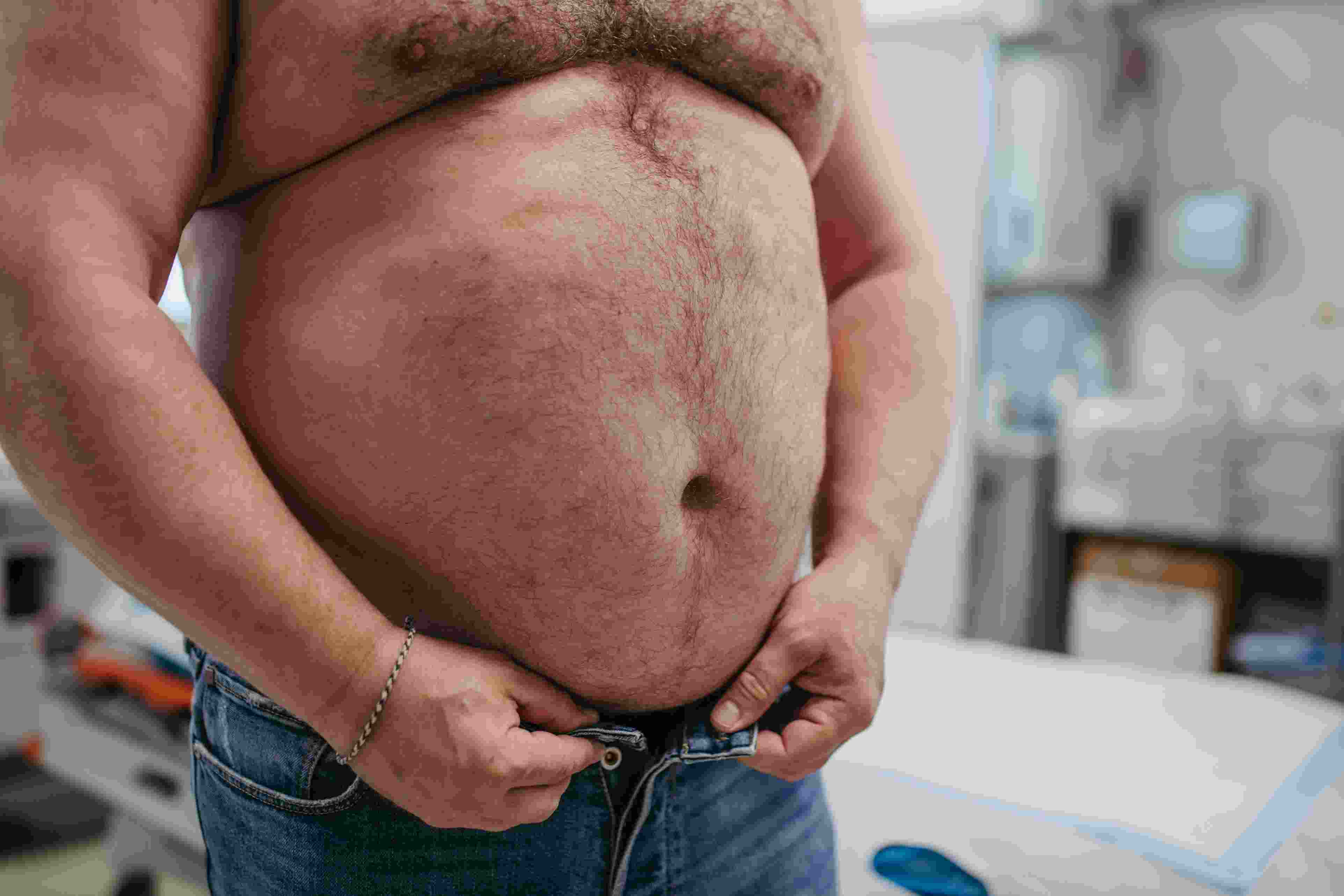
If you have been struggling with weight gain alongside other symptoms of low testosterone — fatigue, low mood, reduced motivation, loss of muscle — you have probably wondered whether fixing your testosterone levels could help shift the weight. It is a reasonable question, and the answer is more nuanced than a simple yes or no.
The relationship between testosterone and body weight is genuinely bidirectional: low testosterone promotes fat accumulation, and excess body fat suppresses testosterone production. This creates a self-reinforcing cycle that can be remarkably difficult to break through lifestyle measures alone. Understanding this relationship — and where testosterone replacement therapy fits into the picture — is important for men who want to make informed decisions about their health.
This article examines the evidence: what the research actually shows about testosterone and weight loss, what realistic expectations look like, and when other treatments might be needed alongside or instead of TRT.
The Bidirectional Relationship Between Testosterone and Body Fat
The link between testosterone and body composition is not a one-way street. It operates as a feedback loop, and understanding this loop is essential to understanding why low testosterone and weight gain so often go together.
How low testosterone promotes fat gain
Testosterone plays a direct role in regulating fat metabolism. It promotes the mobilisation and oxidation of stored fat, supports the maintenance of lean muscle mass (which is metabolically active and burns calories at rest), and influences insulin sensitivity and glucose metabolism. When testosterone levels fall below the optimal range, several things happen:
- Reduced basal metabolic rate: Less muscle mass means fewer calories burned at rest. Over months and years, this caloric imbalance leads to gradual fat accumulation.
- Increased visceral fat deposition: Low testosterone is associated with preferential fat storage around the abdominal organs (visceral adiposity), which is the most metabolically harmful pattern of fat distribution.
- Reduced physical activity: The fatigue, low motivation, and reduced exercise tolerance that accompany low testosterone often lead to less activity, further reducing calorie expenditure.
- Impaired insulin sensitivity: Low testosterone is associated with insulin resistance, which promotes fat storage and makes fat loss more difficult.
How excess body fat suppresses testosterone
Fat tissue is not an inert storage depot. It is an active endocrine organ that produces hormones and enzymes with direct effects on testosterone levels.
The most important of these is aromatase, an enzyme abundantly expressed in adipose tissue that converts testosterone to oestradiol (a form of oestrogen). The more body fat a man carries, the more aromatase activity he has, and the more of his testosterone is converted to oestrogen. This has two consequences: it directly reduces circulating testosterone, and the elevated oestrogen signals the brain to reduce LH production, further suppressing testicular testosterone output.
Additionally, excess body fat promotes chronic low-grade inflammation and increases the production of inflammatory cytokines, which further impair the hypothalamic-pituitary-gonadal (HPG) axis and reduce testosterone production.
The result is the hypogonadal-obesity cycle: low testosterone causes fat gain, and fat gain causes lower testosterone. Without intervention, this cycle tends to worsen over time.
What the Research Says: TRT and Fat Loss
There is a substantial body of evidence examining the effects of testosterone replacement therapy on body composition. The findings are consistent: TRT in men with confirmed low testosterone leads to meaningful changes in body composition, though these changes are better characterised as recomposition (losing fat while gaining muscle) rather than dramatic weight loss.
The T4DM Trial
The Testosterone for Diabetes Mellitus (T4DM) trial, published in The Lancet Diabetes & Endocrinology in 2021, is one of the most significant studies in this area. This Australian randomised controlled trial enrolled 1,007 men aged 50 to 74 with a waist circumference of 95 cm or more and low or low-normal testosterone levels. Participants were randomly assigned to receive testosterone undecanoate injections or placebo for two years, alongside a lifestyle programme for both groups.
Key findings:
- The testosterone group lost significantly more visceral fat than the placebo group
- Lean muscle mass increased significantly in the testosterone group
- Fewer men in the testosterone group progressed to type 2 diabetes (12% vs 21%)
- The benefits were additive to those of the lifestyle programme — TRT enhanced the results of diet and exercise rather than replacing them
This trial is particularly valuable because it was large, well-designed, and included a lifestyle intervention in both groups, making the isolated contribution of testosterone clearer.
Meta-analyses and systematic reviews
A 2020 meta-analysis published in Clinical Endocrinology, pooling data from 28 randomised controlled trials involving over 3,500 men, found that testosterone therapy was associated with:
- A significant reduction in total body fat mass (average approximately 1.6 kg)
- A significant reduction in waist circumference
- A significant increase in lean body mass (average approximately 1.6 kg)
The overall change in body weight was often modest because the fat loss was partially offset by muscle gain. This is an important point: the scale may not move dramatically, but body composition can change meaningfully. A man who loses 2 kg of fat and gains 2 kg of muscle may weigh the same but look and feel noticeably different.
Long-term observational data
Several long-term observational studies — some following men on TRT for 10 years or more — have reported progressive and sustained reductions in weight, waist circumference, BMI, and visceral fat in men receiving testosterone therapy. A registry study by Saad and colleagues (2016) following over 800 men on testosterone undecanoate reported an average weight loss of approximately 15 kg over eight years, with continuous improvement in waist circumference and BMI.
While observational data cannot prove causation (these men were also likely making lifestyle changes), the consistency and magnitude of the findings are noteworthy and align with the mechanistic evidence.
How TRT Affects Body Composition
The body composition changes associated with TRT are driven by several mechanisms working in concert:
Increased lean muscle mass
Testosterone is a powerful anabolic hormone that promotes muscle protein synthesis. When testosterone levels are restored to the normal range, men typically gain lean muscle mass, particularly when combined with resistance training. This increased muscle mass raises basal metabolic rate, creating a more favourable caloric balance for fat loss.
Reduced visceral fat
TRT preferentially reduces visceral adipose tissue — the metabolically active fat around the abdominal organs. This is clinically significant because visceral fat is strongly associated with insulin resistance, type 2 diabetes, cardiovascular disease, and systemic inflammation. Reducing visceral fat improves metabolic health markers independently of total body weight change.
Improved insulin sensitivity
Testosterone improves insulin sensitivity both directly and indirectly (through reduced visceral fat and increased muscle mass). Better insulin sensitivity means the body is more efficient at using glucose for energy rather than storing it as fat, and it reduces the chronically elevated insulin levels that promote fat storage.
Increased energy and motivation
One of the first changes men notice on TRT is improved energy levels and motivation. This often translates into more physical activity — both structured exercise and general daily movement. The caloric expenditure from increased activity contributes meaningfully to fat loss over time.
Reduced oestrogen levels
By restoring testosterone to normal levels and reducing excess body fat, the aromatase-driven conversion of testosterone to oestrogen decreases. This helps break the hypogonadal-obesity cycle and supports the maintenance of healthier testosterone levels.
Realistic Expectations: What TRT Can and Cannot Do
This is where honest clinical guidance matters. While the evidence for TRT’s effects on body composition is genuine and well-supported, it is crucial to set realistic expectations.
What TRT can do
- Shift body composition toward more muscle and less fat
- Reduce visceral fat and waist circumference
- Improve metabolic markers (insulin sensitivity, lipid profile, HbA1c)
- Increase energy and motivation, supporting more physical activity
- Break the hypogonadal-obesity cycle
- Enhance the results of diet and exercise interventions
What TRT cannot do
- Replace the need for a calorie-controlled diet
- Produce dramatic weight loss on its own without lifestyle changes
- Overcome a significant caloric surplus
- Work as a standalone weight loss treatment for men with normal testosterone levels
TRT is not a weight loss drug. It is a hormone replacement therapy that restores a deficient hormone to normal levels, and one of the benefits of that restoration is improved body composition. Men who expect TRT alone to produce dramatic weight loss without changes to diet and exercise are likely to be disappointed. Men who use TRT as a foundation alongside consistent nutrition and training are the ones who see the most impressive results.
The Role of Diet and Exercise Alongside TRT
The most successful outcomes we see in clinical practice come from men who combine TRT with structured lifestyle changes. The evidence from the T4DM trial reinforces this: testosterone enhanced the benefits of a lifestyle programme, but the lifestyle programme was an essential component.
Nutrition
Fat loss fundamentally requires a caloric deficit — consuming fewer calories than you expend. TRT makes this easier in several ways (increased metabolic rate, better energy for activity, improved insulin sensitivity), but it does not eliminate the need for dietary attention. A moderate caloric deficit (300–500 calories per day below maintenance) combined with adequate protein intake (1.6–2.2 g per kg of body weight per day) supports both fat loss and muscle preservation.
Resistance training
If there is one lifestyle factor that synergises most powerfully with TRT for body composition improvement, it is resistance training. Testosterone enhances the body’s response to resistance exercise, promoting greater muscle protein synthesis and faster recovery. Men on TRT who lift weights consistently see significantly better body composition outcomes than those who rely on cardio alone or do not exercise.
Cardiovascular exercise
Regular cardiovascular exercise supports fat loss through increased calorie expenditure, improved cardiovascular health, and enhanced insulin sensitivity. A combination of resistance training and moderate cardio (such as brisk walking, cycling, or swimming) is the optimal approach for most men.
Sleep and stress management
Poor sleep and chronic stress both impair testosterone levels and promote fat storage through elevated cortisol. Addressing these factors is an important but often overlooked component of body composition improvement. The NHS recommends seven to nine hours of sleep per night for adults.
When TRT and GLP-1 Medication Might Both Be Needed
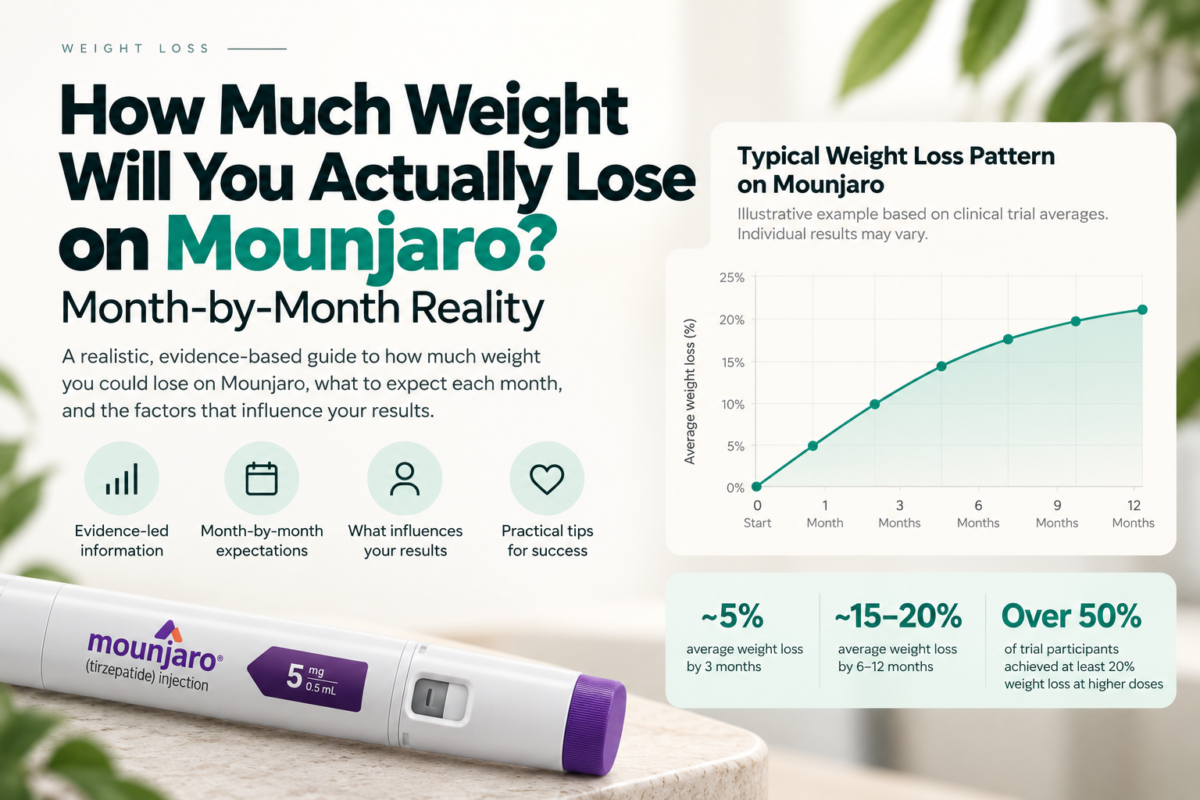
For some men, the weight loss challenge is significant enough that TRT and lifestyle changes alone may not be sufficient. This is where the newer generation of weight loss medications — specifically GLP-1 receptor agonists such as semaglutide (Wegovy) and tirzepatide (Mounjaro) — may have a complementary role.
GLP-1 medications work through entirely different mechanisms to testosterone. They reduce appetite, slow gastric emptying, and improve insulin signalling, producing significant weight loss (typically 15–20% of body weight in clinical trials). For men who are both overweight and testosterone deficient, there is a compelling case for addressing both issues simultaneously:
- GLP-1 medication addresses the caloric side of the equation by reducing appetite and promoting fat loss.
- TRT addresses the hormonal side by restoring testosterone, preserving muscle mass during weight loss, and improving metabolic function.
This combination can be particularly powerful because one of the risks of rapid weight loss (even with GLP-1 medications) is loss of lean muscle mass alongside fat. TRT helps protect against this, ensuring that the weight lost is predominantly fat rather than a mix of fat and muscle.
At Evernu, we offer medically supervised weight loss treatments including GLP-1 medications, and our clinicians can assess whether a combined approach with TRT is appropriate for your situation. Not every man needs both, but for those who do, the results can be transformative.
Who Benefits Most from TRT for Body Composition?
The men who see the most significant body composition improvements with TRT typically share several characteristics:
- Confirmed low testosterone: Blood tests showing testosterone below the normal range (typically below 8–12 nmol/L for total testosterone, depending on the laboratory reference range and clinical context).
- Symptoms consistent with hypogonadism: Fatigue, reduced motivation, low mood, decreased libido, loss of muscle mass, increased visceral fat.
- Commitment to lifestyle changes: Men who combine TRT with improved nutrition and regular exercise see the best results.
- Patience: Body composition changes on TRT are gradual. Meaningful results typically emerge over three to six months, with continued improvement over 12 months and beyond.
Conversely, men with normal testosterone levels should not expect TRT to help with weight loss — supraphysiological testosterone doses are not a safe or appropriate weight management strategy.
How to Find Out If Low Testosterone Is Contributing to Your Weight Gain
If you are experiencing unexplained weight gain, particularly increased abdominal fat, alongside symptoms such as fatigue, low mood, reduced motivation, poor concentration, or decreased sex drive, low testosterone is a possibility worth investigating.
The first step is a blood test. A comprehensive testosterone blood test measures not only total testosterone but also free testosterone, SHBG, oestradiol, and other markers that give a complete picture of your hormonal health. Because testosterone levels fluctuate throughout the day (peaking in the morning), blood samples should ideally be taken before 10 am.
Our free online testosterone assessment can help you determine whether your symptoms are consistent with low testosterone and whether further investigation is warranted. If the screening suggests a possible hormonal issue, we will guide you through the testing and assessment process.
The Bottom Line
Does testosterone help with weight loss? The evidence says yes — but with important caveats.
For men with confirmed low testosterone, TRT produces meaningful improvements in body composition: reduced fat mass (particularly visceral fat), increased lean muscle mass, improved metabolic markers, and better energy for physical activity. These effects are real, well-documented, and clinically significant.
However, TRT works best as one component of a comprehensive approach that includes appropriate nutrition, regular exercise (especially resistance training), adequate sleep, and stress management. It is not a standalone weight loss solution, and it should only be prescribed to men with genuinely deficient testosterone levels.
For men who need more aggressive weight loss alongside hormonal optimisation, the combination of TRT with GLP-1 medication offers a powerful, complementary approach that addresses both the hormonal and metabolic dimensions of the problem.
If you think low testosterone may be contributing to your weight challenges, the most important step is getting tested. Knowledge is the foundation of good treatment decisions, and a proper hormonal assessment is the starting point.
At Evernu, we provide comprehensive hormonal assessments and personalised treatment plans for men across the UK. Whether the right approach for you is TRT, weight loss medication, lifestyle guidance, or a combination, our clinicians will help you find the path that fits your individual circumstances.
This article is for informational purposes only and does not constitute medical advice. Always consult a qualified healthcare professional before starting or changing any medication. Evernu is regulated by the Regulation and Quality Improvement Authority (RQIA).