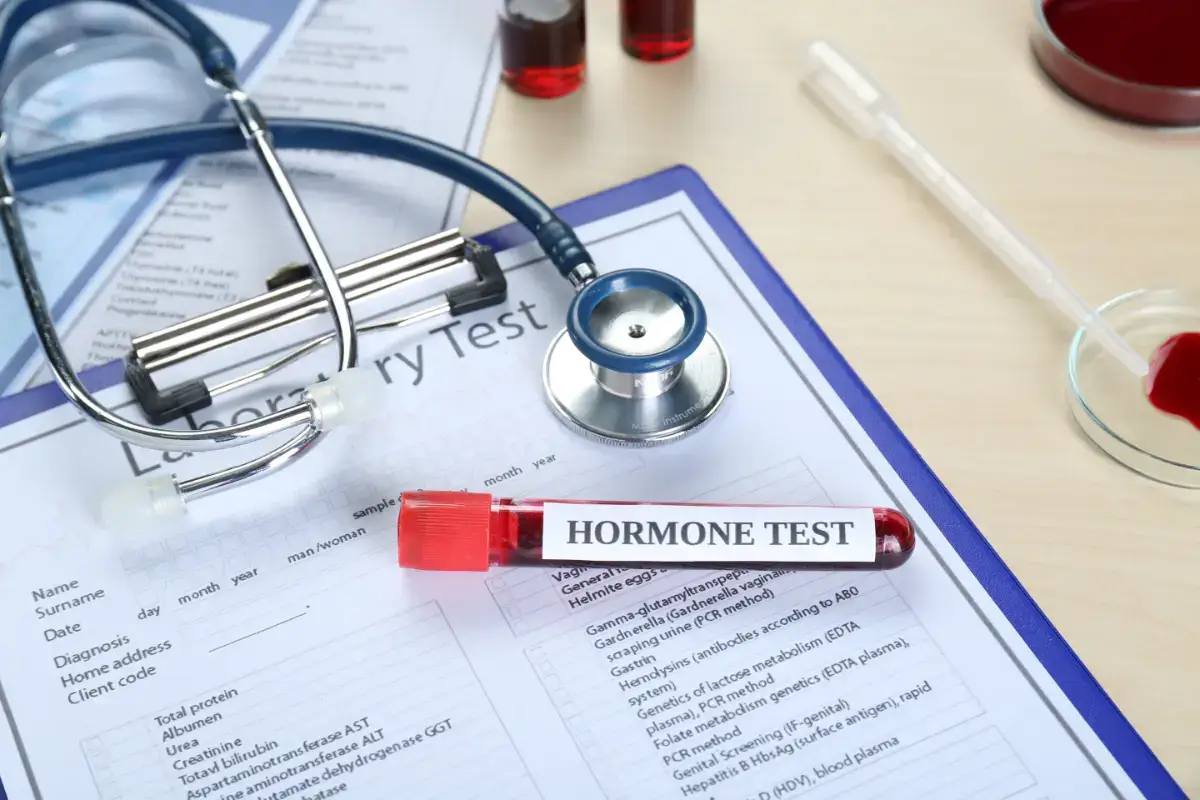
If you have been feeling persistently tired, struggling with brain fog, losing muscle despite exercising, gaining weight around your midsection, or noticing changes in your sex drive, you may have wondered whether your hormones are to blame. It is a reasonable question — and one that an increasing number of men across the UK are asking.
Hormones regulate virtually every system in the male body, from energy and metabolism to mood, sleep, sexual function, and body composition. When they are in balance, you barely notice them. When they are not, the effects can be widespread, persistent, and genuinely debilitating — yet frustratingly vague enough that many men spend months or years attributing their symptoms to stress, poor sleep, or simply “getting older.”
The good news is that checking your hormone levels is straightforward, accessible, and no longer requires a lengthy battle with your GP. This guide explains the signs of hormone imbalance in men, which hormones you should actually test, the different ways to get tested in the UK, how to interpret your results, and what to do if something is off.
Signs of Hormone Imbalance in Men
Before reaching for a blood test, it helps to understand what hormonal imbalance actually looks and feels like. The symptoms can be subtle at first, building gradually over months or years until they become impossible to ignore. Many men describe a general sense that “something isn’t right” without being able to pinpoint exactly what has changed.
Common signs of hormone imbalance men experience include:
- Persistent fatigue — a deep tiredness that is not relieved by sleep or rest. This is different from the normal tiredness after a long day; it is a baseline exhaustion that colours everything you do.
- Low libido — a noticeable and sustained decline in sexual desire. Not a temporary dip related to stress, but a persistent lack of interest that feels uncharacteristic.
- Erectile difficulties — problems achieving or maintaining erections, or a noticeable reduction in spontaneous and morning erections.
- Mood changes — increased irritability, anxiety, emotional flatness, or depression-like symptoms. Many men with hormonal imbalance are prescribed antidepressants before their hormones are ever tested.
- Brain fog — difficulty concentrating, poor short-term memory, struggling to find words, or a general cognitive sluggishness.
- Unexplained weight gain — particularly increased abdominal fat, even without significant changes in diet or activity.
- Loss of muscle mass and strength — muscles feeling softer and weaker, or training producing no visible results despite consistent effort.
- Sleep disturbances — difficulty falling asleep, staying asleep, or waking feeling unrefreshed despite adequate hours in bed.
- Reduced motivation and drive — a loss of ambition, purpose, or enthusiasm that extends across work, hobbies, and social life.
- Hot flushes or night sweats — less commonly discussed in men, but these can occur with significant hormonal changes.
- Gynaecomastia — enlargement of breast tissue, which can indicate elevated oestrogen relative to testosterone.
If several of these symptoms sound familiar, hormone testing is a sensible next step. But which hormones should you actually test?
Which Hormones Should Men Test?
When most men think about “checking hormones,” they think of testosterone. And testosterone is indeed the most important male hormone to assess. But a comprehensive male hormone blood test should go beyond testosterone alone, because several other hormones interact with testosterone and can independently cause or worsen symptoms.
Total Testosterone
This is the headline marker — the total amount of testosterone circulating in your blood. In the UK, total testosterone is measured in nanomoles per litre (nmol/L). The standard reference range for adult men is approximately 8.64–29 nmol/L, though the precise range varies slightly between laboratories.
NICE guidelines consider a total testosterone below 8 nmol/L as clearly low, while levels between 8–12 nmol/L represent a grey area where clinical symptoms and additional markers help guide diagnosis. However, many men begin experiencing symptoms when total testosterone drops below 12–15 nmol/L, well within the “normal” reference range.
Total testosterone alone, while essential, does not tell the full story. This is one of the most common shortcomings of basic GP-ordered hormone tests.
Free Testosterone
Free testosterone is the portion of testosterone that is not bound to proteins and is immediately available for use by your body’s cells. It represents only 2–3% of total testosterone, but it is arguably the most clinically meaningful measurement because it reflects what your tissues are actually exposed to.
You can have a total testosterone level that appears normal while your free testosterone is low — a situation that is more common than many clinicians recognise and that explains why some men feel terrible despite “normal” blood results. This typically occurs when SHBG levels are elevated, which effectively locks up testosterone and reduces the biologically active fraction.
SHBG (Sex Hormone-Binding Globulin)
SHBG is a protein produced by the liver that binds to testosterone. Higher SHBG levels mean less free testosterone is available, even if total testosterone looks acceptable. Several factors influence SHBG, including ageing, thyroid function, liver health, body weight, and certain medications.
Without measuring SHBG alongside total testosterone, your results can be genuinely misleading. A total testosterone of 14 nmol/L with an SHBG of 25 nmol/L means something very different from the same total testosterone with an SHBG of 60 nmol/L.
Oestradiol (Estradiol / E2)
Oestradiol is the primary form of oestrogen in men. It is produced partly through the conversion of testosterone by an enzyme called aromatase. While oestrogen is essential for male health in small amounts (it supports bone density, cardiovascular function, and brain health), elevated levels can cause symptoms that overlap with — and worsen — low testosterone symptoms.
Symptoms of elevated oestradiol in men include water retention, mood swings, reduced libido, erectile difficulties, and breast tissue enlargement (gynaecomastia). Testing oestradiol is important because treatment strategies differ depending on whether your symptoms are driven primarily by low testosterone, elevated oestrogen, or both.
LH (Luteinising Hormone)
LH is a pituitary hormone that signals the testes to produce testosterone. It is essential for determining why testosterone is low, which directly influences how the condition is treated.
If testosterone is low and LH is high, the pituitary is working hard to stimulate the testes, but the testes are not responding. This is called primary hypogonadism — the problem is in the testes.
If testosterone is low and LH is low or normal, the pituitary is not sending an adequate signal. This is secondary hypogonadism, and the cause may be in the pituitary, the hypothalamus, or related to factors like obesity, medications (particularly opioids), or chronic illness. Secondary hypogonadism sometimes has a reversible cause.
FSH (Follicle-Stimulating Hormone)
FSH works alongside LH and is primarily involved in sperm production. Measuring FSH helps further differentiate the type and cause of hormonal deficiency and is particularly important for men who are concerned about fertility alongside hormone levels.
Prolactin
Prolactin is a pituitary hormone that, when elevated, can suppress testosterone production. Causes of elevated prolactin include certain medications (particularly antipsychotics and some antidepressants), stress, a benign pituitary tumour called a prolactinoma, or other pituitary conditions.
Testing prolactin is important because if it is significantly elevated, treating the underlying cause may restore testosterone levels without the need for testosterone replacement therapy.
Thyroid Hormones (TSH, Free T4, Free T3)
Thyroid disorders are less common in men than women but are far from rare, and their symptoms overlap significantly with testosterone deficiency — fatigue, weight gain, depression, low libido, brain fog, and cold intolerance. Including thyroid markers in a hormone panel helps ensure that thyroid dysfunction is not missed or misattributed to testosterone alone.
TSH (Thyroid-Stimulating Hormone) is the primary screening marker. If TSH is abnormal, free T4 and free T3 provide additional detail about thyroid function.
Additional Markers Worth Including
Depending on your symptoms and medical history, a comprehensive hormone level test might also include:
- DHEA-S (Dehydroepiandrosterone Sulphate): An adrenal hormone that serves as a precursor to both testosterone and oestrogen. Low levels can contribute to fatigue and reduced well-being.
- Cortisol: The primary stress hormone. Chronically elevated cortisol (from prolonged stress, poor sleep, or overtraining) can suppress testosterone production and cause many of the same symptoms.
- Insulin / HbA1c: Insulin resistance is strongly associated with low testosterone, and the two conditions often coexist and worsen each other.
- Vitamin D: Not technically a hormone in the traditional sense, but vitamin D functions as a hormone in the body and deficiency is extremely common in the UK. Low vitamin D is associated with fatigue, low mood, impaired immune function, and has been linked to lower testosterone levels.
Where Can You Get Your Hormones Tested in the UK?
There are three main routes for men’s hormone testing in the UK, each with advantages and limitations.
Route 1: Your GP (NHS)
The most obvious starting point is your GP. If you describe symptoms consistent with hormone deficiency, your GP can order blood tests through the NHS at no cost to you. This is a perfectly valid route, and many men successfully obtain a diagnosis and treatment referral through their GP.
However, the GP route has well-documented limitations:
- Limited panel: Many GPs will only test total testosterone, without including free testosterone, SHBG, oestradiol, or pituitary hormones. This can result in an incomplete picture that misses clinically significant abnormalities.
- Inconsistent awareness: Not all GPs are experienced in male hormone health. Some may be reluctant to test testosterone in younger men, or may dismiss symptoms as stress or depression without investigating a hormonal cause.
- Waiting times: Depending on your area, it may take weeks to get an appointment, additional weeks for blood test availability, and further time for results and follow-up.
- Referral threshold: If your total testosterone falls within the reference range (even at the very bottom), some GPs may consider this “normal” and decline further investigation, even if you are clearly symptomatic.
If your GP is supportive and experienced in male hormone health, the NHS route can work well. If you encounter resistance or feel that your concerns are not being taken seriously, other options exist.
Route 2: Private Clinics
Private hormone clinics offer comprehensive testing with shorter waiting times and typically more specialised clinical expertise. Many private TRT clinics and men’s health clinics across the UK — in cities like London, Manchester, Birmingham, Edinburgh, Belfast, and Cardiff — offer detailed hormone panels with clinical consultation.
Advantages of the private clinic route include:
- Comprehensive panels that include all relevant markers (total and free testosterone, SHBG, LH, FSH, oestradiol, prolactin, thyroid)
- Venous blood draw for greater accuracy
- Specialist clinical interpretation by doctors experienced in male hormone health
- Faster turnaround times (often 3–5 working days for results)
- Direct access to treatment if indicated, without the need for GP referral
Costs for a private hormone consultation and blood panel typically range from £150 to £400, depending on the number of markers tested and whether a consultation is included.
Route 3: At-Home Hormone Test Kits
At home hormone test men kits have become increasingly popular in the UK, and for good reason. They remove the barriers of GP appointments and clinic visits, allowing you to collect a blood sample at home (typically via finger-prick or a small venous sample) and send it to an accredited laboratory for analysis.
Evernu offers an at-home testosterone blood test kit that tests the key hormone markers needed to identify deficiency. The process is straightforward: order the kit online, collect your sample at home (ideally first thing in the morning, fasting), post it to the laboratory using the prepaid packaging, and receive clinician-reviewed results within a few days.
At-home testing is a particularly good option if you want to:
- Check your hormone levels without waiting for a GP appointment
- Establish a baseline before deciding whether to pursue further investigation
- Monitor your levels over time if you are already on treatment
- Avoid the inconvenience of travelling to a clinic, particularly if you are in a rural area
The key consideration with any at-home test is sample quality. Follow the instructions precisely — collect the sample in the morning (between 7:00 AM and 11:00 AM), after fasting overnight, and post the sample promptly. Results from a poorly collected sample can be misleading.
How to Interpret Your Hormone Results
Receiving a sheet of numbers is one thing; understanding what they mean is another. Here is how to interpret the key markers in a men’s hormone test UK:
Total Testosterone
| Range (nmol/L) |
Interpretation |
| Below 8 |
Clearly low — further investigation and treatment likely warranted |
| 8–12 |
Grey area — symptoms and free testosterone levels help guide clinical decisions |
| 12–15 |
Low-normal — some men are symptomatic at these levels, particularly if free testosterone is also low |
| 15–29 |
Normal range — unlikely to be testosterone-deficient unless free testosterone is disproportionately low |
Free Testosterone
Free testosterone reference ranges vary between laboratories, but generally a calculated free testosterone below 0.225 nmol/L is considered low in adult men. As with total testosterone, the reference range is broad, and symptoms at the lower end of “normal” are common.
SHBG
The typical reference range for SHBG in men is 10–70 nmol/L. An SHBG above 50 nmol/L may be reducing your free testosterone to symptomatic levels even if total testosterone is within range. Conversely, very low SHBG (below 15 nmol/L) is often associated with insulin resistance and metabolic issues.
LH
Normal LH in adult men is approximately 1.5–9.3 IU/L. High LH with low testosterone suggests primary hypogonadism. Low or inappropriately normal LH with low testosterone suggests secondary hypogonadism.
Oestradiol
The typical reference range for oestradiol in men is approximately 40–160 pmol/L. Levels significantly above the upper limit may be contributing to symptoms, particularly if testosterone is concurrently low.
TSH
Normal TSH is approximately 0.27–4.2 mIU/L. A TSH above the upper limit suggests an underactive thyroid (hypothyroidism), while a suppressed TSH suggests an overactive thyroid (hyperthyroidism). Some clinicians consider TSH above 2.5 mIU/L as suboptimal, particularly in the presence of symptoms.
Important: Context Matters More Than Numbers
A single hormone result in isolation tells you very little. The clinical picture emerges when all markers are considered together, alongside your symptoms, medical history, age, and lifestyle factors. This is why having your results reviewed by a clinician experienced in male hormone health — rather than simply comparing numbers to a reference range on a lab report — is essential.
Two men with identical total testosterone levels can have very different clinical situations based on their free testosterone, SHBG, oestradiol, and symptom profiles. The numbers are the starting point, not the conclusion.
What to Do If Your Hormone Levels Are Abnormal
If your results suggest a hormonal imbalance, the next steps depend on what exactly is out of range and what the suspected cause is.
If Testosterone Is Low
- Confirm with a repeat test. A single low result should always be confirmed with a second blood test, ideally 2–4 weeks later, taken under the same conditions (morning, fasting). Hormone levels fluctuate naturally, and a single measurement may not be representative.
- Investigate the cause. LH, FSH, and prolactin results help determine whether the problem is primary (testicular) or secondary (pituitary/hypothalamic). Secondary causes sometimes have reversible triggers.
- Address modifiable factors. Obesity, poor sleep, excessive alcohol, chronic stress, and certain medications can all suppress testosterone. If these factors are present, addressing them may improve levels without the need for hormone replacement.
- Consider treatment. If testosterone is confirmed as low and symptoms are significantly affecting your quality of life, testosterone replacement therapy (TRT) may be appropriate. This should always be prescribed and monitored by a qualified clinician.
If Thyroid Markers Are Abnormal
- Elevated TSH (with or without low free T4) suggests hypothyroidism. Treatment typically involves levothyroxine, a synthetic thyroid hormone. Thyroid conditions are usually managed by your GP or an endocrinologist.
- Suppressed TSH (with or without elevated free T4) suggests hyperthyroidism, which requires further investigation and specialist management.
If Prolactin Is Elevated
Significantly elevated prolactin warrants further investigation, often including an MRI scan of the pituitary gland to rule out a prolactinoma. Medication-induced prolactin elevation is common and may be addressed by reviewing your current prescriptions with your doctor.
If Oestradiol Is Elevated
High oestradiol in men is often related to excess body fat (adipose tissue contains aromatase, which converts testosterone to oestrogen), liver dysfunction, or medication effects. Reducing body fat and addressing underlying causes is the first-line approach.
When to Test: Practical Tips for Accurate Results
The accuracy of your hormone level test depends significantly on when and how it is done. Follow these guidelines for the most reliable results:
- Test in the morning — between 7:00 AM and 11:00 AM. Testosterone follows a circadian rhythm and peaks in the early morning. Testing in the afternoon can produce results that are 20–30% lower than your true peak.
- Fast overnight — eating, particularly high-sugar or high-carbohydrate meals, can acutely suppress testosterone levels. Fast from midnight, with only water permitted.
- Avoid intense exercise the day before — heavy training can temporarily alter hormone levels.
- Get adequate sleep the night before — sleep deprivation suppresses testosterone. Try to get at least 7 hours.
- Avoid alcohol for 24–48 hours before testing — alcohol can acutely affect testosterone, oestradiol, and liver markers.
- Note any medications and supplements — biotin (a common supplement) can interfere with some immunoassay-based hormone tests. Opioids, corticosteroids, and certain other medications can suppress testosterone levels.
Frequently Asked Questions
Can my GP test my hormone levels for free?
Yes. If your GP considers hormone testing clinically appropriate based on your symptoms, blood tests can be ordered through the NHS at no charge. However, the panel may be limited — often only total testosterone, with additional markers added only if the initial result is abnormal. If you want a comprehensive panel from the outset, a private test or at-home kit is an alternative.
How much does a private hormone test cost in the UK?
A comprehensive male hormone blood test through a private clinic or at-home testing service typically costs between £50 and £200, depending on the number of markers included. Basic total testosterone tests can be as low as £30–50, but a full panel including free testosterone, SHBG, LH, FSH, oestradiol, prolactin, and thyroid markers is recommended for an accurate picture.
How often should men check their hormone levels?
For healthy men with no symptoms, a baseline check in your 30s and periodic testing every 3–5 years from age 40 is a reasonable approach. If you are symptomatic, currently on treatment, or have risk factors for hormonal deficiency, more frequent testing (every 6–12 months) is appropriate. Men on TRT require regular monitoring as part of their treatment protocol.
Are at-home hormone tests accurate?
At-home hormone tests that use accredited laboratories (UKAS-accredited in the UK) provide clinically valid results. The key to accuracy is following the collection instructions precisely — particularly regarding timing, fasting, and prompt posting of the sample. Venous blood samples are generally more accurate than finger-prick samples for hormone testing, though both can provide useful clinical information.
Taking the Next Step
If you have been wondering how to check testosterone levels or how to investigate broader hormonal health, the answer is simpler than you might think. A blood test — whether through your GP, a private clinic, or an at-home kit — provides objective data that replaces guesswork with clarity.
Evernu’s at-home testosterone blood test kit is designed to make this first step as straightforward as possible. It tests the key markers needed to identify hormonal deficiency, with results reviewed by a clinician who can advise on next steps specific to your situation. As a RQIA-regulated healthcare provider, Evernu ensures that your results are interpreted within proper clinical context, not just compared to a reference range on a page.
Understanding your hormone levels is not about finding a problem — it is about understanding your body well enough to make informed decisions about your health. Whatever your results show, you will be better off knowing.