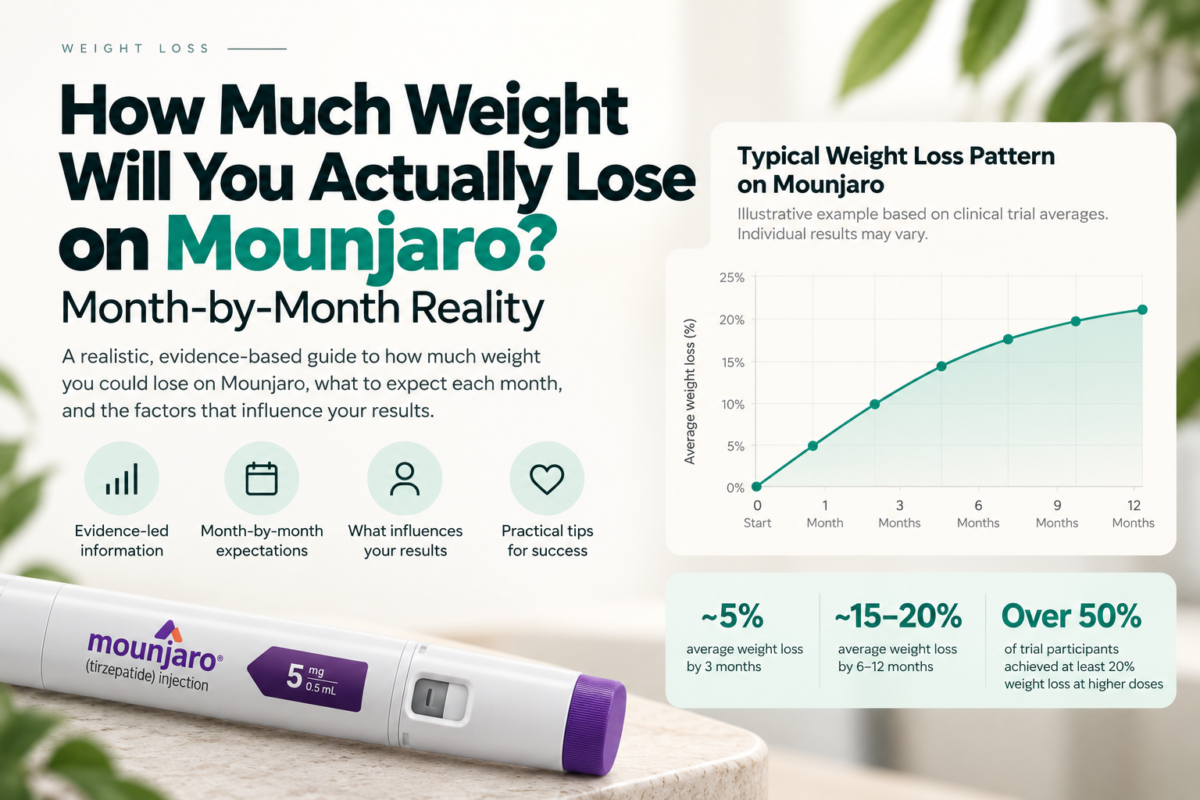
Mounjaro (tirzepatide) has transformed weight management for thousands of people across the UK. The dual-action GLP-1/GIP receptor agonist can produce remarkable results, with clinical trials showing average weight losses of 15 to 22 percent of body weight depending on dose and duration. But if you are approaching your target weight or considering stopping treatment, a difficult question looms: how do you keep it off?
This is not a minor concern. Research consistently shows that weight regain after discontinuing weight loss medication is the norm rather than the exception. But “the norm” is not the same as “inevitable.” With the right preparation, realistic expectations, and sustained effort, many people successfully maintain a significant portion of their weight loss after Mounjaro.
This article covers what actually happens when you stop tirzepatide, why the body pushes back against weight loss, and the specific strategies that give you the best chance of keeping your results.
What Happens When You Stop Taking Mounjaro?
To understand how to maintain weight loss after Mounjaro, it helps to understand what the medication was doing while you were taking it.
Tirzepatide works by activating two receptors in the body: GLP-1 (glucagon-like peptide-1) and GIP (glucose-dependent insulinotropic polypeptide). This dual mechanism produces several effects that contribute to weight loss:
- Appetite suppression: Mounjaro reduces hunger signals sent to the brain, making you feel less inclined to eat and more satisfied with smaller portions.
- Slowed gastric emptying: Food moves through your stomach more slowly, prolonging feelings of fullness after meals.
- Improved insulin sensitivity: Better blood sugar regulation reduces the energy crashes and cravings that can drive overeating.
- Reduced food reward: Some evidence suggests GLP-1 agonists dampen the pleasurable response to high-calorie foods, making it easier to resist them.
When you stop taking Mounjaro, all of these effects gradually reverse. The medication’s half-life means it takes roughly five days for tirzepatide levels to halve in your body, and several weeks before it has fully cleared your system. During this period, hunger gradually returns, portion satisfaction decreases, and the cravings that the medication had been dampening begin to resurface.
This is not a psychological failure. It is pharmacology.
The Weight Regain Picture: What the Research Shows
The SURMOUNT-4 trial, one of the key clinical trials for tirzepatide, provides the clearest data on what happens after stopping. Participants who switched from tirzepatide to placebo regained approximately half of their lost weight over the following year, while those who continued the medication maintained their weight loss.
That headline figure is sobering, but the detail is important. Even after partial regain, the group who had been on tirzepatide were still significantly lighter than at baseline. They retained meaningful health improvements including better blood sugar control, improved lipid profiles, and reduced cardiovascular risk markers.
In other words, even imperfect maintenance has real clinical value. The goal is not necessarily to maintain every single pound of weight loss, but to hold on to as much as you can while preserving the metabolic benefits you have gained.
Five Strategies for Keeping Weight Off After Tirzepatide
1. Rebuild Your Relationship with Hunger
One of the most disorienting aspects of stopping Mounjaro is the return of genuine hunger. While you were on the medication, many of the normal hunger cues were muted. You may have gone hours without thinking about food. That experience can make the return of appetite feel alarming, even overwhelming.
Preparing for this transition mentally is as important as preparing for it practically. A few things to keep in mind:
- Hunger is not an emergency. Feeling hungry does not mean you need to eat immediately or that something is wrong. Learning to sit with moderate hunger and respond to it calmly, rather than reactively, is a valuable skill.
- Distinguish between types of hunger. Physical hunger builds gradually and can be satisfied by a range of foods. Emotional or habitual hunger tends to appear suddenly and often centres on specific comfort foods. Learning to tell the difference helps you respond appropriately.
- Expect an adjustment period. Your appetite regulation may be somewhat erratic in the first few weeks after stopping. This typically settles over one to two months as your body readjusts.
2. Prioritise Protein and Fibre
Without Mounjaro’s appetite-suppressing effects, dietary composition becomes significantly more important. Not all foods are equal when it comes to keeping you full, and structuring your meals around the most satiating nutrients can help bridge the gap left by the medication.
Protein is the most satiating macronutrient. It triggers the release of hormones that signal fullness, takes longer to digest than carbohydrates, and has a higher thermic effect, meaning your body uses more energy to process it. Aim for a source of protein at every meal and most snacks. Good options include:
- Chicken, turkey, and other lean meats
- Fish and seafood
- Eggs
- Greek yoghurt and cottage cheese
- Legumes, lentils, and chickpeas
- Tofu and tempeh
Dietary fibre serves a complementary role. It adds bulk to meals without adding significant calories, slows digestion, and supports a healthy gut microbiome, which emerging research suggests plays its own role in weight regulation. The NHS recommends 30g of fibre per day for adults, though most people in the UK fall well short of this target. Good sources include:
- Vegetables, particularly broccoli, carrots, and leafy greens
- Whole grains such as oats, brown rice, and wholemeal bread
- Fruits with their skins where possible
- Beans, lentils, and pulses
- Nuts and seeds
A meal built around protein and fibre, say grilled chicken with roasted vegetables and quinoa, will keep you fuller for considerably longer than one built around refined carbohydrates, even if the calorie content is similar.
3. Maintain a Consistent Exercise Routine
The NICE guidelines on physical activity recommend at least 150 minutes of moderate aerobic activity per week, supplemented by strength training on at least two days. For weight maintenance specifically, some evidence suggests aiming for the higher end of this range or slightly beyond.
Exercise supports weight maintenance through multiple mechanisms:
- Direct calorie expenditure. While you cannot outrun a bad diet, regular exercise provides a meaningful buffer against moderate calorie surpluses.
- Muscle preservation. Weight loss almost always involves some loss of lean muscle mass, which reduces your basal metabolic rate. Resistance training helps preserve and rebuild muscle, keeping your metabolism higher.
- Appetite regulation. Regular moderate exercise has been shown to improve the sensitivity of appetite-regulating hormones, helping your body more accurately signal when it is genuinely hungry versus when it is not.
- Mood and stress management. Exercise is one of the most effective natural interventions for anxiety, low mood, and stress, all of which can trigger overeating in susceptible individuals.
The most important factor in exercise for maintenance is consistency rather than intensity. A 30-minute walk five days a week is vastly more effective than an ambitious gym plan that you abandon after three weeks. Choose activities you genuinely enjoy, or at least do not actively dislike, and build them into your routine as non-negotiable appointments.
4. Manage Stress and Emotional Eating
Mounjaro’s appetite suppression can mask emotional eating patterns that were present before treatment. With the medication removed, these patterns often re-emerge, sometimes more strongly than before because the underlying triggers were never addressed.
Common emotional eating triggers include:
- Work stress and pressure
- Relationship difficulties
- Boredom, particularly in the evenings
- Loneliness or social isolation
- Anxiety about the future, including about weight regain itself
Developing alternative coping strategies before or during the transition off Mounjaro gives you replacement behaviours to draw on when cravings hit. These might include:
- Physical activity: Even a brief walk can disrupt the craving-action cycle
- Structured relaxation: Deep breathing, meditation apps, or yoga
- Social connection: Calling a friend or joining an online support community
- Productive distraction: Cooking a healthy meal, reading, gardening, or working on a hobby
If emotional eating has been a significant factor in your weight history, professional support from a therapist or counsellor experienced in eating behaviours can be genuinely transformative. This is not a sign of weakness. It is a recognition that weight management has psychological dimensions that deserve the same quality of care as the physical ones.
5. Discuss Tapering and Maintenance Dosing with Your Prescriber
Stopping Mounjaro does not have to mean stopping abruptly. Increasingly, clinicians are recommending a gradual dose reduction before discontinuation, giving the body time to adjust to declining tirzepatide levels rather than experiencing a sudden withdrawal of appetite suppression.
The available dose strengths of Mounjaro (2.5mg, 5mg, 7.5mg, 10mg, 12.5mg, and 15mg) make step-down tapering relatively straightforward. A typical approach might involve reducing by one dose level every four to six weeks, though the exact schedule should be determined by your prescriber based on your individual response.
Additionally, some patients and clinicians are exploring the concept of a maintenance dose: continuing Mounjaro at a lower dose long-term rather than discontinuing entirely. The rationale is that obesity is a chronic condition, and ongoing pharmacological support may be appropriate for some individuals, much like continuing blood pressure medication even after levels normalise.
This is a conversation worth having with your healthcare provider, particularly if you have a history of significant weight cycling or if previous attempts at maintenance without medication have been unsuccessful.
Building Habits That Outlast the Medication
The single most important thing you can do to maintain weight loss after Mounjaro is to use your time on the medication as an opportunity to build sustainable habits. The appetite suppression that tirzepatide provides creates a window of reduced biological resistance, a period where making healthier choices is genuinely easier.
If you use that window only for weight loss and do not also use it to establish new dietary patterns, exercise routines, and coping strategies, you are essentially building a house on a foundation that disappears when the medication stops.
Conversely, if you spend your time on Mounjaro actively practising the eating behaviours, activity levels, and stress-management techniques that you will need long-term, you give yourself the strongest possible platform for maintenance.
This is not about perfection. No one maintains a perfect diet or never misses an exercise session. It is about establishing patterns that are robust enough to survive the inevitable disruptions that life brings, and that are sustainable enough that you can maintain them without the medication’s support.
The Role of Medical Support
Weight maintenance is not something you have to figure out alone. Regular check-ins with a healthcare provider who understands your history and goals can make a significant difference. They can help you:
- Monitor your weight trend and intervene early if regain is occurring
- Adjust your maintenance plan based on what is and is not working
- Assess whether resuming medication or trying an alternative might be appropriate
- Address any metabolic changes, such as altered blood sugar or cholesterol levels, that may accompany weight changes
- Provide accountability and encouragement during a phase that can feel isolating
The transition off weight loss medication is a medically significant event that deserves the same clinical attention as starting the medication. Do not treat it as simply stopping something. Treat it as starting a new phase of your health management.
A Realistic Perspective
It would be dishonest to suggest that maintaining weight loss after Mounjaro is straightforward. The biology working against you is real and significant. Your body evolved to resist weight loss and promote weight regain, and those mechanisms do not switch off just because you have reached your target.
But it would be equally dishonest to suggest that regaining all the weight is inevitable. Plenty of people successfully maintain meaningful weight loss long-term, including after stopping medication. They do so not through superhuman willpower but through practical strategies, consistent habits, psychological awareness, and appropriate support.
Your goal should not be perfection. It should be progress that you can sustain. Even maintaining 50 to 75 percent of your total weight loss has substantial benefits for cardiovascular health, metabolic function, joint health, and quality of life. And those benefits are very much worth protecting.
Frequently Asked Questions
What is the maintenance dose of Mounjaro?
There is no single “maintenance dose” of Mounjaro. The available doses range from 2.5mg to 15mg weekly, and a maintenance dose, if appropriate, would be determined by your prescriber based on your individual response, side effect profile, and weight management goals. Some patients find that a lower dose, such as 5mg or 7.5mg, is sufficient to help prevent regain without the stronger appetite suppression of higher doses. This should always be a clinical decision, not a self-directed one.
How much weight do people typically regain after stopping Mounjaro?
Data from the SURMOUNT-4 trial suggests that participants who stopped tirzepatide regained approximately half of their lost weight over the following year. However, this varied considerably between individuals. Those who maintained healthy eating and exercise habits generally fared better. Importantly, even after partial regain, participants retained meaningful improvements in metabolic health markers compared to their pre-treatment baseline.
Can I restart Mounjaro if I start regaining weight?
In many cases, yes. Restarting tirzepatide is a reasonable clinical option if you experience significant weight regain and your prescriber considers it appropriate. Some healthcare providers view weight management as requiring intermittent or ongoing pharmacological support, similar to other chronic conditions. If you are considering this, discuss it with your clinician rather than attempting to manage the decision independently.
Should I taper off Mounjaro or stop all at once?
Gradual tapering is generally preferred over abrupt discontinuation, as it allows your body to adjust to decreasing levels of tirzepatide over several weeks. The specific tapering schedule, whether stepping down one dose level every four to six weeks or using a different approach, should be determined by your prescriber based on your current dose, treatment duration, and individual circumstances. Never adjust your dose without medical guidance.
How long after stopping Mounjaro does appetite return?
Most people notice their appetite beginning to return within two to four weeks of their last injection, with full appetite restoration typically occurring over six to eight weeks as tirzepatide clears from the body. Some people experience a temporary period of increased appetite beyond their pre-treatment baseline, which usually settles within one to two months. Having dietary strategies in place before this happens can help you manage the transition more comfortably.