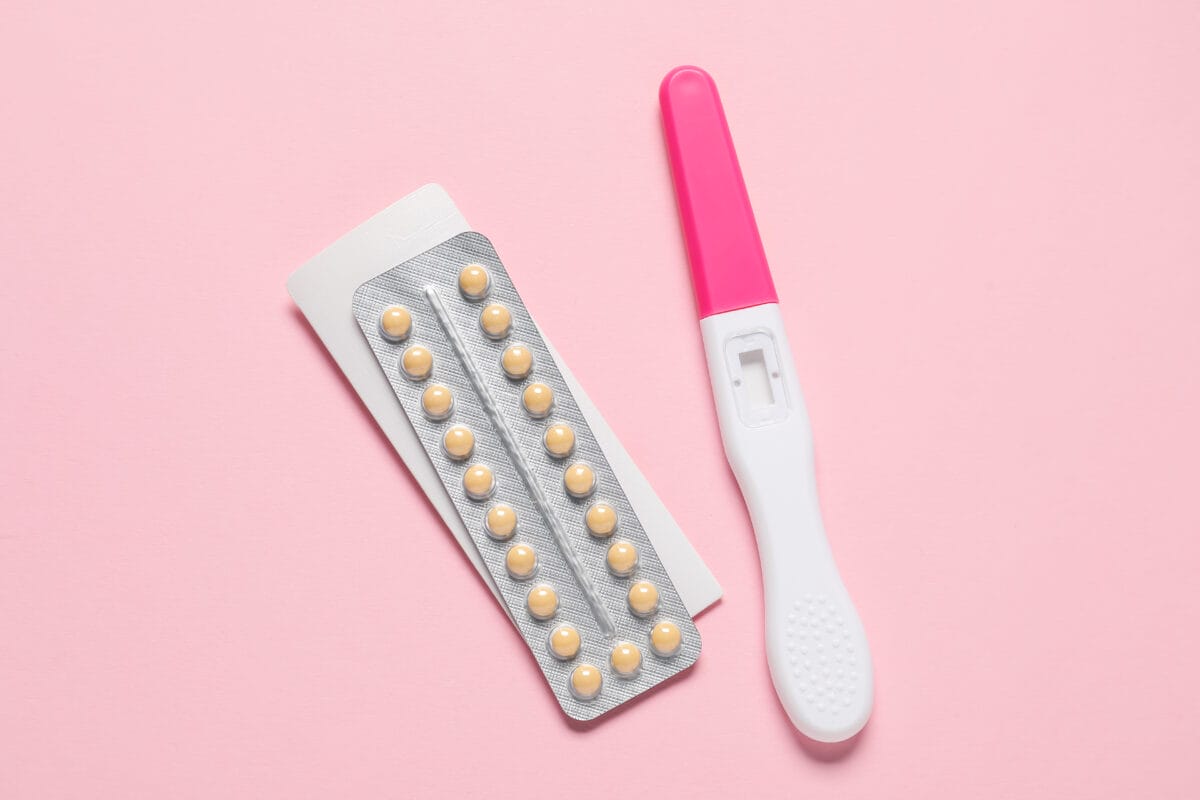
If you are wondering whether you need to pay for the contraceptive pill in the UK, the short answer is reassuring: no, you do not. All contraception — including both types of oral contraceptive pill — is available free of charge on the NHS, regardless of your age, immigration status, or where in the UK you live. This applies in England, Scotland, Wales, and Northern Ireland.
But while the principle is simple, the practicalities can be less straightforward. Where exactly do you go? What happens at the appointment? What if you cannot easily get to a GP? And is there ever a reason you might choose to pay for the pill instead of getting it for free? This guide walks through all of it.
Free Contraception on the NHS: The Basics
The UK has a long-standing commitment to providing free contraception. This is not limited to the pill — it covers all forms of contraception, including condoms, the coil (IUD and IUS), the implant, the injection, the patch, the vaginal ring, and emergency contraception. The principle is that cost should never be a barrier to preventing unintended pregnancy.
For the contraceptive pill specifically, this means you can obtain both the combined oral contraceptive pill and the progestogen-only pill (mini pill) at no cost through NHS services.
Where to Get the Free Contraceptive Pill
There are several NHS routes to accessing the pill for free:
Your GP Surgery
This is the most commonly used route. You book an appointment with your GP (or a practice nurse trained in contraception), who will ask about your medical history, check your blood pressure, and possibly record your weight and height. Based on this assessment, they will recommend whether the combined pill or mini pill is more suitable for you and write a prescription.
Many GP surgeries offer repeat prescriptions for the contraceptive pill, which means you do not need a new appointment every time you need more pills. Instead, you can request your repeat prescription online, by phone, or in person, and collect it from the pharmacy without seeing a doctor each time. You will typically be asked to attend a review appointment once a year (or as your GP recommends) to check that your current pill is still the right choice.
When you take your NHS prescription to a pharmacy, there is no charge. Contraceptive prescriptions are exempt from the standard NHS prescription charge in England (which currently stands at £9.90 per item). In Scotland, Wales, and Northern Ireland, all NHS prescriptions are free anyway, so this is not a concern.
Sexual Health Clinics
Sexual health clinics (sometimes called GUM clinics or contraception clinics) offer free contraceptive services, including the pill. You usually do not need a GP referral to attend, and many accept walk-in appointments as well as bookings.
These clinics are staffed by specialists in sexual and reproductive health, so they can be a particularly good option if you have specific questions about contraception, need STI testing at the same time, or would prefer not to go through your GP. Services are confidential, and you do not need to be registered with a GP to attend.
You can find your nearest sexual health clinic through the NHS service search tool.
Community Pharmacies
A growing number of community pharmacies across the UK now offer contraception services directly, without needing a GP prescription. Under pharmacy contraception schemes (which vary by region), a trained pharmacist can assess your suitability for certain contraceptive pills and supply them to you on the spot, free of charge.
This is a relatively newer development and availability depends on where you live. In some areas, pharmacies can initiate new prescriptions for the pill; in others, they can only supply repeat prescriptions. It is worth calling your local pharmacy ahead of time to check what services they offer.
Additionally, since 2021, certain progestogen-only pills (specifically those containing desogestrel, such as Lovima and Hana) have been reclassified as pharmacy medicines in the UK. This means they can be purchased directly from a pharmacist after a short consultation, without a prescription. However, buying them this way does cost money — typically around £7-13 for a month’s supply. If cost is a consideration, getting the same pill on an NHS prescription is the free option.
Young People’s Services
If you are under 25 (the age varies by area), you may be able to access the contraceptive pill through dedicated young people’s sexual health services, such as Brook clinics or local authority youth health services. These offer the same clinical assessment and free supply as other NHS routes, often in a setting that feels more accessible and less formal for younger patients.
All contraception consultations for under-16s are confidential, provided the healthcare professional is satisfied that the young person understands the advice being given and is not at risk of harm.
What Happens at a Contraceptive Pill Appointment
Regardless of where you access the pill, the appointment process follows a similar pattern. Understanding what to expect can make it feel less daunting, especially if it is your first time.
The Assessment
Your healthcare professional will ask about:
- Your general medical history (including any conditions you have or have had)
- Family medical history (particularly regarding blood clots, stroke, or heart disease)
- Any medications you are currently taking
- Whether you smoke
- Your blood pressure (this will be measured)
- Your weight and height (to calculate your BMI)
- Your menstrual cycle and any previous experiences with contraception
This is not a judgement call — it is a clinical safety check. Certain medical conditions and risk factors mean that one type of pill may be safer for you than another. For example, if you have migraines with aura, the combined pill would not be recommended due to a small increase in stroke risk, but the mini pill would likely be a safe alternative.
Choosing the Right Pill
Based on your assessment, your prescriber will recommend either the combined pill or the progestogen-only pill. Within each category, there are multiple brands containing different types and doses of hormones. Your prescriber will usually start you on a commonly used formulation and adjust if needed based on how you respond.
You should feel comfortable asking questions during this process. Good things to discuss include:
- What side effects to expect and when to be concerned
- How to take the pill correctly (including what to do if you miss one)
- How the pill interacts with other medications you take
- What secondary benefits the pill might offer (for example, help with acne or heavy periods)
- How long it takes for the pill to become effective
Follow-Up and Reviews
After your initial prescription, you will typically be invited back for a follow-up after three months to check how you are getting on. After that, annual reviews are standard. These are important — they give your prescriber a chance to recheck your blood pressure, update your medical history, and ensure that your current pill is still the safest and best option for you.
Why Some People Choose to Pay for the Pill
Given that the contraceptive pill is free on the NHS, you might wonder why anyone would pay for it. There are several practical reasons:
Convenience and Speed
Getting a GP appointment in the UK is not always quick or easy. If you are running low on pills and cannot get an appointment for two weeks, the gap could leave you unprotected. Online contraception services and pharmacy purchases offer same-day or next-day access, which can be worth paying for in a pinch.
Accessibility
Not everyone finds it easy to attend in-person appointments. If you live in a rural area, have limited mobility, work long hours, have caring responsibilities, or simply find in-person medical consultations stressful, online services that deliver the pill to your door can remove significant barriers.
Privacy
While all NHS contraception services are confidential, some people — particularly younger patients or those in certain living situations — may feel more comfortable ordering online than visiting their local GP or pharmacy, where they might encounter someone they know.
Consistency
Some online services offer subscription models that automatically dispatch your next supply before you run out, removing the need to remember to reorder or rebook appointments. For busy people, this “set and forget” approach can be genuinely helpful in maintaining consistent contraceptive use.
Buying the Pill Over the Counter
Since the reclassification of desogestrel-based progestogen-only pills (such as Lovima and Hana) as pharmacy medicines, it is now possible to buy certain mini pills directly from a pharmacy without a prescription. The pharmacist will conduct a short consultation to check that the pill is suitable for you, and then you can purchase it on the spot.
This is currently limited to desogestrel-based POPs — you cannot buy the combined pill over the counter. The cost is typically £7-13 for a one-month supply, depending on the brand and pharmacy.
This option is particularly useful for women who have used the mini pill before and need a quick resupply, or for those who prefer the immediacy of an in-store purchase over waiting for an NHS prescription.
What About Emergency Contraception?
While this article focuses on the regular contraceptive pill, it is worth noting that emergency contraception (the “morning after pill”) is also available free on the NHS from GPs, sexual health clinics, some pharmacies, and A&E departments. It can also be purchased over the counter from pharmacies, where it typically costs £15-35 depending on the type.
Since April 2024, Levonorgestrel emergency contraceptive pills have been available free of charge from pharmacies in England for women and girls, regardless of age, without a prescription. In Scotland and Wales, similar pharmacy schemes have been in place for longer. Check what is available in your area.
Making the Right Choice for You
The most important thing is that you have access to contraception that works for you — in a way that fits your life. For most people in the UK, the NHS provides everything you need at no cost. But if the NHS route does not work well for your circumstances, paid options exist to fill the gaps.
At Evernu, we are committed to making women’s healthcare accessible and straightforward. Whether you are navigating contraception for the first time or looking for support with broader hormonal health questions, our team is here to help you make informed decisions about your body.
A Quick Summary of Your Options
- Free via GP: Both combined pill and mini pill. Requires appointment and assessment. Repeat prescriptions available.
- Free via sexual health clinic: Both types. Often walk-in. No GP registration needed.
- Free via community pharmacy schemes: Availability varies by area. Check locally.
- Free via young people’s services: For those under 25 (age varies by area).
- Over-the-counter purchase: Desogestrel mini pill only. Costs £7-13 per month. No prescription needed.
- Online services: Both types available. Costs vary. Delivered to your door.
Whatever route you take, make sure you have a proper clinical assessment before starting any hormonal contraception for the first time. This is a genuine safety requirement, not a bureaucratic hurdle.
Frequently Asked Questions
Do I need to pay the NHS prescription charge for the contraceptive pill?
No. Contraceptive prescriptions are exempt from the NHS prescription charge in England. You will never be asked to pay the standard £9.90 prescription fee for contraception. In Scotland, Wales, and Northern Ireland, all NHS prescriptions are free, so there is no charge regardless of the medication.
Can I get the contraceptive pill if I am not registered with a GP?
Yes. You do not need to be registered with a GP to access free contraception. Sexual health clinics provide contraceptive services to anyone, regardless of GP registration status. Some pharmacy schemes also do not require GP registration. If you need contraception and are not registered with a GP, a sexual health clinic is your best starting point.
How many months’ supply of the pill can I get at once?
This depends on your prescriber and the service you use. GPs commonly prescribe three to six months’ supply at a time, especially once you are established on a particular pill. Sexual health clinics may give you a similar supply. When you first start a new pill, you may receive a shorter initial supply (one to three months) so that you can be reviewed before continuing.
Can men pick up a contraceptive pill prescription on behalf of their partner?
In most cases, yes — anyone can collect a named prescription from a pharmacy on behalf of the patient. However, the initial assessment and prescription must be carried out with the person who will be taking the pill. A partner cannot attend the consultation on your behalf or request a new prescription for you.
What if my GP refuses to prescribe the contraceptive pill?
If your GP determines that a particular pill is not medically suitable for you, they should explain why and discuss alternative options. If you feel your concerns are not being addressed, you can seek a second opinion by visiting a sexual health clinic, asking to see a different GP at your surgery, or using an online consultation service. Everyone has the right to access contraception, and there should always be a suitable option available to you.