Dutasteride has been generating significant interest in the hair loss community for years, primarily because of its superior DHT-blocking capability compared to finasteride. While oral dutasteride is already used off-label for male pattern baldness in the UK, a growing body of research is now examining whether applying dutasteride directly to the scalp — as a topical formulation — might deliver the same follicle-level benefits with fewer systemic side effects.
It is an appealing idea: target DHT exactly where it’s causing damage, without significantly affecting hormone levels throughout the rest of the body. But how strong is the evidence, and can you actually access topical dutasteride in the UK? This guide covers what we know so far, what remains uncertain, and what this emerging treatment might mean for men dealing with hair loss.
What Is Topical Dutasteride?
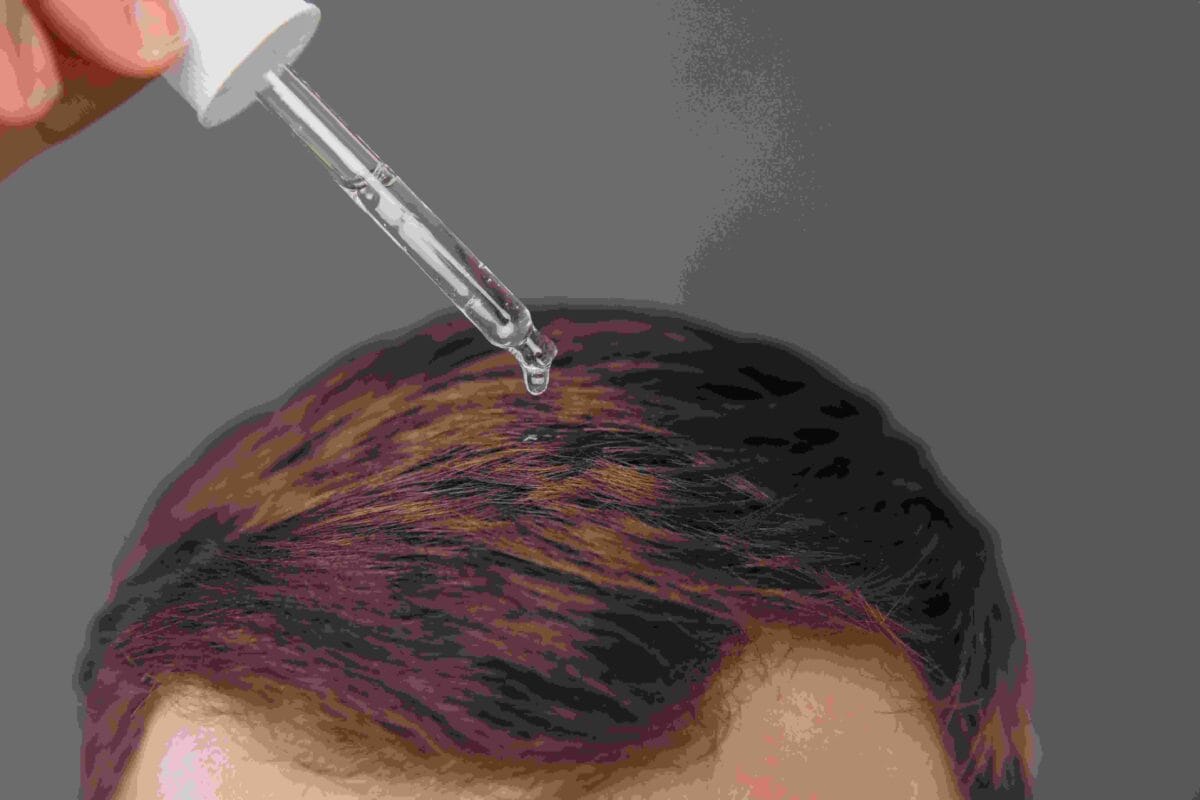
Topical dutasteride is a formulation of the drug dutasteride designed to be applied directly to the scalp rather than taken as an oral capsule. The active ingredient is the same — dutasteride, a potent dual 5-alpha-reductase inhibitor — but the delivery method changes how the drug interacts with the body.
When taken orally, dutasteride is absorbed into the bloodstream and reduces DHT levels systemically, meaning throughout the entire body. This comprehensive approach is highly effective for hair loss but also means that DHT suppression occurs in tissues far beyond the scalp, which is where most of the reported side effects originate.
The rationale behind topical application is to concentrate the drug’s effects at the scalp — where the hair follicles are — while limiting how much reaches the wider circulation. In pharmacological terms, the goal is to maximise local bioavailability while minimising systemic exposure.
If you are not yet familiar with how dutasteride works more broadly, our comprehensive guide to dutasteride covers the fundamentals in detail.
How Topical Dutasteride Works
To understand why topical dutasteride is generating excitement, it helps to revisit the mechanism of action.
Male pattern baldness is driven by dihydrotestosterone (DHT), a hormone produced when the enzyme 5-alpha-reductase converts testosterone. DHT binds to androgen receptors in genetically susceptible hair follicles on the scalp, triggering a gradual shrinking process called follicular miniaturisation. Over time, this produces thinner, shorter hairs until the follicle eventually stops producing visible hair.
There are two main isoforms of 5-alpha-reductase relevant to hair loss:
- Type I — found predominantly in the skin and sebaceous glands, including the scalp
- Type II — found in hair follicles, the prostate, and other tissues
Finasteride inhibits only the type II isoform, reducing serum DHT by approximately 60-70%. Dutasteride inhibits both type I and type II, reducing serum DHT by approximately 90% when taken orally. This more comprehensive blockade is why dutasteride has been shown to produce greater hair count improvements than finasteride in head-to-head trials.
When applied topically, dutasteride penetrates the skin layers of the scalp and inhibits 5-alpha-reductase activity locally. The key question — and the focus of current research — is whether this local application delivers sufficient DHT suppression at the follicle while keeping systemic drug levels low enough to reduce the risk of side effects.
Clinical Evidence: What the Research Shows
Research into topical dutasteride is still at a relatively early stage compared to the decades of data behind oral finasteride and topical minoxidil. However, several studies have produced encouraging results.
Key Studies
Fernandez-Nieto et al. (2021): A Spanish study compared topical dutasteride (0.01% and 0.25%) applied daily against oral dutasteride 0.5mg in men with androgenetic alopecia. After 24 weeks, the higher-concentration topical group (0.25%) showed improvements in hair density comparable to oral dutasteride. Crucially, systemic DHT suppression was significantly lower in the topical groups, suggesting reduced systemic exposure.
Saceda-Corralo et al. (2022): This randomised, controlled study assessed topical dutasteride 0.25% against topical finasteride 0.25% and found that both produced meaningful improvements in hair count, with the dutasteride group showing numerically superior results, though the difference did not reach statistical significance in this sample size.
Tsunemi et al. (2016): An earlier Japanese pilot study explored topical dutasteride at varying concentrations and found a dose-dependent response — higher concentrations produced greater improvements. The study also confirmed that topical application resulted in lower serum dutasteride levels compared to oral administration.
Moussa et al. (2022): A systematic review examining the available literature on topical dutasteride concluded that the treatment showed “promising efficacy” with a “favourable side effect profile” compared to oral formulations, while noting that larger, longer-term randomised controlled trials are needed to establish definitive conclusions.
What the Evidence Tells Us — and What It Does Not
The current evidence suggests that topical dutasteride:
- Can reduce DHT levels at the scalp sufficiently to improve hair density
- Produces lower systemic DHT suppression than oral dutasteride
- May offer a similar magnitude of hair improvement to oral dutasteride at adequate concentrations
- Appears to be well-tolerated with fewer systemic side effects than the oral form
However, important limitations remain:
- Most studies have been relatively small (typically fewer than 100 participants)
- Study durations have been short (typically six months or less), while hair loss is a long-term condition
- Formulation variables (concentration, vehicle, excipients) differ between studies, making direct comparisons difficult
- No large-scale, multi-centre, placebo-controlled Phase III trials have been completed
- Long-term safety data specific to topical application is limited
Potential Advantages Over Oral Dutasteride
The primary appeal of topical dutasteride lies in its potential to separate local efficacy from systemic effects. Here is how the two approaches compare:
| Factor |
Oral Dutasteride |
Topical Dutasteride |
| DHT reduction (scalp) |
~90% |
Significant (concentration-dependent) |
| DHT reduction (systemic) |
~90% |
Lower (varies by study, typically 30-50%) |
| Sexual side effects |
Reported in 3-8% of users |
Potentially lower (limited data) |
| Half-life concerns |
~5 weeks (long washout if side effects occur) |
Likely shorter effective duration locally |
| Convenience |
One capsule daily |
Daily scalp application |
| UK availability |
Off-label prescription |
Compounding pharmacies only |
| Evidence base |
Multiple large RCTs |
Smaller studies, growing evidence |
The reduced systemic DHT suppression is particularly relevant for men who are concerned about the side effect profile of oral 5-alpha-reductase inhibitors. One of the main barriers to treatment with both finasteride and oral dutasteride is anxiety about potential sexual side effects, even though these occur in a small minority of users. If topical dutasteride can deliver comparable scalp-level results while meaningfully reducing that risk, it could address one of the biggest reasons men hesitate to start treatment.
For a broader comparison of how different hair loss treatments stack up, see our guide on evidence-based solutions for male hair growth.
How Topical Dutasteride Compares to Topical Finasteride
Topical finasteride has been available for somewhat longer and has a slightly more established evidence base than topical dutasteride. The question of whether topical dutasteride offers meaningful advantages over topical finasteride mirrors the oral comparison: dutasteride is a more potent DHT inhibitor because it blocks both isoforms of 5-alpha-reductase.
In theory, this should translate to greater scalp DHT reduction and potentially better hair outcomes. The Saceda-Corralo study mentioned earlier did find numerically superior results with topical dutasteride over topical finasteride, though the difference was not statistically significant.
Practically speaking, topical finasteride is currently more accessible in the UK, with several compounding pharmacies offering standardised formulations. Topical dutasteride remains less widely available, partly because dutasteride’s lipophilic (fat-soluble) nature makes it more challenging to formulate into an effective topical vehicle.
For an in-depth comparison of finasteride and another established treatment, see our finasteride vs minoxidil guide.
UK Availability: Where Things Currently Stand
This is perhaps the most important practical question for anyone reading this in the UK. The short answer is that topical dutasteride is not commercially available as a licensed product in the UK. There is no MHRA-approved topical dutasteride formulation for hair loss — or for any other indication.
However, that does not mean it is entirely inaccessible. There are two main routes:
Compounding Pharmacies
Compounding pharmacies can prepare bespoke topical dutasteride formulations on an individual-patient basis, under the direction of a prescribing clinician. This is the same route through which topical finasteride has become available in the UK. The clinician writes a prescription specifying the concentration and vehicle, and the pharmacy compounds the product to order.
The advantages of this approach include the ability to customise concentration and formulation. The disadvantages include higher cost (compounded products are more expensive than mass-manufactured medications), potential variability in quality between pharmacies, and the lack of the rigorous quality assurance processes that licensed products undergo.
Clinical Trials and Research Settings
Some dermatology clinics and research institutions may offer topical dutasteride as part of clinical studies. Participation in such studies can provide access to the treatment under close medical supervision, though eligibility criteria apply and availability is limited.
Important Caveats
- Purchasing compounded medications online from unregulated sources carries significant risks. Products may be incorrectly dosed, contaminated, or ineffective.
- Any prescription for topical dutasteride should come from a qualified clinician who can assess your suitability and monitor your response.
- The MHRA regulates licensed medications in the UK, but compounded products fall under a different regulatory framework.
Who Might Consider Topical Dutasteride?
Based on the current evidence and availability landscape, topical dutasteride may be worth discussing with a clinician if you:
- Have tried finasteride (oral or topical) and found it insufficient for your hair loss
- Are interested in dutasteride’s greater DHT-blocking potency but concerned about the side effect profile of the oral formulation
- Want to explore a more targeted treatment approach before committing to systemic therapy
- Have experienced side effects on oral finasteride and are looking for an alternative with potentially lower systemic absorption
Topical dutasteride is generally not a first-line recommendation at this stage, simply because the evidence base is not yet as robust as for oral finasteride or topical minoxidil. However, for men who have specific reasons to explore it, it represents a legitimate area of clinical interest.
Side Effects and Safety Considerations
Because topical dutasteride reduces systemic DHT levels to a lesser extent than the oral form, it is expected — though not yet conclusively proven — that systemic side effects occur less frequently. The side effects most commonly associated with oral dutasteride include:
- Reduced libido (reported in approximately 3-5% of users)
- Erectile changes (approximately 3-5%)
- Decreased ejaculate volume (approximately 1-2%)
- Breast tenderness or enlargement (rare)
In the small studies of topical dutasteride conducted to date, sexual side effects were reported at lower rates than with oral dutasteride, though sample sizes were too small to make definitive comparisons.
Local side effects specific to topical application may include:
- Scalp irritation or redness
- Dryness or flaking at the application site
- Contact dermatitis (uncommon)
These local effects are generally mild and often related to the vehicle (the liquid or gel base) rather than the dutasteride itself.
For more detail on how side effects compare across hair loss treatments, our finasteride side effects guide provides useful context.
The Future of Topical Dutasteride
The trajectory of topical dutasteride mirrors the earlier development of topical finasteride — initial off-label use supported by small studies, followed by growing clinical interest and eventual wider availability. Several factors suggest that topical dutasteride may become a more mainstream option in the coming years:
- Pharmaceutical company interest: Multiple companies are investigating topical dutasteride formulations, including novel delivery systems designed to improve scalp penetration and stability
- Growing demand: Patient interest in treatments that minimise systemic exposure is increasing, driven in part by online health literacy and shared experiences in hair loss communities
- Regulatory pathways: If larger clinical trials demonstrate a clear efficacy-to-side-effect advantage over existing treatments, a licensed topical dutasteride product could eventually receive MHRA approval
- Formulation advances: Nanotechnology-based delivery systems (such as liposomes and nanoparticles) are being explored to improve dutasteride’s penetration through the skin barrier, which has been one of the main technical challenges
Until then, topical dutasteride remains an emerging option — scientifically plausible, supported by early evidence, and available through compounding, but not yet established as a standard treatment.
When to Seek Professional Advice
If you’re considering topical dutasteride, we strongly recommend discussing it with a clinician who has experience with hair loss treatments. A proper assessment should include:
- Confirming that your hair loss is consistent with androgenetic alopecia
- Reviewing your treatment history and response to previous therapies
- Discussing the current evidence, including its limitations
- Evaluating whether first-line treatments (finasteride, minoxidil) have been adequately trialled
- Considering baseline blood tests to monitor hormonal and metabolic markers
Our clinicians can help you assess whether topical dutasteride — or another treatment approach — is appropriate for your situation. Visit our hair loss treatment page to explore your options.
Key Takeaways
- Topical dutasteride is a formulation of dutasteride applied directly to the scalp, aiming to reduce local DHT with less systemic absorption than the oral form.
- Early clinical evidence is promising, showing meaningful improvements in hair density with lower systemic DHT suppression compared to oral dutasteride.
- The evidence base remains limited — larger, longer-term clinical trials are needed before definitive conclusions can be drawn.
- In the UK, topical dutasteride is not available as a licensed product but can be obtained through compounding pharmacies with a prescription.
- It is not a first-line treatment — oral finasteride and topical minoxidil remain the standard starting points for most men with androgenetic alopecia.
- Potential advantages include fewer systemic side effects while maintaining scalp-level efficacy, though this needs further confirmation.
- Always seek clinical guidance before starting any hair loss treatment, particularly emerging or off-label therapies.