If you are a man considering testosterone replacement therapy and there is any possibility that you might want to father children in the future, this is one of the most important articles you will read. The relationship between exogenous testosterone and male fertility is one of the most significant — and too often inadequately discussed — aspects of TRT.
Here is the essential point, stated plainly: testosterone replacement therapy suppresses sperm production. In many cases, it can reduce sperm count to zero. This effect is well-documented, predictable, and occurs in the majority of men on TRT. It is not a rare side effect or an unlikely complication — it is a direct pharmacological consequence of how exogenous testosterone interacts with the hormonal systems that control sperm production.
This does not mean that TRT is incompatible with ever having children. It does mean that the decision to start TRT requires thoughtful planning if fertility matters to you, and that your clinician should discuss this with you before treatment begins. If they do not raise it, you should.
How Testosterone Controls Sperm Production
To understand why TRT affects fertility, you need to understand the hormonal feedback loop that regulates both testosterone production and sperm production. These two processes are intimately linked, and you cannot artificially alter one without affecting the other.
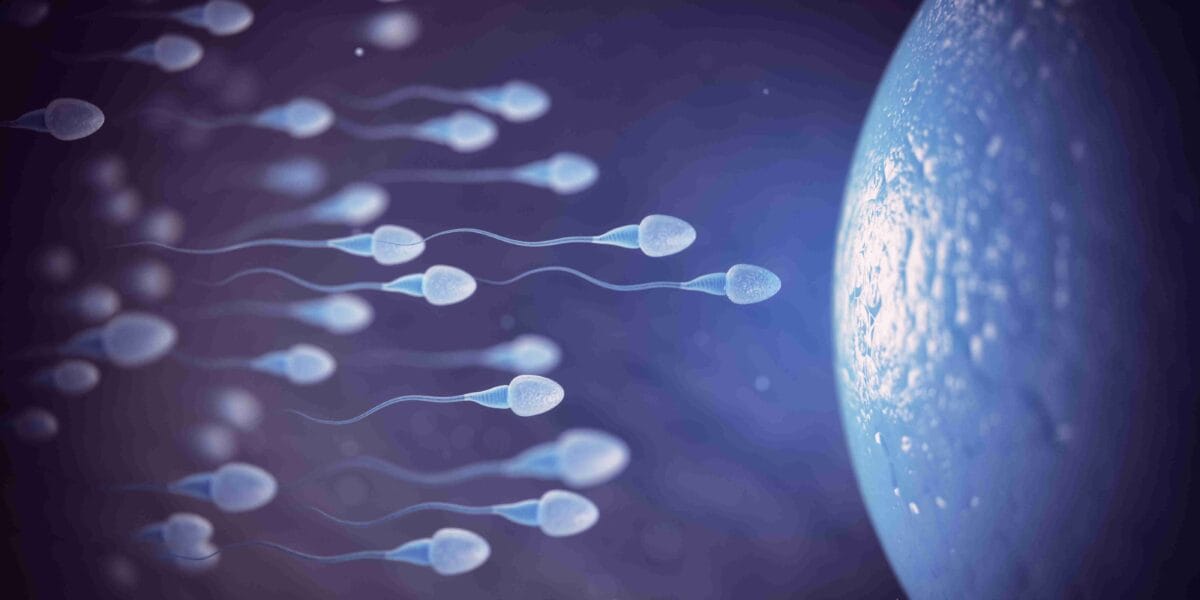
The hypothalamus, a small region at the base of the brain, releases gonadotropin-releasing hormone (GnRH) in a pulsatile pattern. This signals the pituitary gland to release two critical hormones: luteinising hormone (LH) and follicle-stimulating hormone (FSH). LH stimulates the Leydig cells in the testes to produce testosterone, while FSH acts on the Sertoli cells in the testes to support sperm production (spermatogenesis).
This system operates on a negative feedback loop. When testosterone levels in the blood are adequate, the hypothalamus and pituitary reduce their output of GnRH, LH, and FSH. When testosterone levels drop, they increase output to stimulate more production.
Here is the critical point: when you introduce exogenous testosterone (from an external source such as an injection or gel), your brain detects the resulting high testosterone levels and interprets this as a signal that production is more than sufficient. It responds by dramatically reducing GnRH, LH, and FSH output. With LH suppressed, your testes reduce or stop their own testosterone production. And critically, with FSH suppressed, sperm production is severely impaired or halted entirely.
In effect, TRT turns off the hormonal signals that drive sperm production. The testes may physically shrink (testicular atrophy) as a result of reduced stimulation, and sperm counts can fall to azoospermic levels (zero sperm) within a few months of starting treatment.
How Significant Is the Effect?
Research consistently shows that the impact on fertility is substantial. A comprehensive review published in the Journal of Clinical Endocrinology and Metabolism found that exogenous testosterone induces azoospermia (complete absence of sperm) in approximately 65 to 90 percent of men within four to six months of starting treatment. Even men who do not become fully azoospermic typically experience severely reduced sperm counts (severe oligozoospermia) that would significantly impair natural conception.
This is not dose-dependent in a simple way — even physiological replacement doses of testosterone (doses intended to restore levels to the normal range, not supraphysiological doses used for performance enhancement) can suppress sperm production to infertile levels. The method of delivery (gel, injection, or other) does not meaningfully change this effect; all forms of exogenous testosterone suppress the HPG axis.
It is worth emphasising that TRT should never be used as a reliable form of contraception, despite its sperm-suppressing effects. Some men maintain low but non-zero sperm counts on TRT, and pregnancies have occurred in partners of men on testosterone therapy. The suppression is significant enough to cause infertility in most men, but not reliable or complete enough to serve as contraception.
Is the Effect Reversible?
This is the question that causes the most anxiety, and the honest answer is: usually, but not always, and not quickly.
For most men, sperm production does recover after stopping testosterone therapy. However, the recovery timeline varies considerably:
- Typical recovery: Most men see sperm count begin to recover within three to six months of stopping TRT, with more complete recovery taking six to twelve months or longer.
- Extended recovery: Some men, particularly those who have been on TRT for many years, may take 12 to 24 months to recover adequate sperm counts.
- Incomplete recovery: A minority of men do not fully recover pre-treatment sperm production levels. This risk appears to increase with longer duration of TRT use and with older age. Men who had borderline fertility before starting TRT may be particularly vulnerable.
A study in the journal Fertility and Sterility found that approximately 90 percent of men recovered sperm production within six to twelve months of stopping exogenous testosterone, but recovery to pre-treatment levels was not guaranteed. The probability of full recovery decreases with the duration of testosterone use.
This is why the conversation about fertility must happen before treatment begins, not after. Once you have been on TRT for several years, the decision to stop in order to conceive carries genuine uncertainty about recovery.
HCG as an Adjunct to TRT for Fertility Preservation
Human chorionic gonadotropin (HCG) is a hormone that mimics the action of LH (luteinising hormone). When administered alongside TRT, HCG can stimulate the Leydig cells in the testes to continue producing intratesticular testosterone, which is necessary for sperm production. In essence, HCG partially counteracts the HPG axis suppression caused by exogenous testosterone.
How it works in practice: HCG is typically injected subcutaneously two to three times per week at a dose of 500 to 1500 IU per injection, alongside the patient’s regular testosterone therapy. The goal is to maintain enough intratesticular testosterone and testicular function to support ongoing spermatogenesis.
Evidence for effectiveness: Studies show that HCG co-administration can maintain sperm production in some men on TRT, though the evidence is not unanimous. A proportion of men on TRT plus HCG maintain sperm counts within fertile ranges, while others still experience significant suppression. The response is variable and cannot be guaranteed.
Limitations:
- HCG does not fully replicate the effects of natural LH and FSH, so sperm production may still be reduced compared to baseline
- Adding HCG increases the complexity and cost of treatment
- HCG can increase oestradiol (oestrogen) levels, potentially requiring additional management
- HCG availability has been intermittent in recent years due to manufacturing and regulatory changes
- Response is highly individual — regular semen analysis is needed to assess whether HCG is maintaining fertility
Despite these limitations, many TRT clinics in the UK — particularly private providers — routinely offer HCG alongside testosterone for younger men who want to preserve fertility potential. If fertility is important to you, asking about HCG should be part of your initial consultation.
Fertility Preservation Before Starting TRT
For men who know they want to start TRT but want to protect their future ability to have children, fertility preservation (sperm banking or cryopreservation) is the most reliable option. This involves providing one or more semen samples to a fertility clinic, where they are frozen and stored for potential future use.
The process:
- Referral: Your TRT clinician can refer you to a fertility clinic, or you can self-refer to most private fertility services across the UK.
- Semen analysis: An initial sample is analysed to assess sperm count, motility (movement), and morphology (shape). This provides a baseline and confirms that the sample is suitable for freezing.
- Sample collection: Most clinics recommend banking two to three samples, collected on separate days with two to five days of abstinence between each collection.
- Storage: Frozen samples can be stored for up to 55 years under current UK regulations (the Human Fertilisation and Embryology Authority updated storage limits in 2022).
- Cost: Private sperm banking in the UK typically costs between £300 and £600 for the initial collection and processing, with annual storage fees of £150 to £350. Some NHS fertility services may offer cryopreservation for patients starting medical treatments that affect fertility, though availability varies by region across England, Scotland, Wales, and Northern Ireland.
Sperm banking is a straightforward process that provides genuine peace of mind. If you are even slightly uncertain about whether you may want children in the future, it is worth doing before starting TRT. The cost is modest compared to the potential emotional and financial consequences of impaired fertility later.
Alternative Treatments for Men Who Want to Preserve Fertility
For men with symptomatic low testosterone who actively want to conceive or who place a high priority on fertility preservation, there are alternative treatment approaches that can improve testosterone levels without suppressing sperm production.
Clomiphene Citrate (Clomid)
Clomiphene is a selective oestrogen receptor modulator (SERM) that works by blocking oestrogen’s negative feedback on the hypothalamus and pituitary. This causes the brain to increase its output of LH and FSH, which in turn stimulates the testes to produce more testosterone and more sperm. Unlike TRT, clomiphene works with the body’s own hormonal axis rather than replacing it.
Evidence: Studies show that clomiphene can increase testosterone levels by 50 to 200 percent in hypogonadal men while maintaining or even improving sperm parameters. It is prescribed off-label for male hypogonadism (it is licensed for female ovulation induction), but its use in men is well-established in clinical practice.
Limitations: Not all men respond to clomiphene. Some men achieve improved testosterone levels but do not experience adequate symptom relief, possibly because the quality of the hormonal signal differs from direct testosterone replacement. Side effects can include visual disturbances, mood changes, and elevated oestrogen levels.
Enclomiphene
Enclomiphene is the trans-isomer of clomiphene and has a similar mechanism of action but without some of the oestrogenic effects of the cis-isomer (zuclomiphene) present in standard clomiphene. It is not widely available in the UK but is used by some specialist TRT clinics.
HCG Monotherapy
HCG can be used on its own (without testosterone) to stimulate the testes to produce more testosterone endogenously. Because the testosterone is produced within the testes, intratesticular testosterone levels remain high enough to support sperm production. This approach may be suitable for men with secondary hypogonadism (where the problem lies with the pituitary or hypothalamus rather than the testes themselves).
Limitations: HCG monotherapy may not achieve testosterone levels as high or as stable as direct testosterone replacement. The need for multiple weekly injections and the cost of HCG can be barriers. Response is variable and depends on the underlying cause of low testosterone.
When to Involve a Fertility Specialist
You should consider consulting a fertility specialist (reproductive endocrinologist or urologist with fertility expertise) in the following situations:
- Before starting TRT if you are actively trying to conceive or plan to within the next two to three years
- If you have been on TRT and want to come off to conceive — a specialist can guide the recovery process and monitor sperm parameters
- If sperm recovery is slow after stopping TRT — additional interventions (clomiphene, HCG, FSH therapy) may be needed to stimulate recovery
- If you have a history of fertility problems prior to TRT — baseline fertility may have been compromised, and recovery may be less predictable
- If you are over 40 and want to conceive after TRT, as age-related fertility decline adds an additional factor
The NICE fertility guidelines recommend that couples who have been trying to conceive for 12 months without success (or six months if the female partner is over 36) should be referred for fertility investigation. If TRT is a contributing factor, earlier referral is appropriate.
Fertility services are available across the UK, including through the NHS (though waiting times and eligibility criteria vary by region) and through private clinics. In Northern Ireland, NHS fertility services are provided through regional health trusts, while England, Scotland, and Wales have their own commissioning arrangements.
Planning Your Approach: A Framework
The right approach depends on your individual circumstances. Here is a practical framework for thinking through the options:
If you definitely want children in the near future (next 1-2 years):
- Do not start TRT without fertility specialist input
- Consider alternatives such as clomiphene or HCG monotherapy that can raise testosterone while preserving or enhancing fertility
- Have a baseline semen analysis before any treatment
If you might want children at some point but not immediately:
- Bank sperm before starting TRT — this is the single most impactful step you can take
- Discuss HCG co-administration with your TRT clinician to help maintain testicular function
- Monitor with periodic semen analyses if fertility preservation is important to you
If you are confident you do not want (more) children:
- The fertility effects of TRT are not a barrier to starting treatment
- Be aware that TRT is not a reliable form of contraception — continue to use contraception if pregnancy would be unwanted
- Understand that testicular atrophy is a cosmetic effect that some men find bothersome; HCG can be used to mitigate this if desired
If you are on TRT and now want to conceive:
- Discuss a recovery plan with your clinician and consider referral to a fertility specialist
- Stopping TRT and starting HCG and/or clomiphene can accelerate sperm recovery
- Expect recovery to take three to twelve months or longer
- Have a semen analysis at regular intervals to track progress
- Be prepared for the possibility that recovery may be slow or incomplete
What Your TRT Clinic Should Discuss with You
A responsible TRT provider will raise the topic of fertility during your initial consultation, regardless of your age or current family situation. The conversation should include:
- A clear explanation that TRT suppresses sperm production
- Discussion of whether you may want to father children in the future
- Information about sperm banking and how to access it
- Discussion of HCG co-administration as a potential fertility preservation strategy
- Information about alternative treatments if fertility is a current priority
- Documentation of this discussion in your medical records
If your clinician does not raise these topics, ask. And if they dismiss fertility concerns as unimportant or tell you that TRT has no effect on fertility, consider seeking a second opinion from a more experienced provider.
At Evernu, we ensure that fertility implications are discussed thoroughly during every testosterone assessment. As a RQIA-regulated provider, we believe informed consent requires honest, complete information about both the benefits and the trade-offs of treatment. Our clinicians will work with you to develop a treatment plan that respects your reproductive goals alongside your testosterone health.
If you are experiencing symptoms of low testosterone and want to explore your options with a provider who takes fertility seriously, start your assessment with Evernu today.
Frequently Asked Questions
Can I get my partner pregnant while on TRT?
It is possible but significantly less likely. TRT suppresses sperm production substantially, and most men on testosterone therapy have very low or zero sperm counts. However, some men retain a small amount of sperm production, and pregnancies have been reported in partners of men on TRT. If you are on TRT and absolutely do not want a pregnancy, you should still use contraception. Conversely, if you are on TRT and want to conceive, you should not assume it is possible without a semen analysis to check your current sperm count.
How long after stopping TRT will my sperm come back?
Most men begin to see sperm recovery within three to six months of stopping TRT, with more complete recovery typically occurring by twelve months. However, the timeline is highly variable. Factors that influence recovery speed include how long you were on TRT, your age, your baseline fertility before treatment, and whether recovery agents like HCG or clomiphene are used. Some men recover within a few months; others may take up to two years. A small percentage may not fully recover, particularly after prolonged use.
Does testosterone gel affect fertility differently than injections?
No. All forms of exogenous testosterone — whether delivered by injection, gel, patch, or any other method — suppress the HPG axis and impair sperm production through the same mechanism. The delivery method does not meaningfully change the impact on fertility. Some men mistakenly believe that lower-dose gel therapy may spare fertility; this is not supported by the evidence. Any dose of exogenous testosterone that is sufficient to raise blood levels into the therapeutic range will also suppress the signals that drive sperm production.
Is it safe to take HCG alongside testosterone long-term?
HCG has been used alongside TRT for many years with a generally good safety profile. The main considerations are that HCG can increase oestradiol levels (which may require management with an aromatase inhibitor in some men), and that long-term data specifically on HCG co-administration with TRT is more limited than for TRT alone. Regular blood monitoring of hormone levels, including oestradiol, is important when using HCG alongside testosterone. Discuss the benefits, risks, and monitoring requirements with your clinician to determine whether HCG is appropriate for your situation.
Should I bank sperm even if I do not want children right now?
If there is any possibility that your feelings about fatherhood might change in the future, sperm banking before starting TRT is a sensible precaution. Life circumstances change — new relationships, changed perspectives, unexpected desires — and having frozen sperm available provides options that cannot easily be recreated later. The cost of sperm banking is relatively modest (typically £300 to £600 plus annual storage), and the process is straightforward. Many men who banked sperm before TRT report that it provides significant peace of mind, even if they ultimately never use the samples.
This article is for informational purposes only and does not constitute medical advice. Always consult a qualified healthcare professional before starting or changing any medication, particularly regarding fertility decisions. Evernu is regulated by the Regulation and Quality Improvement Authority (RQIA).