If you’re on testosterone replacement therapy, regular blood monitoring isn’t optional. It’s essential. Without it, you’re flying blind, with no way of knowing whether your testosterone is in the right range, whether your haematocrit is creeping up, or whether your oestrogen levels are climbing to a point where they’ll cause problems.
The traditional approach to blood monitoring means booking an appointment at a clinic or GP surgery, sitting in a waiting room, and having a venous blood draw from your arm. It works, but it’s inconvenient. For many men on TRT, particularly those with busy schedules or those who live far from their prescribing clinic, the logistics of regular venous blood tests can become a genuine barrier to proper monitoring.
This is where finger-prick blood tests come in. They allow you to collect a blood sample at home, at a time that suits you, and send it to a laboratory for analysis, without needing to visit a clinic. For men on TRT, this has been a significant advancement in making monitoring practical, accessible, and consistent.
This article explains how TRT finger-prick blood tests work, what markers they measure, how they compare to traditional venous draws, and how often you should be testing while on testosterone therapy.
What Is a Finger-Prick Blood Test?
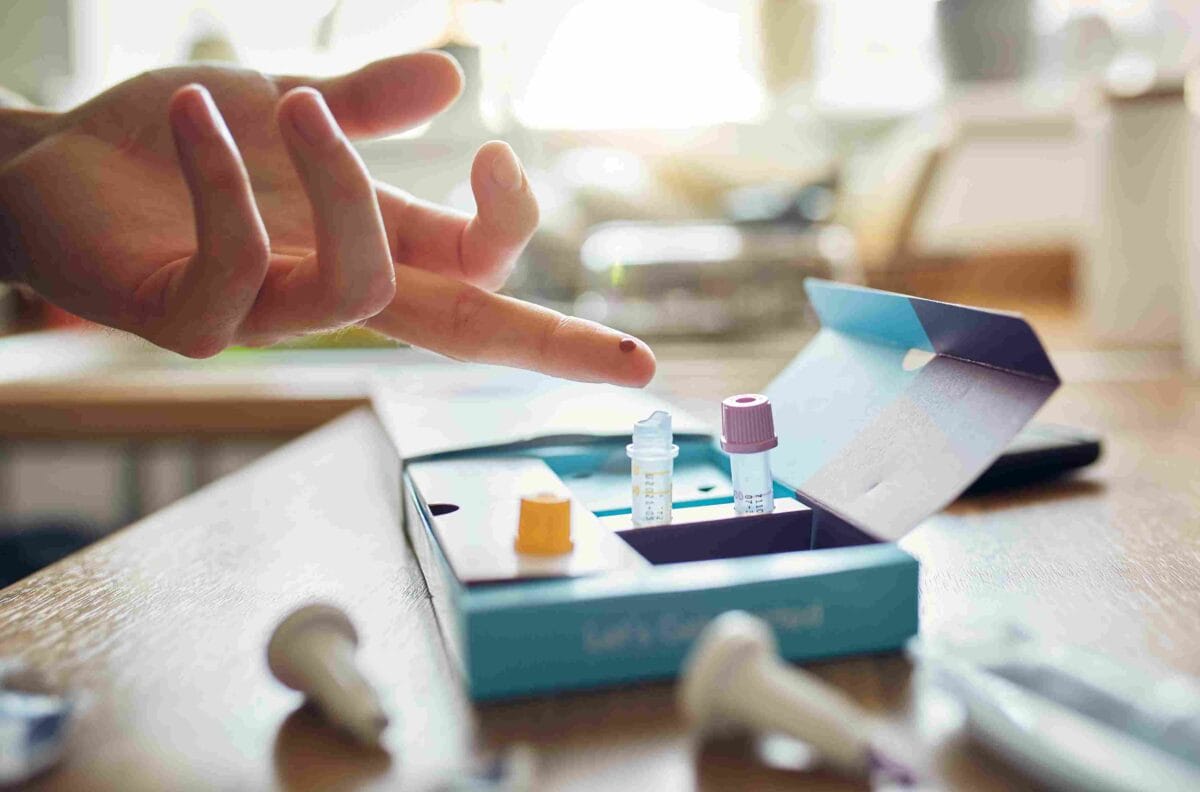
A finger-prick blood test, sometimes called a capillary blood test or dried blood spot test, involves collecting a small sample of blood from a fingertip using a lancet. The lancet makes a tiny puncture in the skin, and the blood is collected either into a small microtainer tube or onto a specially treated collection card, depending on the testing method.
The sample is then posted to a certified laboratory for analysis using the same analytical equipment and quality standards as venous blood samples. Results are typically available within two to five working days and are shared digitally, either via an online portal, an app, or directly with your prescribing clinician.
Finger-prick testing has been used in healthcare for decades. Diabetics routinely use finger-prick glucose tests, and newborn screening programmes in the UK have used heel-prick blood spot tests since the 1960s. The application to hormone monitoring, including TRT, is a more recent development, but the underlying technology is well-established and validated.
How Finger-Prick Tests Work for TRT Monitoring
The process of taking a TRT finger-prick blood test at home is straightforward. A typical home testing kit includes:
- A single-use lancet device (spring-loaded for a quick, controlled puncture)
- An alcohol swab to clean the finger
- A blood collection tube or card
- A plaster for after collection
- A prepaid return envelope or shipping label
- Clear instructions with step-by-step guidance
Step-by-Step Process
- Warm your hands. Run your hands under warm water for a minute or two. This increases blood flow to your fingertips and makes collection significantly easier.
- Clean the puncture site. Use the alcohol swab to clean the side of your chosen finger (usually the ring finger or middle finger). The side of the fingertip is less painful than the pad and bleeds more freely.
- Use the lancet. Press the lancet firmly against the side of your fingertip and trigger the device. The puncture is quick and typically causes only mild, brief discomfort.
- Collect the blood. Gently squeeze your finger to encourage blood flow, and fill the collection tube to the indicated line or cover the designated circles on the collection card.
- Seal and send. Place the sample in the provided packaging and post it to the laboratory.
The entire process takes approximately five to ten minutes. Most men find that after their first attempt, subsequent tests are quick and routine.
Timing Your Test
For TRT monitoring, the timing of your blood test matters. Testosterone levels fluctuate throughout the day (highest in the morning) and in relation to your dosing schedule. The standard recommendation is:
- Morning collection: Take your sample between 7am and 10am for the most consistent and comparable results.
- Trough timing for injections: If you’re using testosterone injections, the ideal time to test is at the trough point, immediately before your next injection. This tells your clinician what your lowest levels are, which is more clinically useful than testing at the peak.
- Consistent timing for gel: If you’re using testosterone gel, test at the same time relative to your application. Most clinicians recommend testing before applying your daily dose.
- Fasting: A fasting sample (no food for 8-12 hours, water is fine) is preferable, as eating can affect some markers, particularly glucose and lipids if these are included in your panel.
What Markers Are Tested?
A comprehensive TRT monitoring blood test measures several key markers. Not every test panel will include all of these, so it’s important to ensure you’re using a panel specifically designed for TRT monitoring rather than a basic testosterone-only test.
| Marker |
Why It Matters on TRT |
Target Range |
| Total Testosterone |
Confirms your testosterone is within the therapeutic range. Too low means inadequate dosing; too high increases risk of side effects. |
15-30 nmol/L (trough) |
| Free Testosterone |
The biologically active fraction of testosterone. Can be low even when total testosterone appears adequate if SHBG is elevated. |
0.2-0.6 nmol/L |
| Oestradiol (E2) |
Testosterone is partially converted to oestradiol by aromatase. Elevated oestradiol can cause water retention, mood changes, and gynaecomastia. |
40-160 pmol/L |
| Haematocrit |
Measures the proportion of red blood cells in your blood. TRT stimulates red blood cell production, and elevated haematocrit increases the risk of blood clots. |
Below 0.52 (52%) |
| Haemoglobin |
Related to haematocrit. Elevated haemoglobin alongside high haematocrit confirms polycythaemia and may require intervention. |
130-170 g/L |
| PSA (Prostate-Specific Antigen) |
A screening marker for prostate health. While TRT does not cause prostate cancer, PSA monitoring is recommended to detect any pre-existing issues. |
Below 4.0 ng/mL (age-dependent) |
| SHBG (Sex Hormone-Binding Globulin) |
A protein that binds testosterone and makes it biologically inactive. High SHBG can reduce the effectiveness of your TRT dose. |
15-50 nmol/L |
| Liver Function (ALT, AST) |
Monitors liver health. While modern TRT formulations (injections, gel, patches) are much easier on the liver than oral testosterone, monitoring remains good practice. |
Within laboratory reference ranges |
| Full Blood Count (FBC) |
A broader panel that includes haematocrit, haemoglobin, white blood cells, and platelets. Provides a more complete picture of blood health. |
Within laboratory reference ranges |
Some TRT monitoring panels also include thyroid function, lipid profiles, and HbA1c (a marker of long-term blood sugar control), which can be valuable for a holistic view of your health.
Accuracy: Finger-Prick vs Venous Blood Tests
The question men most frequently ask about finger-prick tests is whether they’re as accurate as a traditional venous blood draw. It’s a fair question, and the answer requires some nuance.
The Evidence on Accuracy
Multiple validation studies have demonstrated that finger-prick blood tests show strong correlation with venous samples for the key markers used in TRT monitoring. For testosterone, oestradiol, and PSA, the correlation is typically above 95% when tests are performed correctly and analysed by accredited laboratories.
The UK’s Medicines and Healthcare products Regulatory Agency (MHRA) and the Care Quality Commission (CQC) regulate diagnostic laboratories, and any laboratory processing finger-prick samples for clinical use must meet the same accreditation standards as those processing venous samples. Look for laboratories with UKAS accreditation (ISO 15189) to ensure quality.
Where Differences Can Occur
There are a few scenarios where finger-prick and venous results may differ slightly:
- Sample volume: Finger-prick tests collect a smaller volume of blood. If the sample is insufficient (too few drops), some markers may be unreportable. Following the collection instructions carefully avoids this.
- Haemolysis: If the sample is squeezed too aggressively, red blood cells can rupture (haemolyse), which can affect certain markers, particularly potassium and LDH. Gentle milking of the finger rather than forceful squeezing minimises this risk.
- Haematocrit measurement: Some finger-prick panels estimate haematocrit from haemoglobin levels rather than measuring it directly. While the estimation is generally reliable, a direct venous measurement is considered more precise for this particular marker.
For the purposes of routine TRT monitoring, finger-prick tests are considered clinically appropriate by the majority of hormone specialists. If a finger-prick result is borderline or unexpected, your clinician may request a confirmatory venous test, but this is the exception rather than the rule.
How Often Should You Test on TRT?
The frequency of blood monitoring depends on where you are in your TRT journey. The British Society for Sexual Medicine (BSSM) guidelines and broader endocrinology consensus recommend the following schedule:
| Stage of Treatment |
Recommended Testing Frequency |
| Before starting TRT |
Baseline blood test including testosterone, FBC, PSA, liver function, lipids, thyroid function |
| 6-8 weeks after starting |
First follow-up test to assess initial response and check for early side effects (especially haematocrit) |
| 3 months |
Comprehensive panel to confirm dose adequacy and monitor key safety markers |
| 6 months |
Full monitoring panel. By this point, your dose should be optimised |
| Ongoing (stable treatment) |
Every 6-12 months, depending on clinical stability and risk factors |
| After any dose change |
6-8 weeks after the adjustment to assess the effect |
Men with specific risk factors, such as a history of polycythaemia, elevated PSA, or cardiovascular disease, may need more frequent monitoring. Your clinician will advise on the appropriate schedule for your individual circumstances.
Advantages of Home Finger-Prick Testing for TRT
The practical advantages of finger-prick home testing are significant, particularly for men on long-term TRT who need to test regularly:
- Convenience: Test at home, at a time that suits you. No clinic appointments, no waiting rooms, no travel.
- Consistency: Because you control the timing, it’s easier to test at the optimal point (early morning, trough timing) than it is to get a clinic appointment at exactly the right time.
- Compliance: Men who can test at home are more likely to maintain their monitoring schedule. When testing requires a clinic visit, it’s common for men to skip or delay tests, leading to gaps in monitoring that can miss developing issues.
- Speed: Results are typically available within two to five working days, and digital delivery means your clinician can review them promptly.
- Privacy: For men who prefer discretion, home testing avoids the need to explain to colleagues why you’re leaving work for a blood test or to discuss hormone therapy in a busy GP waiting room.
- Cost-effectiveness: Home finger-prick tests are often less expensive than a venous blood draw at a private clinic, and there are no travel costs or time off work to factor in.
Limitations to Be Aware Of
Finger-prick testing is excellent for routine monitoring, but it has some limitations:
- Not suitable for all markers: Certain specialised tests, such as dihydrotestosterone (DHT) or detailed iron studies, may require a venous sample.
- Collection technique matters: If you don’t follow the instructions carefully, poor sample quality can result in unreportable results, which means repeating the test.
- Postal delays: In rare cases, postal delays can affect sample quality, particularly in hot weather. Using next-day post and avoiding Friday collections (which sit over the weekend) helps mitigate this.
- Not a substitute for clinical assessment: Blood results are one component of TRT monitoring. They should be reviewed alongside your symptoms, clinical history, and physical examination. A blood test result in isolation doesn’t tell the whole story.
What Should You Do?
If you’re currently on TRT, or considering starting, regular blood monitoring is a non-negotiable part of responsible treatment. Finger-prick home testing makes this monitoring practical and accessible, removing many of the barriers that lead men to skip their blood tests.
At Evernu, we offer a comprehensive home TRT monitoring blood test specifically designed for men on testosterone therapy. Our panel covers all the key markers, including total and free testosterone, oestradiol, haematocrit, haemoglobin, PSA, SHBG, and liver function, and results are reviewed by our clinical team.
Here’s how our process works:
- Order your test online and receive your kit within one to two working days
- Collect your sample at home following the step-by-step instructions
- Post your sample using the prepaid packaging
- Receive your results within a few working days, reviewed and interpreted by our clinicians
- Clinical follow-up if any results require attention or dose adjustment
If you’re not yet on TRT but are experiencing symptoms of low testosterone, such as persistent fatigue, low mood, reduced libido, or difficulty building muscle, a testosterone blood test is the essential first step in determining whether your levels are genuinely low. Our screening questionnaire can help you assess whether testing is appropriate for your symptoms.
Take our free testosterone screening questionnaire to get started, or visit our testosterone treatment page to learn more about how Evernu can support your hormonal health with proper, evidence-based monitoring.
The Bottom Line
TRT finger-prick blood tests are a validated, convenient, and clinically appropriate method for monitoring testosterone therapy at home. They measure the same markers as venous blood tests, are processed by accredited laboratories, and produce results that clinicians can confidently use to manage your treatment.
The most important thing is not how your blood is collected, but that it’s collected regularly and reviewed by someone who knows what they’re looking at. Monitoring is what makes TRT safe. Without it, you’re guessing. With it, you’re making informed decisions about your health based on real data.
The first step to TRTFind out if it's your testosterone
A simple finger-prick test you do at home. Results in 2–3 days, set against the UK reference range — so you know where you actually stand.
£26.99£63.99Save £37
Check my testosterone →No commitment — you only start treatment if it's right for you.