Wegovy has quickly become one of the most recognisable names in weight management. It is featured regularly in the news, discussed on social media, and increasingly recommended by healthcare professionals across the UK. But behind the headlines, there is a lot of nuance that often gets lost.
If you are considering Wegovy, or simply want to understand what it is and whether it might be relevant to you, this guide covers everything in one place: how the medication works, who it is suitable for, what the clinical evidence actually shows, what side effects to expect, and how to access it in England, Scotland, Wales, and Northern Ireland.
What Is Wegovy?
Wegovy is a prescription medication used for chronic weight management in adults and adolescents aged 12 and over. It is manufactured by Novo Nordisk and contains the active ingredient semaglutide, which belongs to a class of drugs called GLP-1 receptor agonists.
The medication is administered as a once-weekly subcutaneous injection (a small injection into the fatty tissue just beneath the skin) using a pre-filled pen device. It is licensed in the UK for patients who meet specific BMI criteria and is intended to be used alongside a reduced-calorie diet and increased physical activity.
Wegovy is not a cosmetic treatment or a quick fix. It is a medical intervention for a medical condition, and it requires a prescription following a clinical assessment.
How Does Wegovy Work?
To understand Wegovy, it helps to understand the hormone it mimics. GLP-1 (glucagon-like peptide-1) is a naturally occurring hormone produced primarily in the gut in response to food. It plays a crucial role in several processes:
- Appetite regulation: GLP-1 acts on receptors in the brain, specifically in the hypothalamus, to reduce hunger and increase feelings of satiety (fullness). Wegovy amplifies this signal, helping patients feel satisfied with smaller portions and reducing the constant preoccupation with food that many people with obesity experience.
- Gastric emptying: GLP-1 slows the rate at which food moves from the stomach into the small intestine. This means you feel full for longer after eating, which naturally reduces overall calorie intake.
- Blood sugar regulation: GLP-1 stimulates insulin release when blood sugar is elevated and suppresses glucagon (a hormone that raises blood sugar). This dual action helps stabilise blood sugar levels, which can reduce energy crashes and cravings.
- Reward pathways: Emerging research suggests that GLP-1 receptor agonists may also influence the brain’s reward pathways, reducing the pleasure response to high-calorie, palatable foods. This is why many patients report that foods they previously found irresistible, such as crisps, chocolate, or takeaways, simply lose their appeal.
In practical terms, most patients describe the experience as a quietening of “food noise,” that persistent, intrusive background of thoughts about food, meals, and snacking that can dominate daily life for people with obesity.
What Does the Clinical Evidence Show?
Wegovy has been evaluated in the STEP (Semaglutide Treatment Effect in People with Obesity) clinical trial programme, which is one of the most extensive trial programmes ever conducted for a weight-management medication.
Weight Loss Results
- STEP 1 (standard dose, 2.4 mg): Participants lost an average of approximately 15% of their body weight over 68 weeks. For someone starting at 100 kg, that is roughly 15 kg.
- Higher dose (7.2 mg): More recent trials evaluating the 7.2 mg dose showed approximately 20.7% body weight loss, with nearly half of participants losing 20% or more of their body weight over 72 weeks.
These results were achieved when the medication was combined with lifestyle modifications, specifically a reduced-calorie diet and increased physical activity. Participants who relied solely on the medication without making any lifestyle changes saw smaller results, which underscores an important point: Wegovy is a powerful tool, but it works best as part of a comprehensive approach.
Cardiovascular Benefits
The SELECT trial, published in the New England Journal of Medicine, demonstrated that semaglutide 2.4 mg reduced the risk of major adverse cardiovascular events (heart attack, stroke, cardiovascular death) by 20% in overweight or obese adults with established cardiovascular disease. This was true regardless of whether participants had diabetes.
This finding is significant because it suggests that the benefits of semaglutide extend beyond weight loss itself, offering meaningful cardiovascular protection that could save lives.
Other Health Improvements
Across the STEP trials, participants also experienced improvements in:
- Blood pressure
- Cholesterol and triglyceride levels
- Blood sugar control (HbA1c)
- Waist circumference
- Markers of inflammation
- Quality of life and physical functioning scores
Who Is Eligible for Wegovy?
In the UK, Wegovy is licensed for adults (and adolescents aged 12+) who meet the following criteria:
- BMI of 30 or higher (classified as obesity), or
- BMI of 27 or higher with at least one weight-related health condition, such as type 2 diabetes, high blood pressure, high cholesterol, obstructive sleep apnoea, or cardiovascular disease.
A prescriber will assess your overall medical history before recommending Wegovy. This includes reviewing any current medications, previous weight-loss attempts, and relevant health conditions.
Who Should Not Take Wegovy?
Wegovy is not suitable for everyone. It is contraindicated in patients with:
- A personal or family history of medullary thyroid carcinoma (MTC)
- Multiple endocrine neoplasia syndrome type 2 (MEN 2)
- A history of pancreatitis
- Pregnancy or plans to become pregnant (Wegovy should be stopped at least two months before trying to conceive)
- Type 1 diabetes
- Severe gastrointestinal conditions such as gastroparesis
- Known hypersensitivity to semaglutide or any of the excipients
Caution is also required in patients with a history of gallbladder disease, kidney problems, or diabetic retinopathy. Your prescriber will discuss these factors during your assessment.
How Is Wegovy Dosed?
Wegovy follows a gradual dose-escalation schedule designed to minimise side effects and allow your body to adjust. Rushing to the full dose increases the risk of significant nausea and other gastrointestinal symptoms.
Standard Dose Escalation (to 2.4 mg)
| Period |
Weekly Dose |
| Month 1 (Weeks 1-4) |
0.25 mg |
| Month 2 (Weeks 5-8) |
0.5 mg |
| Month 3 (Weeks 9-12) |
1 mg |
| Month 4 (Weeks 13-16) |
1.7 mg |
| Month 5+ (Maintenance) |
2.4 mg |
Higher Dose Option (7.2 mg)
For patients who have been stable on 2.4 mg for at least four weeks and may benefit from further weight loss, the 7.2 mg dose is now available. This requires clinical assessment and is not appropriate for everyone. It currently involves three separate 2.4 mg injections weekly, though a single-pen formulation is expected in the future.
Side Effects: What to Expect
Understanding the side-effect profile honestly is important for managing your expectations and your experience during the early weeks of treatment.
Common Side Effects
The most frequently reported side effects are gastrointestinal, and they are most pronounced during dose escalation:
- Nausea: The most common side effect, affecting a significant proportion of patients during the first few weeks at each dose level. It typically diminishes as the body adjusts.
- Diarrhoea: Usually mild and self-limiting.
- Constipation: Can be managed with adequate hydration, fibre intake, and physical activity.
- Vomiting: More common during dose escalation, particularly if eating large or rich meals.
- Headache and fatigue: Often related to reduced calorie intake in the early weeks.
- Abdominal discomfort: Including bloating and indigestion.
Managing Side Effects
Most side effects can be minimised with practical strategies:
- Eat smaller, more frequent meals rather than large portions.
- Avoid very fatty, rich, or greasy foods, especially in the first few weeks.
- Stay well hydrated throughout the day.
- Increase fibre intake gradually to manage constipation.
- If nausea is bothersome, try bland, easily digestible foods until it settles.
Serious Side Effects (Rare)
While uncommon, serious adverse events can occur and require prompt medical attention:
- Pancreatitis: Severe, persistent abdominal pain that may radiate to the back. Stop the medication and seek immediate medical help.
- Gallbladder problems: Including gallstones, which may be more common during rapid weight loss.
- Serious allergic reactions: Difficulty breathing, swelling of face or throat, severe rash.
- Kidney problems: Particularly in patients who become dehydrated from vomiting or diarrhoea.
The NHS page on semaglutide provides comprehensive guidance on side effects, interactions, and safety considerations.
How Does Wegovy Compare to Other Treatments?
Wegovy vs Mounjaro (Tirzepatide)
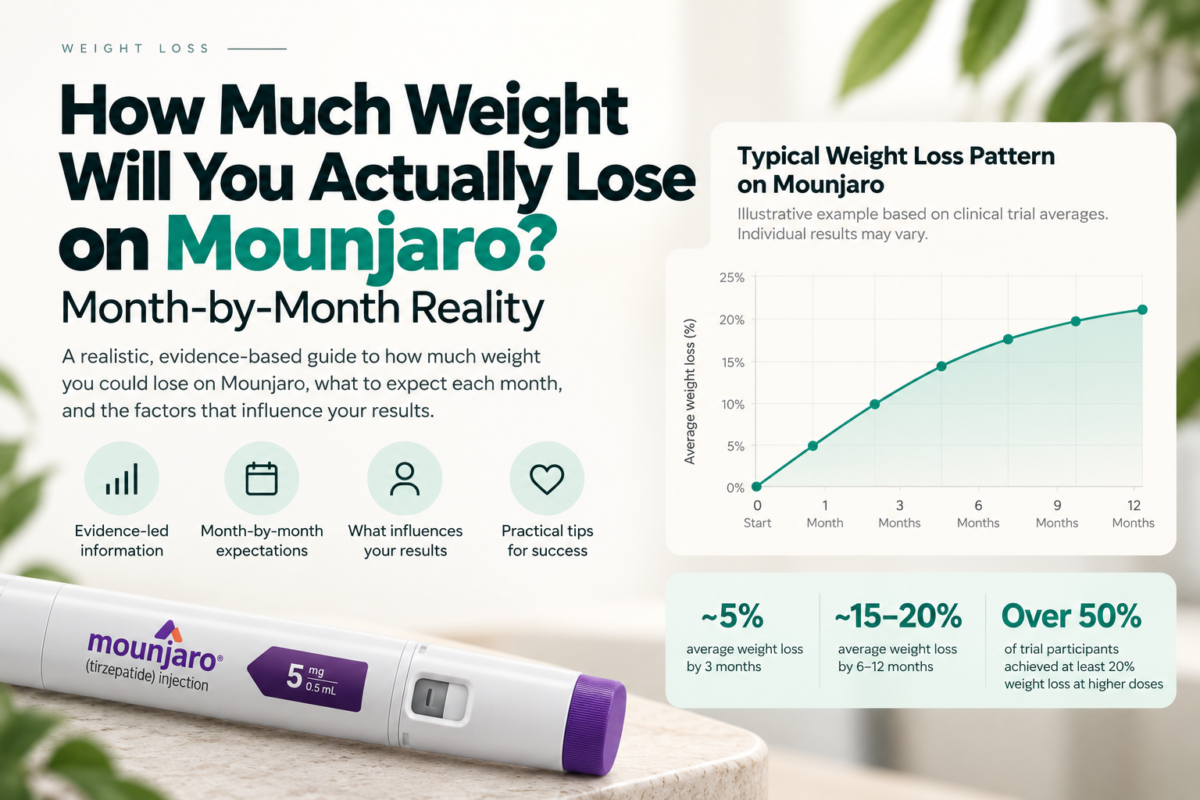
Mounjaro is a dual GIP/GLP-1 receptor agonist that has shown slightly greater average weight loss in clinical trials (up to 22.5% at the highest dose versus approximately 15-20.7% for Wegovy). The two medications work through different mechanisms, and some patients respond better to one than the other. Mounjaro may be particularly suitable for patients with insulin resistance or those who have not achieved adequate results with a GLP-1-only medication.
Wegovy vs Saxenda (Liraglutide)
Saxenda is an older GLP-1 agonist that requires daily injections (compared to Wegovy’s weekly administration). It typically produces around 8% to 10% weight loss, which is less than Wegovy. Saxenda may be appropriate for patients who cannot tolerate semaglutide, but for most people, Wegovy offers greater efficacy and convenience.
Wegovy vs Orlistat
Orlistat is an oral medication that blocks fat absorption in the gut. It produces more modest weight loss (typically 5% to 10%) and requires a strict low-fat diet to avoid unpleasant gastrointestinal side effects. While cheaper and available over the counter at lower doses, it is significantly less effective than Wegovy for most patients.
Could Wegovy Be Right for You?
Evernu offers clinician-led assessments to determine whether Wegovy, Mounjaro, or another treatment is most appropriate for your individual circumstances. Our medical team will review your health history and goals before making a recommendation.
Check your eligibility in minutes
How to Access Wegovy in the UK
NHS Access
NICE has recommended semaglutide for use within specialist weight-management services on the NHS. However, access varies significantly across different parts of the UK, and waiting lists for specialist services can be lengthy. Your GP can refer you to a local weight-management service if one is available in your area.
Private Access
Many patients choose to access Wegovy through regulated private providers, which typically offer faster consultations and delivery. When choosing a private provider, look for:
- Registration with a relevant regulatory body (such as the RQIA, CQC, or GPhC)
- Qualified prescribers who conduct proper medical assessments
- Ongoing clinical support and regular check-ins throughout treatment
- Genuine UK-sourced medication from licensed wholesalers
- Transparent pricing with no hidden costs
Cost
Private Wegovy prescriptions typically start from around 130 pounds per month for the lowest dose, increasing as the dose escalates. The cost of the maintenance dose (2.4 mg) is higher. Some providers offer treatment programmes that include clinical consultations, monitoring, and support within the price.
What to Expect When Starting Wegovy
Setting realistic expectations from the start helps you stay motivated and avoid disappointment during the early weeks:
- Month 1 (0.25 mg): Minimal weight loss. This month is about adjustment, not results. You may notice subtle appetite changes.
- Months 2-3 (0.5 mg to 1 mg): Weight loss begins to become noticeable. Most patients lose 3% to 5% of their body weight by week 12.
- Months 4-5 (1.7 mg to 2.4 mg): Results accelerate as you reach the maintenance dose. Side effects typically settle.
- Months 6-12+: Steady, ongoing weight loss. Most of the total weight loss occurs within the first 12 to 18 months of treatment.
Plateaus are normal and do not mean the medication has stopped working. Your prescriber can help you navigate these periods and adjust your approach if needed.
Frequently Asked Questions
How quickly does Wegovy start working?
Most patients notice a reduction in appetite within the first one to two weeks, even on the starter dose of 0.25 mg. Visible weight loss on the scales typically becomes apparent from weeks three to four onward, though individual timelines vary. The medication’s effects strengthen as the dose increases over the first four to five months.
Will I regain weight if I stop taking Wegovy?
Clinical trial data shows that weight regain is common after discontinuing semaglutide, with most participants regaining a significant proportion of lost weight within a year of stopping. This reflects the chronic nature of obesity rather than a failure of the treatment. Many patients continue treatment long-term, while others use the treatment period to establish sustainable lifestyle habits. Your prescriber will discuss the best long-term strategy for your situation.
Can I take Wegovy if I have type 2 diabetes?
Yes. Semaglutide improves blood sugar control and Wegovy can be used in patients with type 2 diabetes. However, if you are also taking insulin or sulphonylureas, your diabetes medication doses may need to be adjusted to prevent hypoglycaemia (low blood sugar). Your prescriber will coordinate this.
Is Wegovy safe to use long-term?
Long-term safety data for semaglutide is encouraging. The STEP and SELECT trials ran for 68 to 104 weeks, and ongoing extension studies continue to monitor long-term outcomes. No new safety signals have emerged with extended use. However, as with any medication, ongoing medical supervision is important to monitor for any issues.
Can I drink alcohol while taking Wegovy?
Moderate alcohol consumption is not specifically contraindicated, but alcohol adds empty calories, may worsen nausea (especially during dose escalation), and can reduce your inhibitions around food choices. Many patients also report a reduced tolerance for alcohol while on semaglutide. If you choose to drink, keep it moderate and be aware of how it affects you.
Start Your Weight Loss Journey with Evernu
We provide regulated, clinician-led weight management with discreet delivery across the UK. Our team is here to guide you from your first assessment through every step of your treatment.
Explore our weight loss treatments