Self-injecting a medication for the first time can feel daunting, even if you know, rationally, that millions of people do it every week without incident. If you have been prescribed Mounjaro (tirzepatide) and are wondering exactly where and how to inject it, this guide walks through everything you need to know clearly and step by step.
The good news is that Mounjaro uses a pre-filled pen device designed to be straightforward, even for people who have never given themselves an injection before. The needle is fine, the process takes seconds, and most patients across the UK report that it is far less uncomfortable than they expected.
The Three Approved Injection Sites
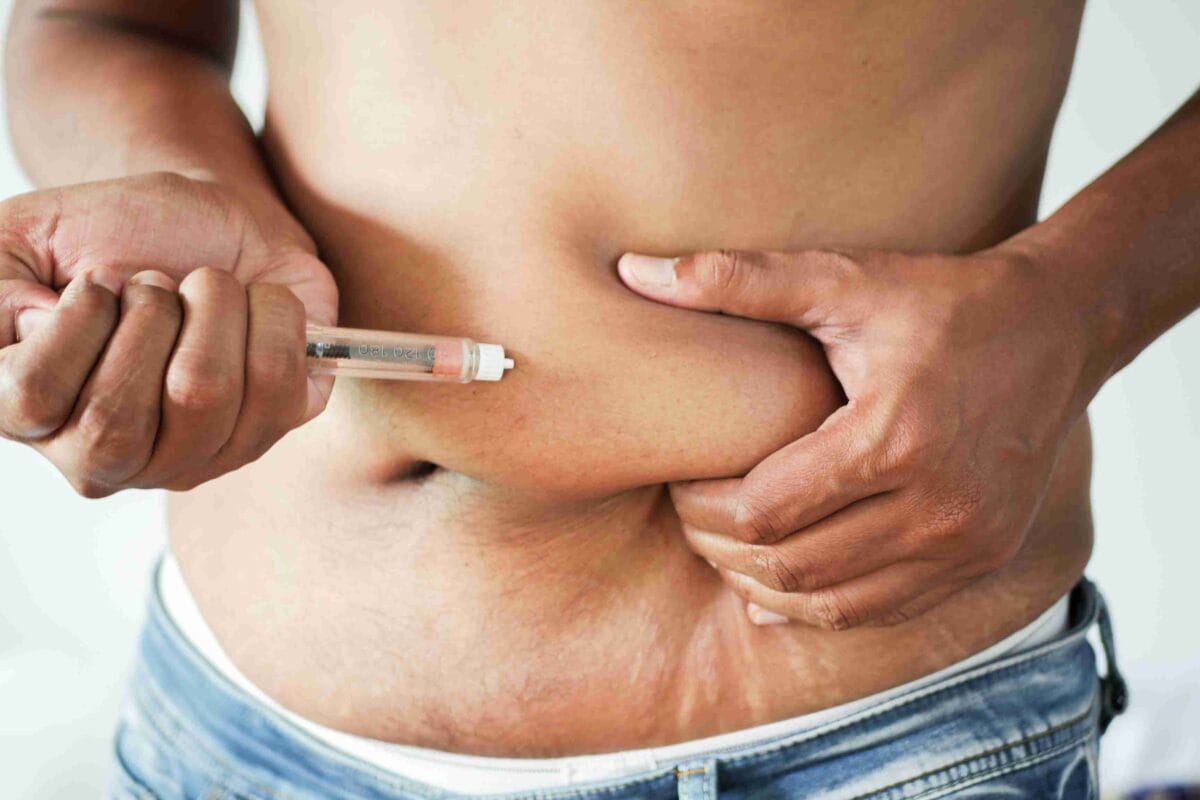
Mounjaro is administered as a subcutaneous injection, meaning the needle delivers the medication into the fatty tissue just beneath the skin. There are three approved areas for injection, and each has its own practical advantages.
1. The Abdomen (Stomach Area)
The abdomen is the most popular injection site for most self-injecting patients, and for good reason.
Where exactly: Anywhere on your stomach area, provided you stay at least 5 cm (approximately 2 inches) away from your navel. Avoid any areas with scars, bruises, stretch marks, or moles.
Why many patients prefer it:
- Easy to see what you are doing, which builds confidence.
- The abdomen typically has a consistent layer of subcutaneous fat, making injection comfortable.
- You can comfortably reach the area while sitting or standing.
- There is plenty of surface area for rotating between different spots within the same zone.
Practical tip: If you are sitting down, your stomach skin may fold. Try injecting while standing or slightly reclining for a flatter surface.
2. The Front or Outer Thigh
The thigh is the second most commonly used injection site and is a good alternative if you prefer not to use your abdomen.
Where exactly: The front or outer surface of your thigh, roughly midway between your hip and your knee. Avoid the inner thigh, where there are more blood vessels and nerve endings.
Why some patients prefer it:
- Convenient if you are seated, as the area is easily accessible.
- Good option for patients who find the abdomen too sensitive.
- Easy to see and reach without assistance.
Practical tip: Wear shorts or loose trousers on injection day for easy access. If you find thigh injections slightly more uncomfortable than abdominal ones, it may be because there is less subcutaneous fat in this area. A gentle pinch of the skin before injecting can help.
3. The Back of the Upper Arm
The upper arm is an approved injection site, but it comes with an important caveat.
Where exactly: The fleshy area at the back of your upper arm, between the shoulder and the elbow.
Why it is less commonly used for self-injection:
- It is difficult, sometimes impossible, to inject yourself in the upper arm with proper technique.
- This site is best used when a partner, family member, or carer is administering the injection for you.
If someone else is injecting you: They should pinch the skin gently and insert the needle at a 90-degree angle into the fatty tissue. Ensure they are comfortable with the process and have read the pen instructions.
Why Site Rotation Matters
Using the exact same spot every week is one of the most common mistakes new patients make, and it can cause problems over time.
What can happen if you do not rotate:
- Lipodystrophy: Hardened lumps or indentations in the fatty tissue beneath the skin. Once these develop, they can affect how the medication is absorbed, making it less effective.
- Localised irritation: Repeated injection into the same spot increases the risk of redness, tenderness, and bruising.
- Scar tissue: Over months of treatment, injecting into the same area can lead to scar tissue formation, which can be uncomfortable and interfere with absorption.
How to rotate effectively:
- Move your injection site by at least 2 to 3 cm each week, even within the same body area.
- Consider alternating between areas (abdomen one week, thigh the next) to give each site maximum recovery time.
- Some patients find it helpful to think of a clock face on their abdomen, moving to a different hour position each week.
- Keep a simple note on your phone or a small diary to track where you last injected.
Step-by-Step: How to Inject Mounjaro
The Mounjaro KwikPen is designed for simplicity. Here is the complete process, from preparation to disposal.
Before You Begin: Preparation
- Wash your hands thoroughly with soap and water. Dry them completely.
- Check your pen. Verify the medication name and dose on the label. Look through the window; the liquid should be clear and colourless. Do not use the pen if the liquid is cloudy, discoloured, or contains particles.
- Allow the pen to reach room temperature if it has been stored in the fridge. Remove it approximately 30 minutes before you plan to inject. Do not use a microwave, warm water, or any other method to heat it, as this can damage the medication.
- Choose and clean your injection site. Wipe the area with an alcohol swab if you wish (this is recommended but optional if the skin is clean). Allow the skin to dry completely before injecting.
Performing the Injection
- Remove the pen cap by pulling it straight off. You should see the grey base cap underneath.
- Place the pen flat against your skin at the chosen injection site. You do not need to pinch the skin when using the KwikPen, although you may do so if you prefer.
- Unlock and press the injection button. You will hear a loud click, which indicates the injection has started. The pen uses a spring-loaded mechanism to insert the needle automatically.
- Hold the pen in place for 10 seconds. You will hear a second click and see the grey plunger move to fill the injection window, confirming the full dose has been delivered. Do not remove the pen before the second click.
- Lift the pen straight away from your skin. The needle will retract automatically. A small drop of liquid or blood at the injection site is normal and nothing to worry about.
After the Injection
- Do not rub the injection site. A gentle press with a clean cotton pad or tissue is fine if there is any bleeding.
- Replace the pen cap and store it appropriately (see storage guidelines below).
- Note where you injected so you can rotate to a different spot next week.
Managing Injection-Site Reactions
Mild reactions at the injection site are common and usually nothing to worry about. According to prescribing data, approximately 1 in 10 patients experience some degree of localised reaction. These can include:
- Redness or slight discolouration around the injection site
- Mild swelling
- Bruising (particularly if a small blood vessel was nicked)
- Itching
- Tenderness to the touch
These reactions typically resolve within 24 to 48 hours without any treatment. If you find them bothersome, a cold compress applied for a few minutes after injection can help reduce redness and swelling.
When to seek medical advice:
- A reaction that spreads, worsens, or does not resolve within a few days
- Signs of infection: increasing redness, warmth, pain, or discharge from the injection site
- Hives or a widespread rash appearing after injection
Storing Your Mounjaro Pen
Proper storage ensures the medication remains effective and safe to use.
Before First Use
- Store in the refrigerator at 2 to 8 degrees Celsius.
- Keep the pen in its original packaging to protect it from light.
- Do not freeze. If a pen has been frozen, do not use it even if it has thawed, as freezing can damage the medication’s structure.
After First Use or at Room Temperature
- The pen can be stored at room temperature (below 30 degrees Celsius) for up to 21 days.
- Keep it away from direct sunlight and heat sources.
- If you are travelling, a cool bag without ice packs touching the pen directly is ideal for warm days.
Disposal
- Used pens should be placed in a sharps container. In the UK, your local pharmacy or council will provide sharps bins free of charge for patients who self-inject at home.
- Never dispose of pens in household waste or recycling.
- Once your sharps bin is three-quarters full, return it to your pharmacy or arrange a collection through your local council.
Common Questions and Concerns About Self-Injection
“I am terrified of needles. Can I still do this?”
Needle anxiety is extremely common, and it does not need to be a barrier to treatment. The Mounjaro KwikPen needle is very fine (much thinner than a blood test needle), and the spring-loaded mechanism means you do not have to push the needle in yourself. Many patients with needle phobia report that the anticipation is far worse than the actual injection, which most describe as a brief pinch lasting one to two seconds.
Strategies that may help:
- Inject in a comfortable, well-lit space where you feel relaxed.
- Take a few slow, deep breaths before starting.
- Look away from the injection site if seeing the pen against your skin increases anxiety.
- Ask someone you trust to be with you for your first few injections.
- Apply a numbing cream (such as an over-the-counter lidocaine cream) to the injection area 30 minutes beforehand.
“What if I do it wrong?”
The pen is designed to be foolproof. As long as you hold it against your skin and wait for the two clicks, the medication will be delivered correctly. If the dose indicator window does not show the completion marker, or if you are unsure whether the full dose was delivered, contact your prescriber or pharmacist before taking any additional medication.
“Can I inject through clothing?”
No. You must always inject into clean, bare skin. Injecting through clothing increases the risk of infection and may prevent the needle from reaching the correct depth.
When to Seek Urgent Medical Attention
While serious reactions to Mounjaro injections are rare, you should seek immediate medical help if you experience any of the following after injecting:
- Difficulty breathing or a feeling of tightness in your chest or throat
- Swelling of your lips, tongue, throat, or face
- A severe, spreading rash or hives
- Dizziness, rapid heartbeat, or feeling faint
- Severe or worsening pain at or around the injection site
These could indicate a serious allergic reaction (anaphylaxis), which requires emergency treatment. In the UK, call 999 or go to your nearest A&E department. The NHS page on tirzepatide provides further guidance on side effects and urgent situations.
Starting Mounjaro with Evernu
When you begin treatment through Evernu, our clinical team provides personalised injection guidance alongside your prescription. We are here to answer your questions and support you through the early weeks of treatment, wherever you are in England, Scotland, Wales, or Northern Ireland.
Check your eligibility in minutes
Frequently Asked Questions
What is the best injection site for Mounjaro?
The abdomen is the most popular site because it offers good visibility, easy access, and a consistent layer of subcutaneous fat for comfortable injection. However, all three approved sites (abdomen, thigh, and upper arm) are equally effective in terms of medication absorption. Choose whichever feels most comfortable for you and remember to rotate between spots each week.
Does the Mounjaro injection hurt?
Most patients describe the sensation as a brief pinch or slight sting lasting one to two seconds. The KwikPen uses a fine needle and a spring-loaded mechanism that makes the process quick. Discomfort tends to decrease as you become more familiar with the technique over the first few weeks.
Can I inject Mounjaro in my arm by myself?
The upper arm is only recommended when someone else is administering the injection for you. It is difficult to maintain proper technique and a 90-degree angle when injecting your own arm, which can result in the medication being delivered too shallowly or into muscle rather than subcutaneous fat. Stick to the abdomen or thigh for self-injection.
What happens if I accidentally inject into muscle?
An accidental intramuscular injection is unlikely to cause harm, but it may result in faster absorption and slightly increased side effects, particularly at the injection site. If it happens once, monitor for any unusual reactions and ensure correct technique on your next injection. If you are unsure about your technique, ask your prescriber or a pharmacist to observe your next injection and provide feedback.
How do I get sharps bins for disposal in the UK?
Sharps containers are available free of charge for patients who self-inject at home. You can collect them from your local pharmacy, GP surgery, or request them through your local council’s clinical waste service. When the bin is three-quarters full, return it to your pharmacy for safe disposal and collect a replacement. Never place used pens or needles in household waste bins. The NHS provides guidance on sharps disposal for home users.
Explore Our Weight Loss Treatments
Evernu provides regulated, clinician-led weight management programmes with discreet UK-wide delivery and ongoing clinical support.
View treatment options
Ready to take the next step?
Take the first step towards better health. Our quick assessment connects you with the right treatment plan, tailored to your unique needs.
Get Started Now