If you have ever typed “which contraceptive pill is best” into a search bar at midnight, you are far from alone. It is one of the most common questions women across England, Scotland, Wales, and Northern Ireland ask about their reproductive health — and frustratingly, the answer is almost never a single brand name. The best contraceptive pill for you depends on your body, your medical history, your lifestyle, and what you are hoping to get out of it beyond pregnancy prevention.
This guide walks through the two main categories of oral contraception available in the UK, how they differ, who they suit, and the factors worth weighing up before you decide. Whether you are considering the pill for the first time or thinking about switching, the goal here is to help you have a more informed conversation with your prescriber — not to replace it.
The Two Types of Contraceptive Pill Available in the UK
Every oral contraceptive pill prescribed in the UK falls into one of two categories: the combined oral contraceptive pill (often just called “the pill”) and the progestogen-only pill (POP), sometimes referred to as the mini pill. Both use synthetic hormones to prevent pregnancy, but they work in slightly different ways and suit different people.
When taken correctly, both types are more than 99% effective at preventing pregnancy. In real-world use — accounting for the occasional missed pill or stomach upset — effectiveness sits closer to 91-93%, according to the NHS. Neither type protects against sexually transmitted infections (STIs), so condoms remain important if STI protection is a consideration.
The Combined Pill: What It Is and Who It Suits
The combined pill contains two synthetic hormones: oestrogen and progestogen. These work together to stop ovulation (the release of an egg each month), thicken cervical mucus to make it harder for sperm to reach an egg, and thin the womb lining to reduce the chance of a fertilised egg implanting.
Common Combined Pill Brands in the UK
There are dozens of combined pill brands available on the NHS and privately. Some of the more commonly prescribed include Microgynon 30, Rigevidon, Yasmin, Cilest, and Marvelon. These contain different types and doses of synthetic oestrogen and progestogen, which is partly why one brand may suit you better than another.
How You Take It
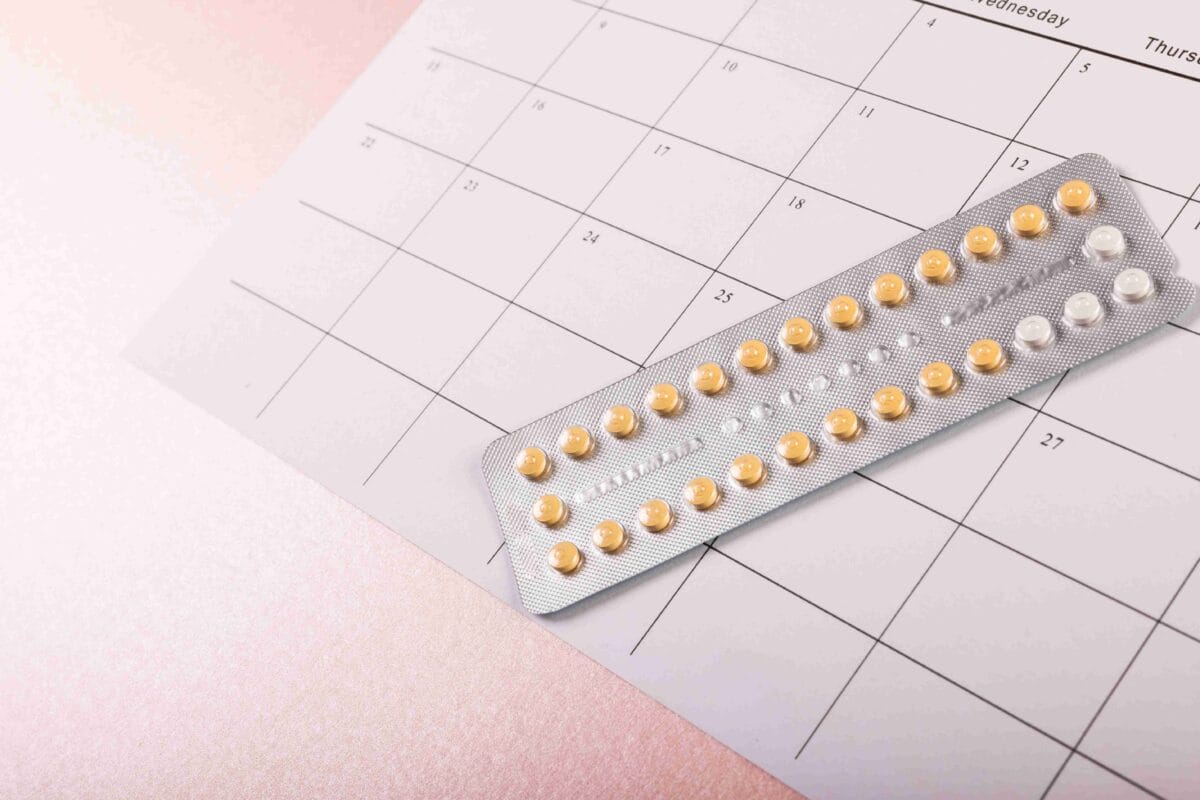
Most combined pills come in 21-day packs. You take one pill daily for 21 days, then have a 7-day break during which you will usually have a withdrawal bleed (not a true period, but it looks and feels similar). Some brands come as “everyday” (ED) pills with 28 tablets — 21 active pills and 7 inactive placebo pills — so you never have a break in pill-taking, which some women find easier to remember.
More recently, the Faculty of Sexual and Reproductive Healthcare (FSRH) updated its guidance to confirm that it is safe to take the combined pill continuously without the 7-day break, or to use tailored regimens such as taking it for 9 weeks then having a 4-day break. This can reduce the frequency of withdrawal bleeds and may help with symptoms that flare during the pill-free week.
Benefits Beyond Contraception
One reason the combined pill remains so widely used is that it offers several non-contraceptive benefits. It can help with:
- Painful or heavy periods — the pill often makes periods lighter, shorter, and less painful
- Premenstrual syndrome (PMS) — some women find mood-related and physical PMS symptoms improve
- Acne — certain combined pills (particularly those containing cyproterone acetate or drospirenone) are specifically used for acne management
- Endometriosis symptoms — continuous use can help manage endometriosis-related pain
- Polycystic ovary syndrome (PCOS) — the pill can regulate cycles and reduce androgen-related symptoms
- Cancer risk reduction — long-term use is associated with reduced risk of ovarian, endometrial, and bowel cancers
Who Should Avoid the Combined Pill
The combined pill is not suitable for everyone. Your prescriber will likely recommend an alternative if you:
- Are aged 35 or over and smoke (or stopped smoking less than a year ago)
- Have a history of blood clots (deep vein thrombosis or pulmonary embolism) or a strong family history of clots
- Experience migraines with aura
- Have uncontrolled high blood pressure
- Have a BMI of 35 or above (though this is assessed individually)
- Have certain heart or circulatory conditions
- Have had breast cancer in the past five years
- Have active liver disease
- Are breastfeeding and less than six weeks postpartum
The main clinical concern with the combined pill is a small but real increase in the risk of venous thromboembolism (blood clots). The absolute risk remains low for most women, but your individual risk factors matter. This is precisely why a proper assessment — whether face-to-face or through a thorough online consultation — is a non-negotiable part of getting a prescription.
Common Side Effects
Side effects vary between individuals and often settle within the first two to three months. They can include headaches, nausea, breast tenderness, mood changes, breakthrough bleeding, and changes to libido. If side effects persist, switching to a pill with a different hormone type or dose often helps.
The Progestogen-Only Pill (Mini Pill): What It Is and Who It Suits
The progestogen-only pill contains just one hormone — a synthetic form of progesterone. It works primarily by thickening cervical mucus and thinning the womb lining. Some newer POPs, particularly those containing desogestrel (such as Cerazette or its generic equivalents), also consistently prevent ovulation in most cycles, making them slightly more effective than older POPs.
Common Mini Pill Brands in the UK
The most widely prescribed progestogen-only pills in the UK include Cerazette, Cerelle, Feanolla, and Zelleta (all desogestrel-based), along with Norgeston and Noriday (older-type POPs containing different progestogens).
How You Take It
You take the mini pill every single day with no break — there is no pill-free week. Older-type POPs need to be taken within a 3-hour window each day, while desogestrel-based pills allow a 12-hour window, which gives more flexibility if your schedule is unpredictable.
Who the Mini Pill Suits
The mini pill is often recommended for women who cannot or prefer not to take oestrogen. This includes women who:
- Are breastfeeding
- Are over 35 and smoke
- Have a history of blood clots or migraines with aura
- Have high blood pressure
- Have other cardiovascular risk factors that make the combined pill unsuitable
Because it does not contain oestrogen, the mini pill does not carry the same increased risk of blood clots as the combined pill, which is a significant advantage for women with certain risk factors.
Common Side Effects
The most commonly reported side effects include irregular bleeding or spotting (especially in the first few months), acne, breast tenderness, mood changes, headaches, and changes to libido. Some women stop having periods altogether on the mini pill, which is not harmful but can be disconcerting if you are not expecting it.
Who Should Avoid the Mini Pill
The mini pill has fewer absolute contraindications than the combined pill, but it is still not suitable for everyone. Your prescriber may advise against it if you have a history of breast cancer, certain liver conditions, unexplained vaginal bleeding, or if you take certain medications that may interact with it, including some epilepsy drugs, St John’s Wort, and certain HIV treatments.
Combined Pill vs Mini Pill: A Side-by-Side Comparison
Sometimes it helps to see the key differences laid out plainly:
- Hormones: Combined pill contains oestrogen + progestogen. Mini pill contains progestogen only.
- Effectiveness: Both are over 99% effective with perfect use.
- Blood clot risk: Slightly increased with combined pill. Not increased with mini pill.
- Period control: Combined pill typically gives predictable, lighter withdrawal bleeds. Mini pill may cause irregular bleeding or stop periods.
- Pill-free break: Combined pill traditionally has a 7-day break (though continuous use is now endorsed). Mini pill is taken every day without breaks.
- Breastfeeding: Combined pill not recommended while breastfeeding (especially in first 6 weeks). Mini pill is safe during breastfeeding.
- Non-contraceptive benefits: Combined pill has more established benefits for acne, PMS, and heavy periods. Mini pill has fewer studied secondary benefits.
- Timing flexibility: Combined pill has a broader daily window. Older mini pills require a strict 3-hour window (desogestrel allows 12 hours).
What to Think About When Choosing
There is no universally “best” contraceptive pill. The right choice depends on a combination of medical eligibility, lifestyle considerations, and personal preferences. Here are some questions worth thinking through before your consultation:
Your Medical History
Certain conditions will narrow your options automatically. If you have migraines with aura, a family history of blood clots, or high blood pressure, the combined pill is likely off the table. Your prescriber will go through a structured assessment — this is not optional box-ticking, it is genuinely important for your safety.
What You Want Beyond Contraception
If you are specifically hoping for help with heavy periods, bad skin, or PMS, the combined pill may offer more in the way of secondary benefits. If your primary goal is straightforward contraception with fewer medical restrictions, the mini pill may be the simpler route.
How You Feel About Periods
Some women want a regular, predictable bleed; others would be happy never to have one. The combined pill gives you more control over the timing of bleeds, including the option to skip them. The mini pill is less predictable — you may have irregular spotting, no bleeding at all, or something in between.
Your Daily Routine
If you are someone who keeps a rigid daily schedule, taking a pill at the same time each day may feel effortless. If your routine is chaotic, a desogestrel-based mini pill with its 12-hour window, or a combined pill, might be more forgiving of the occasional late dose.
Your Plans for the Future
If you are thinking about trying to conceive in the next year or so, it is reassuring to know that fertility typically returns very quickly after stopping either type of pill — usually within one to two cycles for the mini pill and one to three months for the combined pill, though it can vary.
When to Speak to a Professional
The right starting point for choosing a contraceptive pill is always a proper consultation. In the UK, you can access this through your GP, a sexual health clinic, or through reputable online services. Your prescriber will take into account your full medical history, family history, current medications, and lifestyle factors before recommending a suitable option.
If you are already taking a contraceptive pill and experiencing persistent side effects — particularly mood changes, ongoing headaches, or breakthrough bleeding that has not settled after three months — it is worth going back to your prescriber. Switching to a different pill with a different hormone type or dose can often make a significant difference.
At Evernu, we believe that informed decisions about your body start with access to clear, honest medical information and proper clinical support. If you are navigating questions about contraception, hormonal health, or any aspect of women’s wellness, our clinical team is here to help.
The Bottom Line
There is no single “best” contraceptive pill — there is only the best pill for you, right now, given your health, your priorities, and your life. The combined pill and the mini pill are both highly effective, safe for the vast majority of women, and widely available across the UK. What matters most is that you are taking one that has been properly assessed as suitable for you, and that you feel comfortable and supported in your choice.
Contraception is not a set-and-forget decision. Your needs may change over the years — after pregnancy, as you get older, if your health circumstances shift, or simply if the pill you are on stops working well for you. Regular reviews with your prescriber are an important part of making sure your contraception continues to serve you well.
Frequently Asked Questions
Which contraceptive pill has the fewest side effects?
There is no pill that is guaranteed to cause fewer side effects for everyone, because individual responses to hormones vary widely. That said, lower-dose combined pills (containing 20 micrograms of ethinylestradiol rather than 30-35) tend to cause fewer oestrogen-related side effects such as nausea and breast tenderness. The desogestrel-based mini pill is often well tolerated by women who are sensitive to oestrogen. If side effects are a concern, your prescriber can help you choose a starting point and adjust from there.
Can I switch between the combined pill and the mini pill?
Yes, switching is straightforward and common. Your prescriber will advise on the best timing to make the switch so that you remain protected against pregnancy throughout the transition. In most cases, you can switch without needing a break between the two types.
Does the contraceptive pill cause weight gain?
This is one of the most frequently asked questions about hormonal contraception, and the evidence is reassuring. Large-scale studies have not found a consistent link between either type of pill and significant weight gain. Some women do notice minor fluid retention when they first start the pill, which usually settles within a few months. If you experience persistent changes, speak with your prescriber about whether a different formulation might suit you better.
How quickly does fertility return after stopping the pill?
For most women, fertility returns quickly — typically within one to three months after stopping the combined pill and within a few weeks after stopping the mini pill. However, it can take longer for some women, and this is usually unrelated to the pill itself. If your periods have not returned within three months of stopping, it is worth seeing your GP to check for other causes.
Is the contraceptive pill free on the NHS?
Yes. All forms of contraception, including both types of pill, are available free of charge on the NHS across England, Scotland, Wales, and Northern Ireland. You can get a prescription through your GP, a sexual health clinic, or some community pharmacies. Some women choose to purchase their pill through private or online services for convenience, but cost should never be a barrier to accessing contraception in the UK.